

The two-month ban on fishing to protect jatka, the young of the hilsa, ends at midnight today. The ban on fishing in six river areas including the Padma and Meghna is being lifted at midnight on Thursday (30 April), and after the long break Chandpur's fishermen are getting ready to return to the rivers.
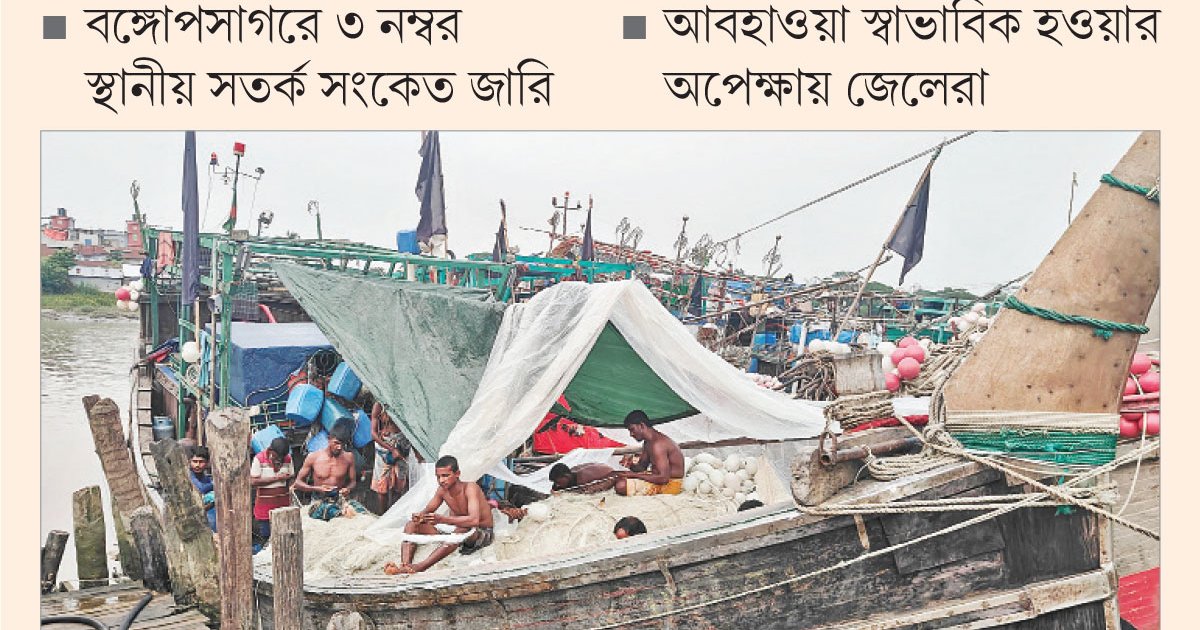
Before the ban ended, the fishermen finished repairing their boats and mending their nets. With new hope they are waiting to get back to their old routine.
Under the programme to prevent jatka catching and protect the hilsa resource, all fishing was banned for the two months of March and April in six rivers, including about 70 kilometres of the Padma and Meghna in Chandpur. Catching, transporting, selling and storing fish were all to be completely stopped during this period.
Complaints of weak enforcement
Fishermen complain, however, that this year the authorities did not carry out strong drives on the river, citing the fuel oil crisis as an excuse. As a result, many fishermen took the chance to catch jatka and other fish freely during the ban.
Al Amin Chhoyal, a fisherman on the Meghna bank at Harinaghat in Hanarchar union of Chandpur Sadar upazila, said they obeyed the ban declared by the government. But to support their families during this time they had to borrow money at interest, and now they are living under a burden of debt. He fears serious trouble if they cannot repay on time.
Md Anwar, a fisherman in Laxmipur Model union, expressed similar frustration. In his view, despite the government drives, fish numbers are falling day by day in reality. Weaker river currents and shoals emerging in different places are among the main reasons for the decline, he said.
Researcher and river police
Hilsa researcher Dr Anisur Rahman said today's jatka are tomorrow's big hilsa. If these jatka or small hilsa are caught indiscriminately, hilsa production could suffer in future. If 70 to 80 per cent of jatka can be conserved this year, there is a chance of raising the country's hilsa production beyond the target of 5.75 lakh tonnes, he said.
Syed Mushfiqur Rahman, superintendent of the river police for the Chandpur region, said more than 500 fishermen were detained, along with many nets and boats, in the jatka protection drives. "Our drives have been very successful," he said. Only the global fuel oil crisis occasionally caused problems in carrying out the drives, though this had no effect on them, he said.
Source: Jagonews24. First published in Bengali on The Agro News.


Comments
(0)