
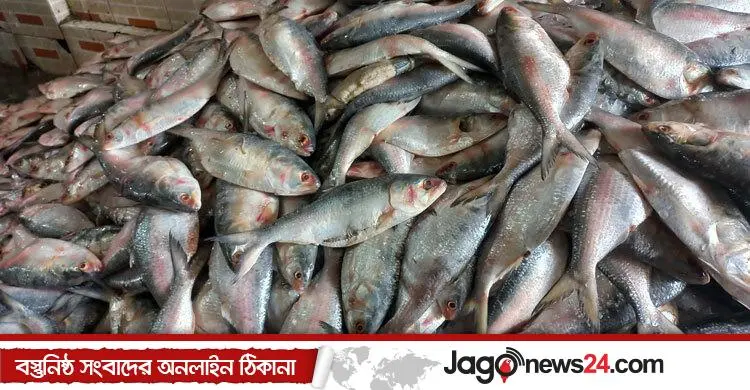
Large quantities of hilsa caught in secret, out of sight of the authorities, during the government ban to protect mother hilsa are reaching the market in Chandpur. Most of this fish is soft and rotten. The scene has been visible at Chandpur's Baro Station fish market for three days since the ban ended, and the stench is spreading through the Baro Station area.
Buyers say the fish caught illegally during the ban are preserved in various ways, and as soon as the ban ends, dishonest traders bring the poor-quality fish to market.
On Wednesday (29 October), from morning until noon, hilsa stored in ice was being unloaded at the ghat from seven or eight large hilsa trawlers from the south. The fish were soft, rotten and smelling. Even though the hilsa on the trawlers had rotted, they were piled in front of the wholesale depots and sold with loud calls.
Traders allege a token drive
Several fish traders, who asked not to be named, said the hilsa were mainly caught in coastal areas during the ban and brought to the ghat by the trawler-load, which is why their quality is poor. They said officials of the consumer rights directorate saw the rotten fish during their drive but destroyed only a token amount, and the rest was sold. "Such a drive is nothing but a show. Selling rotten hilsa like this is damaging the reputation of this traditional market," they said.
Meanwhile, a trader in Chandpur was fined Tk 6,000 for selling rotten hilsa. The drive was carried out at the Baro Station fish ghat at noon on Tuesday (28 October) by Abdullah Al Imran, assistant director of the district Directorate of National Consumer Rights Protection.
After the long 22-day ban, this market, one of the country's main hilsa markets, has come alive again. The directorate ran the drive after learning that soft and rotten hilsa were being supplied alongside fresh fish. On hearing of it, Abdul Bari Jamadar Manik, president of the district fish traders' cooperative society, and general secretary Shobe Barat came to the scene.
Abdullah Al Imran said: "We ran the drive after getting news that rotten fish were being sold. When we went to traders who make salted hilsa, we found it to be true. Then, on their information, we came to Haji Babul Jamadar's depot and found piles of rotten hilsa that were completely unfit to eat. The trader was fined Tk 6,000 for selling rotten fish, and some of the fish were thrown into the river. The traders pledged not to sell such fish in future."
Journalists confronted
At noon on Wednesday (29 October), when local journalists went to the Baro Station fish ghat, Abdul Bari Jamadar Manik, president of the Chandpur fish traders' association, intervened directly. "Journalists are coming and harming the traders. What business do journalists have here every day?" he said.
Chandpur Deputy Commissioner Mohammad Mohsin Uddin said he had been informed about rotten hilsa being sold at the fish ghat and that action would be taken later.
Source: Jagonews24. First published in Bengali on The Agro News.

Comments
(0)