
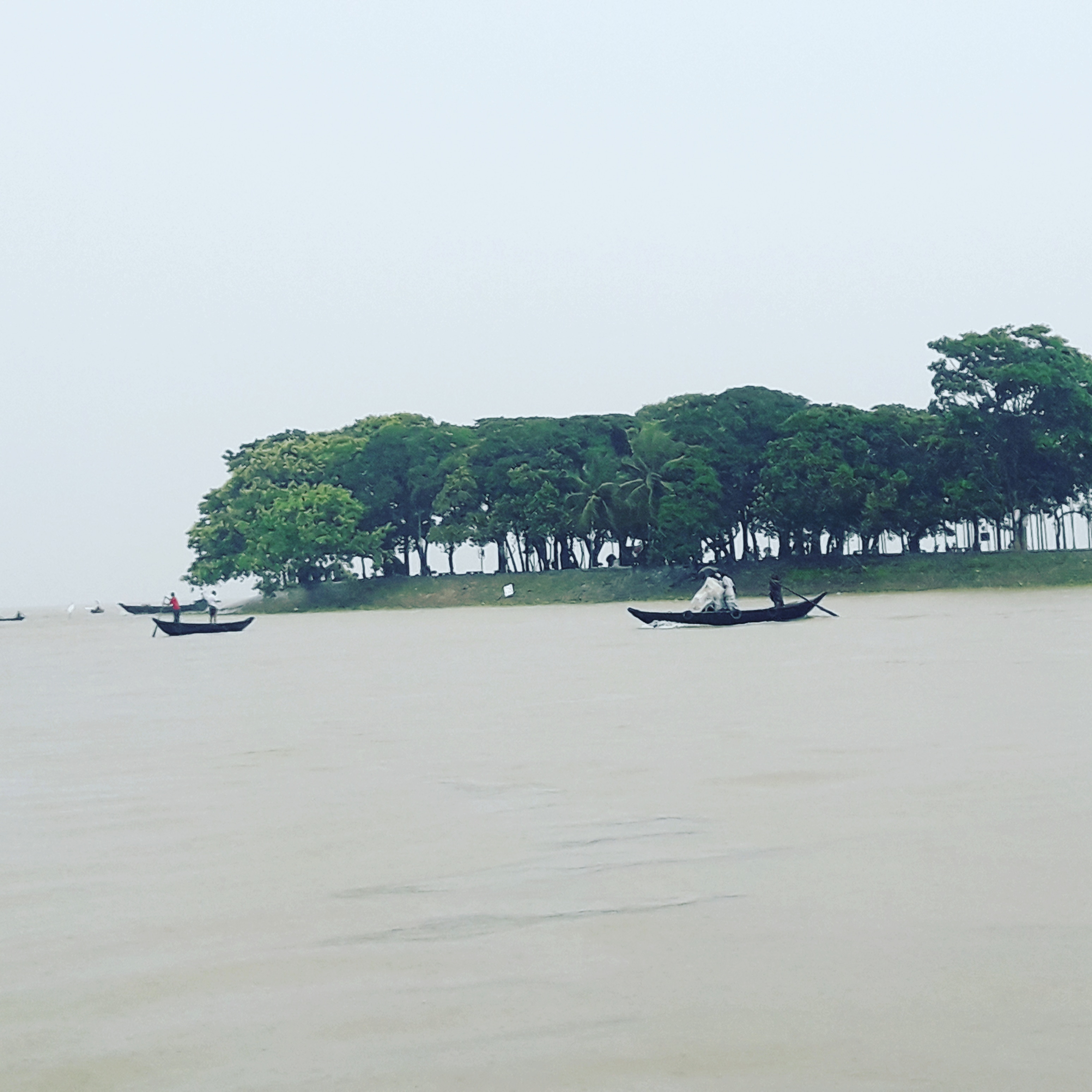
The Baro Station fish ghat in Chandpur, one of the main hilsa landing centres in Bangladesh, was in crisis in the middle of January 2026, Jagonews24 reported on 14 January. Traders and fishermen told the paper's district correspondent that hilsa supply at the ghat had been falling steadily since January 2025 and had by then almost hit bottom: in past years about 150 to 200 maunds of hilsa used to arrive each day at that time of year, but daily supply was not reaching even 20 maunds. Prices had risen several times over, a hilsa of one kilogram was selling for Tk 4,000 to Tk 4,500, and wholesalers and traders said they were short of buyers.
The maund (mon in Bengali) is the traditional unit of weight in which fish is still bought and sold at the country's wholesale landings, and the traders' figures are given in it here as they gave them.
Supply at the ghat below 20 maunds a day
According to the report, the fall began in January 2025 and continued through the year. Even in the peak hilsa season of 2025, the expected quantity of hilsa was not caught in the Chandpur area. By January 2026 the supply had come down almost to nothing.
Fishermen told the paper that hilsa shoals were no longer seen in the Padma and the Meghna as they had been before, and that this had hit the Baro Station ghat directly. While supply had fallen alarmingly, prices had risen several times over, and the result was a shortage of buyers for the wholesalers (aratdars) and traders who work at the landing.
January is not the hilsa season, the report noted. Even so, in past years the ghat used to receive an estimated 150 to 200 maunds of hilsa a day at that time. In January 2026 the picture had changed completely: daily supply did not reach 20 maunds, which the report called rare in the history of the ghat.
The ghat's off-season trade had looked thin in earlier years too. In November 2024, a week after that year's breeding-season ban ended on 3 November, Prothom Alo found little hilsa in the markets of Matlab Uttar and Matlab Dakshin upazilas in Chandpur. Local fisheries officials told the paper that after spawning the fish move back towards the sea and that the pressure of water in the river was low at that time of year, while a fisherman from the Shatnal area said he was catching only five to seven fish a night, not enough to pay for his trawler's diesel. The difference in January 2026, as the traders described it, was the scale: the ghat was getting a small fraction of what it usually handled even in the lean months.
Prices beyond reach and buyers who turned away
With supply down, the price of hilsa had moved beyond the reach of ordinary people, the report said. In the market a hilsa of one kilogram was selling for Tk 4,000 to Tk 4,500. Medium-sized and small hilsa were also selling at high prices, so ordinary consumers were turning away from buying the fish.
Sumon Rahman, who had come to the ghat to buy hilsa, told Jagonews24 that hilsa was a favourite fish but was becoming an unwelcome one because of its price. At Baro Station, he said, the price was so high that he could not buy what he wanted or needed. The money that used to buy a medium-sized hilsa would not now buy even a small one, and the price of hilsa had gone beyond the reach of ordinary people, he said.
Hilsa trader Monsur Ahmen Mahin said that because prices were high, sales were falling and the arats were counting losses. Besides, fishermen were not getting the hilsa they expected even when they cast their nets, because there were no fish in the river. Prices were high mainly because few hilsa were reaching the ghat, he said, and he gave the market's prices as follows:
- hilsa of one kilogram: Tk 4,000 to Tk 4,500;
- hilsa under one kilogram: Tk 3,500 to Tk 3,800;
- small hilsa: Tk 2,000.
Another trader, Bijoy Sarkar, said there were almost no hilsa sales in the off-season. There were few hilsa at the ghat and the prices were high, so buyers came to the ghat but left without buying. "We traders want hilsa supply to increase, and prices to stay within reach," he said.
Nine days earlier, on 5 January 2026, the Dhaka Times correspondent in Chandpur had described the same shortage from another corner of the ghat. Hilsa roe was then selling in Chandpur for Tk 4,000 to Tk 4,200 a kilogram, up from Tk 2,700 to Tk 3,300 a few weeks before. Of the 10 to 15 arats at the ghat that make salted hilsa (nona ilish) and sell roe, only two were operating, because less hilsa had arrived than in the previous year. At these arats, workers cut soft hilsa and salt it, and the salted fish is stored for about a year before being sent to other parts of the country, while the roe is kept separately. One arat owner told the paper that roe had sold for Tk 3,000 a kilogram the year before, and the general secretary of the Chandpur Fish Traders' Cooperative Society said fish supply was below demand, which was why roe prices were high.
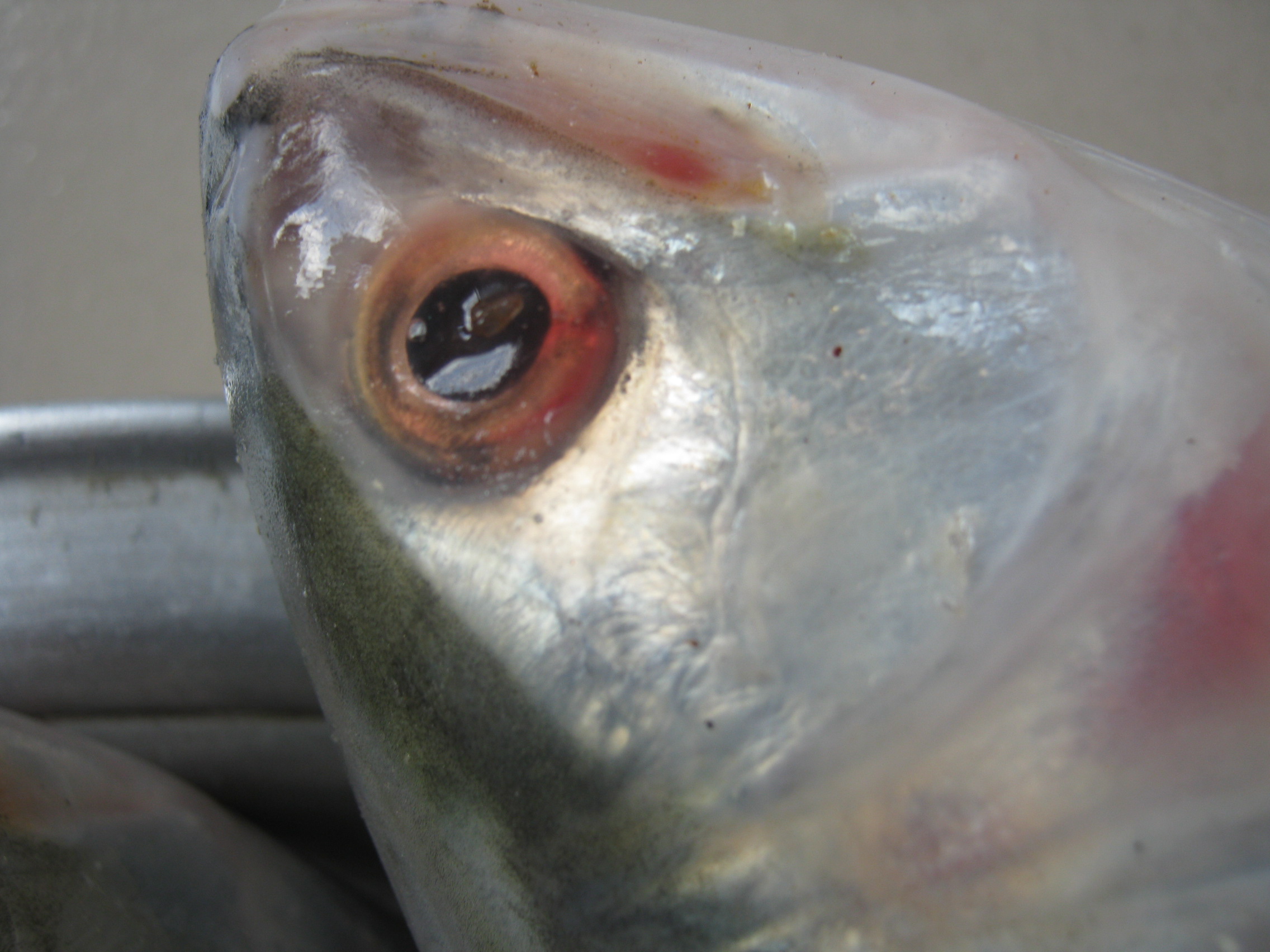
A year of short supply at Baro Station
The January report was the latest in a run of accounts of thin supply at the ghat during 2025. On 17 May 2025, after the two-month ban in the Chandpur river sanctuary ended, the news agency UNB reported that only about 50 maunds of hilsa a day were arriving at the Boro Station landing. Hilsa from the coastal areas of Hatiya, Bhola, Sandwip and Char Fasson were coming by pickup van at 40 to 50 maunds a day, while the trawlers, which usually bring 150 to 200 maunds in a trip, had not yet resumed. A fisheries official told the agency that July to September would bring abundant catches.
On 3 June 2025, The Daily Star's Bangla edition reported that a hilsa of 2 kilograms 480 grams had sold at an open auction at the Baro Station market for Tk 13,390, the highest price yet paid for a hilsa there, with at least 30 retail traders bidding. The traders' association said 100 to 150 maunds of hilsa would normally be expected each day at that time, but only 5 to 10 maunds were arriving; its general secretary likened the fish to a "golden deer", the Bengali image of something out of reach.
On 17 June 2025, Prothom Alo reported that the Chandpur district administration had written to the secretary of the Ministry of Fisheries and Livestock proposing that the price of hilsa be fixed, to bring the fish within reach of ordinary buyers. The letter said that some traders and aratdars in Chandpur and nearby districts set prices as they wished; the deputy commissioner confirmed the proposal to the paper. At the time a maund of one-kilogram hilsa was selling at the ghat for Tk 90,000 to Tk 95,000, and a trader said the market had been handling an average of 50 to 60 maunds a day. The report did not say whether the ministry acted on the proposal.
On 21 June 2025, the daily Desh Rupantor described the ghat's trade as being in crisis. A hilsa seller told the paper that four or five years earlier 2,000 to 3,000 maunds of fish had arrived at the ghat every day, against 40 to 50 maunds then. The president of the Chandpur Fish Merchants' Cooperative Society said about 3.5 lakh maunds of fish had been sold at the ghat in the 2020-21 fiscal year, that supply had fallen every year since 2022, and that a one-kilogram hilsa that had sold for Tk 900 to Tk 1,000 in 2020-21 was then selling for Tk 2,400 to Tk 2,500. He also said new arats opened elsewhere had cut the shipments reaching Baro Station. Wholesalers said they had advanced large sums to fishermen as dadon, the seasonal credit that ties a crew to an arat, and were losing money because the fish were not coming.
In early October 2025, on the eve of that year's breeding-season ban, Prothom Alo set the national picture beside these local reports. The paper's Barishal correspondent, citing Department of Fisheries data, put the hilsa catch in July and August 2025 at 29,519 tonnes, against 40,291 tonnes in the same period of 2024. Citing the Consumers Association of Bangladesh, it put the price of a kilogram of hilsa at Tk 417 in 2010, Tk 789 in 2019 and Tk 3,000 to Tk 3,500 in 2025, and it cited the Trading Corporation of Bangladesh as finding prices in 2025 about 33 per cent higher than in 2023.
Chandpur, its rivers and the Baro Station ghat
Chandpur is a district of Chittagong division covering 1,645.32 square kilometres, according to Banglapedia, the national encyclopedia of the Asiatic Society of Bangladesh. Its main rivers include the Meghna, the Dakatia, the Gumti and the Dhanagada, and the Meghna forms part of its western boundary. Chandpur was made a sub-division of Tripura district in 1878 and became a district in 1984. The 2011 census counted 2,416,018 people in the district, and the encyclopedia lists Ilish Chattor, a hilsa square in the town, among its sights. In its June 2025 letter, the district administration noted that the government had named Chandpur "the home of hilsa" in 2017.
The rivers explain the trade. Banglapedia describes how the Padma, the combined flow of the Ganges and the Brahmaputra-Jamuna, meets the Meghna near Chandpur sixteen kilometres from Shatnal, at a confluence about eleven kilometres wide in the rainy season. Below it runs the Lower Meghna, the combined stream of the Padma and the Upper Meghna, which the encyclopedia counts among the largest rivers in the world because of its wide estuary mouth. This is the water through which hilsa travel between the Bay of Bengal and their upstream spawning grounds.
The Baro Station ghat stands on the bank of the Dakatia, where it runs into the Meghna. It was set up in the British period because hilsa were plentiful there and the place was well connected, Desh Rupantor reported, and from it fish travel by road and rail to the rest of the country. Around the arats work porters who unload the trawlers and trucks, ice factories, packers, hotels and tea stalls, all of which depend on the volume of fish that lands. Since at least 2024 the ghat has also supplied a growing online trade: in October 2024 Prothom Alo reported that about 60 maunds of fish a day were being sent from Chandpur to all 64 districts through orders taken by phone and on Facebook, and the district fish traders' association estimated that trade at no less than Tk 5 crore a year.
Hilsa: the national fish and its life cycle
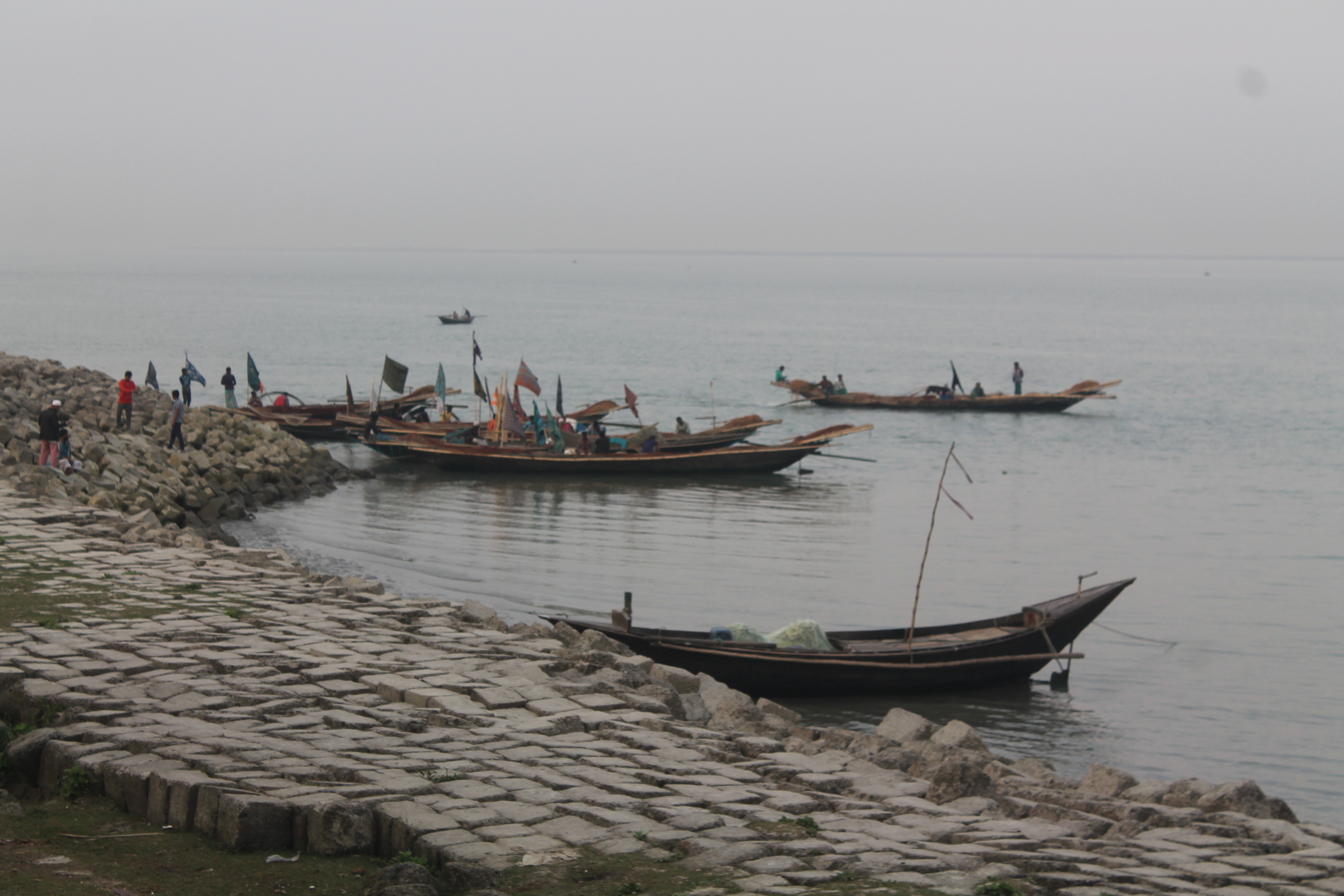
Hilsa, locally ilish, is the national fish of Bangladesh and a member of the herring family. Banglapedia notes that it can reach about 60 centimetres, that a large fish weighs about 2.5 kilograms, and that females grow faster and larger than males. The fish matures in one to two years, and a large female may produce up to two million eggs. In April 2025, at the start of that year's jatka conservation week, the fisheries ministry's figures as reported by TBS Bangla put a one-kilogram hilsa at usually 40 to 50 centimetres long and a fish of more than two kilograms at 60 to 62 centimetres.
The hilsa is anadromous: adults move from the sea up the rivers to breed in fresh water, the eggs float freely and hatch, and the young grow in the rivers before going down to the sea to feed, returning later as breeding adults. Banglapedia records that hilsa spawn more or less throughout the year, with a minor season in February and March and a major season in September and October. That calendar is why January, when the traders spoke, is a lean month at Chandpur: the main run of adults has spawned and gone, and the young fish moving down the rivers are protected.
Those young hilsa are called jatka. After hatching they spend several weeks in nursery grounds in the rivers before moving towards the sea, and they are heavily caught on the way, Banglapedia notes. For enforcement, the government treats a hilsa of up to 10 inches, or 25 centimetres, as jatka. Adult hilsa are caught mostly with fixed or drifting gill nets (chandi jal); on the rivers the fishing is done from small non-mechanised boats, and at sea from mechanised boats and trawlers. A chain of collector boats, wholesale markets such as Baro Station and transporting traders carries the fish to inland markets.
What the national figures showed before January 2026
At the national level, the official figures showed a long rise followed by a fall. In October 2023, the then fisheries and livestock minister said hilsa production had risen from 2.98 lakh tonnes in the 2008-09 fiscal year to 5.71 lakh tonnes in 2022-23, an increase of about 92 per cent over 15 years, TBS reported.
At the jatka conservation week briefing on 7 April 2025, the ministry put production in the 2023-24 fiscal year at 5.29 lakh tonnes, TBS Bangla reported. Hilsa made up about 11 per cent of the country's total fish production and contributed more than 1 per cent of gross domestic product, and more than 80 per cent of the world's hilsa was caught in Bangladesh's rivers, estuaries and sea, which put the country first among the 11 hilsa-producing countries. In October 2025, Prothom Alo reported that projections pointed to a further decline in the 2024-25 fiscal year, though it gave no figure.
Those national totals include the sea catch landed at the coastal ports. The Baro Station traders were describing something narrower: the river hilsa of the Padma and the Meghna, and the shipments from the south, that reach one historic inland market. Banglapedia gives the long background to that difference: until about 1972 the hilsa fishery was concentrated in the upstream rivers, and since then it has declined sharply there and moved to the downstream rivers, the estuaries, the coast and the sea.
The fishing rules in force in January 2026
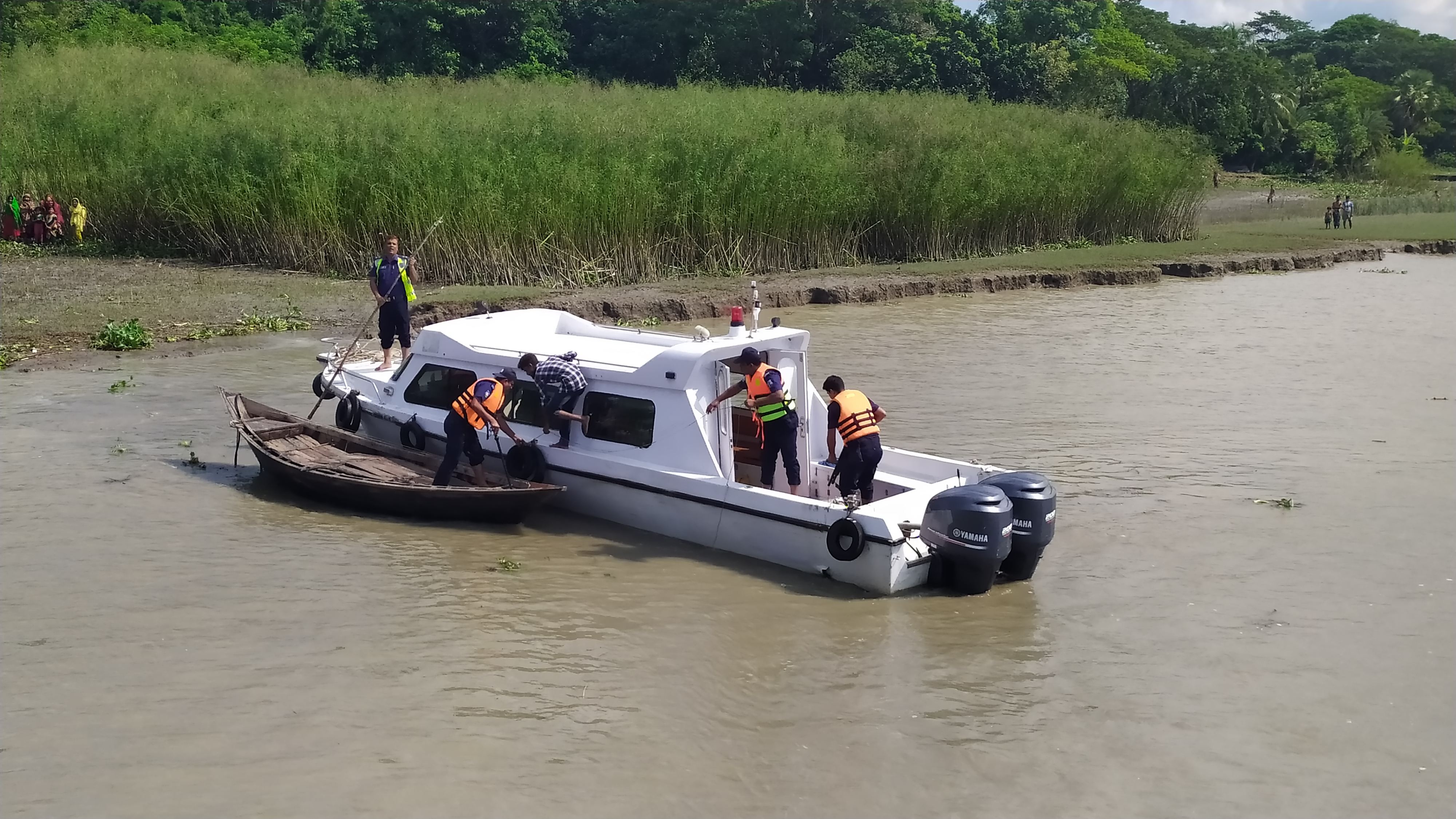
When Jagonews24's reporter visited the ghat, the country was in the middle of the annual ban on jatka. The eight-month nationwide ban began on 1 November 2025 and was to run to 30 June 2026, UNB reported. It prohibited catching, transporting, marketing, buying, selling and storing hilsa under 25 centimetres, and was enforced by the Department of Fisheries with the district and upazila administrations, the Navy, the Coast Guard, the river police, RAB and other agencies. Violators faced up to two years in prison, a fine of up to Tk 5 lakh, or both. Officials said the ban protected the young hilsa then in the coastal rivers and estuaries, hatched from the eggs laid during the breeding-season campaign of October 2025.
That campaign, the Hilsa Conservation Campaign 2025, was a 22-day nationwide ban on catching hilsa from 4 to 25 October 2025, timed to the main spawning season. An 11-day ban on catching brood hilsa around the full moon of the Bengali month of Ashwin was first imposed from 2008, and the country began its jatka conservation programme in 2003-04, Prothom Alo reported. The year before, the ban had run from 13 October to 3 November 2024, and the Chandpur deputy commissioner had announced round-the-clock monitoring of the Padma and the Meghna and a ban on ice factories opening in the district during that period, The Daily Star's Bangla edition reported.
Chandpur also has its own closed season. Its stretch of the Padma and the Meghna is a hilsa sanctuary, and in 2025 all fishing there was banned for two months, from 1 March to 30 April, along a 70-kilometre stretch from Shatnal in Matlab Uttar upazila to Char Bhairavi in Haimchar upazila, The Daily Ittefaq reported. The ban covered about 44,000 registered fishermen in the district, each of whom was to receive 40 kilograms of rice as Vulnerable Group Feeding (VGF) aid for four months, and its purpose was to protect jatka on their way to the sea.
In April 2025 the ministry also held a nationwide jatka conservation week from 8 to 14 April, under the slogan, in translation, "Stop catching jatka and hilsa will fill the nets", TBS Bangla reported.
Why the river catch was thin: traders and researchers
The people at the ghat in January 2026 gave a simple reason for the shortage: there were no fish in the river, and the fishermen's nets came up nearly empty. In June 2025, traders had also pointed to the new arats opened elsewhere, which took some of the shipments that once came to Baro Station.
Researchers and officials quoted before January 2026 pointed to longer-term pressures. In October 2025, the project director of the Hilsa Resource Development and Management Project told Prothom Alo that overfishing had depleted stocks, through illegal fine-mesh nets, local trawlers and the heavy harvest of larger fish, and that only 30 per cent of the stock should be harvested, leaving 70 per cent. An assistant professor of aquaculture at Sher-e-Bangla Agricultural University told the paper that coal-fired power plants and industry near the breeding grounds in the south had polluted the rivers and changed the fish's migration routes, and that hilsa is a highly sensitive species. The same report said a Department of Fisheries survey had found migration blocked at 17 points in the Meghna-Tentulia estuary and adjoining rivers, 14 of them on the Meghna, and that siltation and sandbars had reduced the depth of the southern rivers.
In February 2025, a former scientific officer at the Chandpur fisheries research centre, described by The Daily Ittefaq as a leading hilsa researcher, said hilsa numbers in the Meghna and the Padma had fallen because of pollution and excessive sand extraction, and that conserving jatka with the cooperation of all concerned would raise production.
Banglapedia lists the causes that fisheries scientists had long linked to the decline of the inland hilsa fishery:
- low water flow in the Ganges and heavy siltation since the Farakka Barrage was built in India;
- the heavy catching of jatka;
- blocked migration routes and the loss of spawning and nursery grounds;
- rising river pollution;
- mechanised boats in coastal waters that catch the fish before they can migrate upstream;
- flood control and irrigation works that cut off migration routes.
Photo: DelwarHossain / Wikimedia Commons (CC BY-SA 4.0)
Sources: Jagonews24, Dhaka Times, UNB, The Daily Star (Bangla), Prothom Alo, Desh Rupantor, The Daily Ittefaq, The Business Standard (TBS), Banglapedia
Comments
(0)