
Bangladesh's water resources are a highly promising source of fish, yet they have still not been brought into balanced production through proper use. Because open waters are mainly a management-dependent resource, technology-based farming there was not given the same importance in the past as in closed water bodies.
Fish production from the country's closed water bodies has increased through aquaculture, but it is not enough to meet the fish demand of a fast-growing population. Unless further promising areas are identified and brought into sustainable production, the gap between demand and supply will keep widening.
Cages in rivers
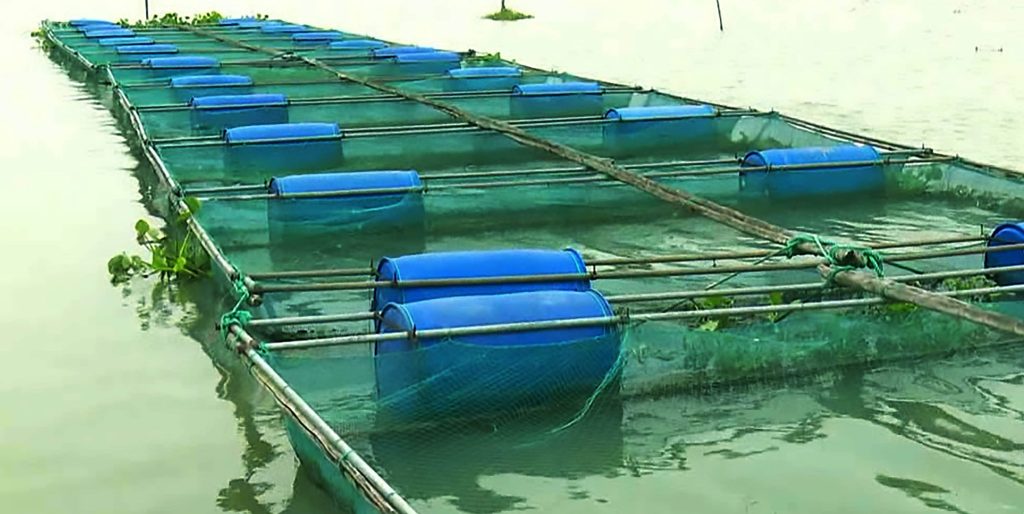
If fish production using suitable technology is emphasised alongside open-water management, it can play an important role in food supply and economic activity. From that point of view, cage fish farming in rivers is an encouraging technology.
Fish have been raised in cages of bamboo or netting since ancient times, though profit and loss were not much considered then. Commercial cage farming, however, began in the China Sea and the Indian Ocean about three decades ago.
For the past few years tilapia has been farmed in cages in various rivers in Bangladesh. To test the feasibility of farming native species such as pabda, gulsha, magur and shing in cages, the Bangladesh Fisheries Research Institute's Freshwater Station in Mymensingh took up a research programme.
Method for gulsha developed
After several years of continuous research, the station has developed a suitable technology for farming the endangered gulsha in cages. If the tasty, high-value gulsha is farmed in floating cages under sustainable management, it is expected to contribute significantly to raising fish production and meeting nutritional needs.
Source: Staff Correspondent. First published in Bengali on The Agro News.

Comments
(0)