
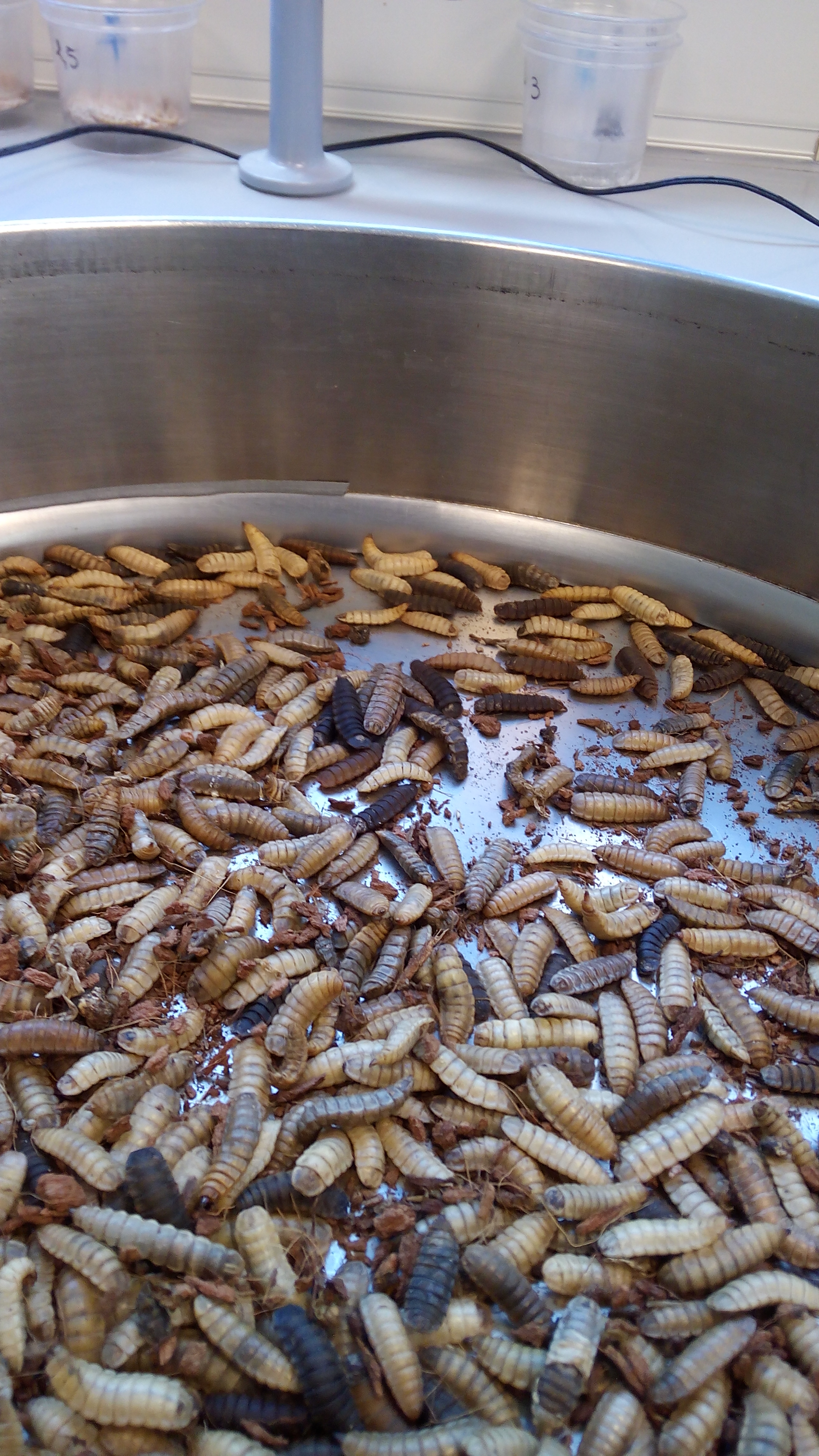
Khalilur Rahman, a young Bangladeshi living in the United Kingdom, brought insects from Britain and set up a farm in Bishwanath upazila of Sylhet. Jagonews24 reported on 8 September 2019 that he had built the black soldier fly farm, named "Haji Biocycle Company" (the report called the insect "parrot poka"), beside his home in Teghori village, Khajanchi union. It was said to be the first farm of its kind in Sylhet division.
Insects in mosquito-net cages, fed on food waste
Visiting on that Sunday morning, the reporter found five large mosquito nets made into five cages inside a tin-shed house, with the insects inside. They were fed on discarded leftover and rotten food. Khalilur said three kinds of insect were being raised: beetles, crickets and black soldier fly.
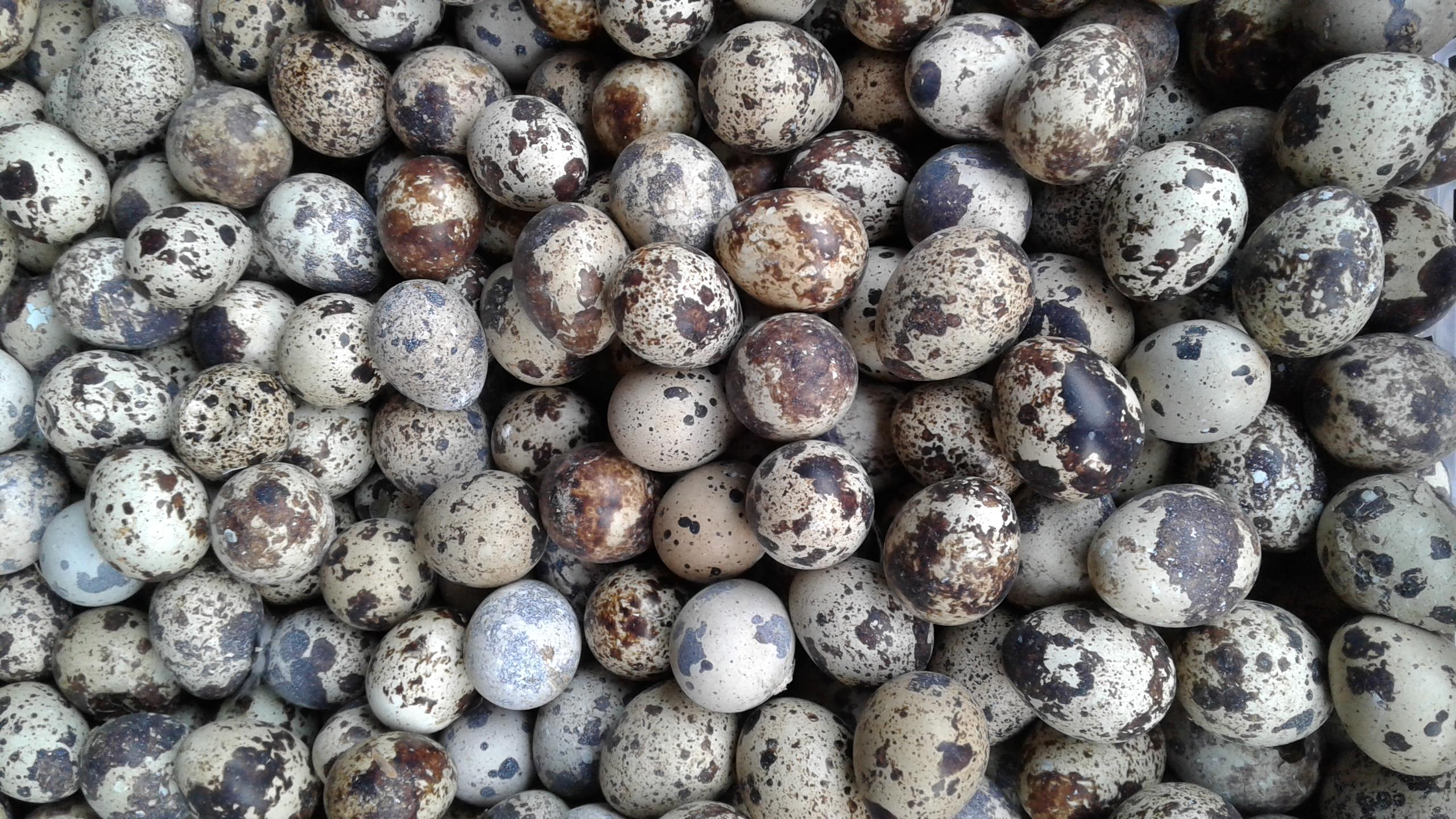
He said he had long wanted to do something in his homeland and first set up a quail and layer hen farm in Bishwanath, where he was born. Feed for the birds was expensive, so he looked for a cheaper source and settled on farming insects. Aiming to start a "bioconversion innovative" centre in Bangladesh, he bought 150 grams of insects from a farm in the UK for 250 taka, brought them home and began farming on 26 June that year. At the time of the report, he said, the farm held about 35,000 to 40,000 insects.
Feed for quail and hens, and the farmer's figures
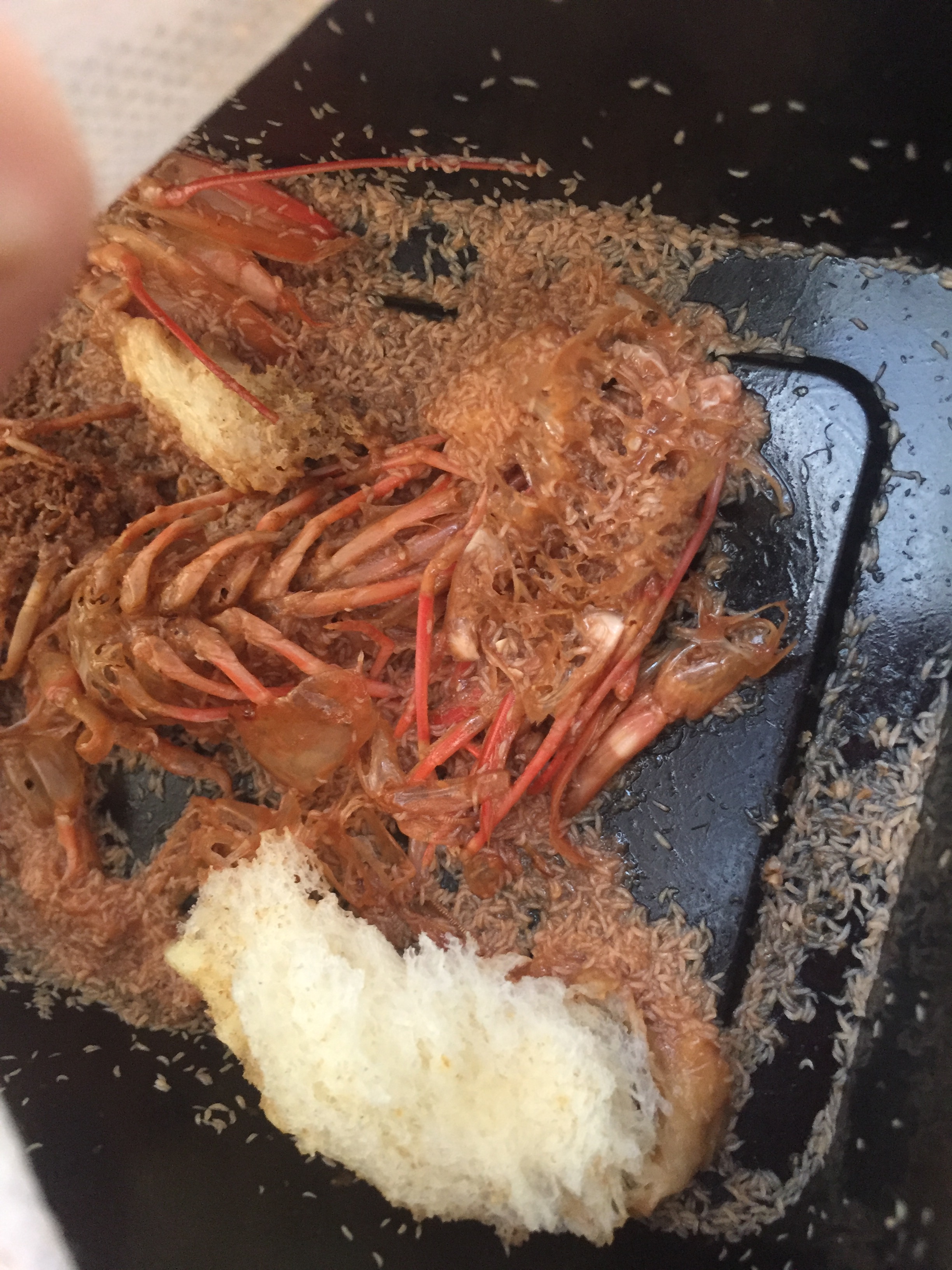
According to Khalilur, the insects contain 40 per cent protein and 20 per cent fat. A female lays 500 to 600 eggs; the larvae that hatch are fully grown in 21 days and are then fed to the birds. He said the insects die after laying eggs, and the dead insects are also a favourite food of quail and hens.
By his reckoning, insects for breeding could be sold at 12,000 taka a kilogram and as bird and poultry feed at 35 to 40 taka, which made the farm profitable, and he planned to expand it on a commercial basis. People of all ages were coming every day from across the upazila to see the unusual farm, and he said their interest made him even more committed to it. The local news site Biswanathnews24 reported the farm at the same time and described it as the first of its kind in Bishwanath.
What the black soldier fly is
The black soldier fly, Hermetia illucens, is native to the Neotropical realm of the Americas but has spread to almost every continent. Unlike the housefly, the adult has greatly reduced mouthparts and usually does not eat at all, living on fat stored as a larva. Neither the larvae nor the adults are considered agricultural pests or disease vectors.
The larvae grow on organic waste such as rotting fruit and vegetables, food scraps, fish offal and animal manure. A female lays roughly 200 to 600 eggs at a time, and the larval stage lasts 18 to 36 days depending on what the larvae are fed. Harvested prepupae and pupae are eaten by poultry, fish and pigs.
The animal feed database Feedipedia puts the larvae's crude protein at about 40 to 44 per cent of dry matter. Their fat content depends on their diet: 15 to 25 per cent for larvae raised on poultry manure and up to 42 to 49 per cent for larvae raised on oil-rich food waste. The larvae are also rich in calcium, and Feedipedia notes that products made from them can be useful ingredients in broiler diets.
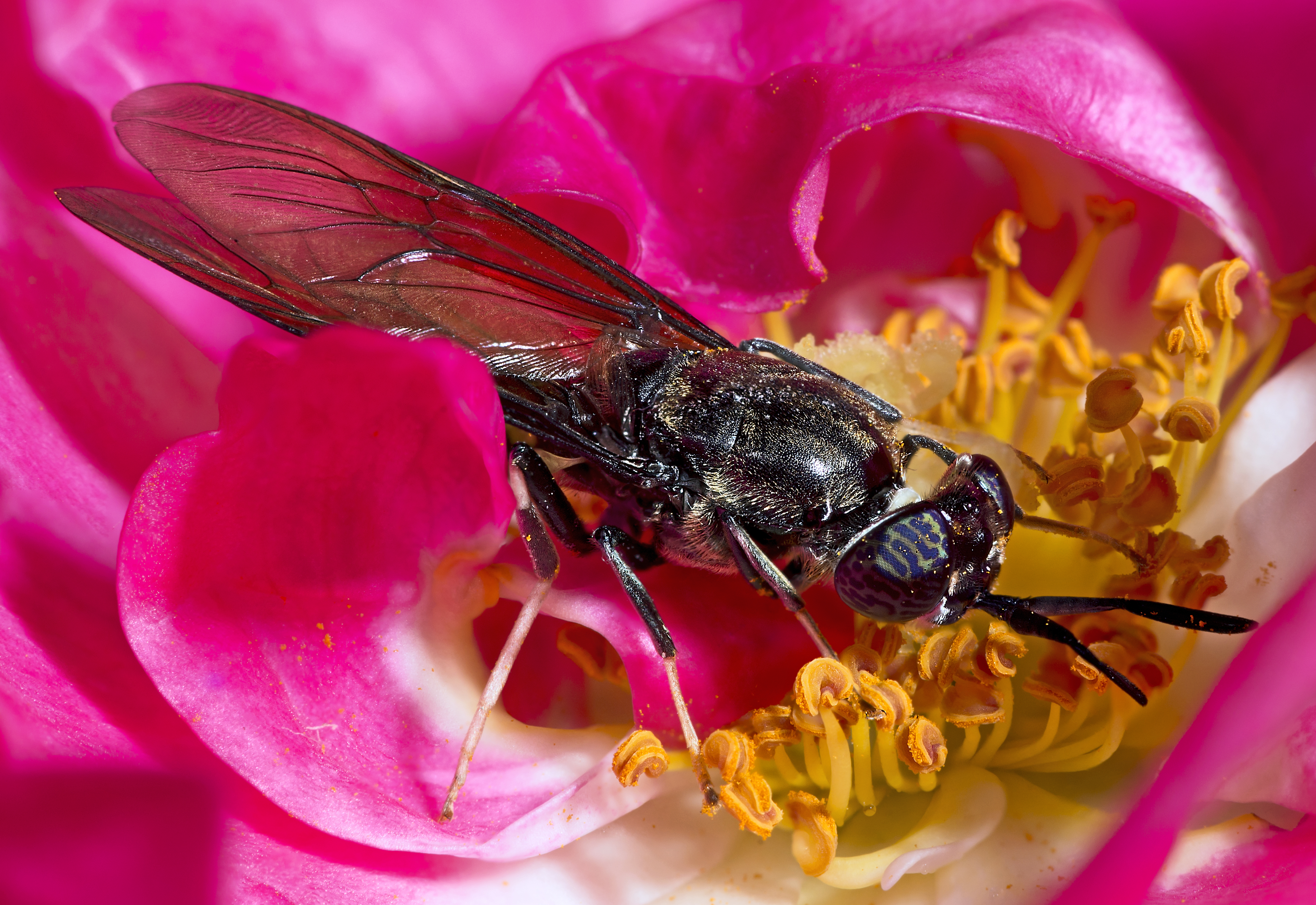
Photo: ShaunRomero / Wikimedia Commons (CC BY-SA 4.0)
Sources: Jagonews24, Biswanathnews24, Feedipedia (INRAE, CIRAD, AFZ and FAO), Wikipedia
Comments
(0)