
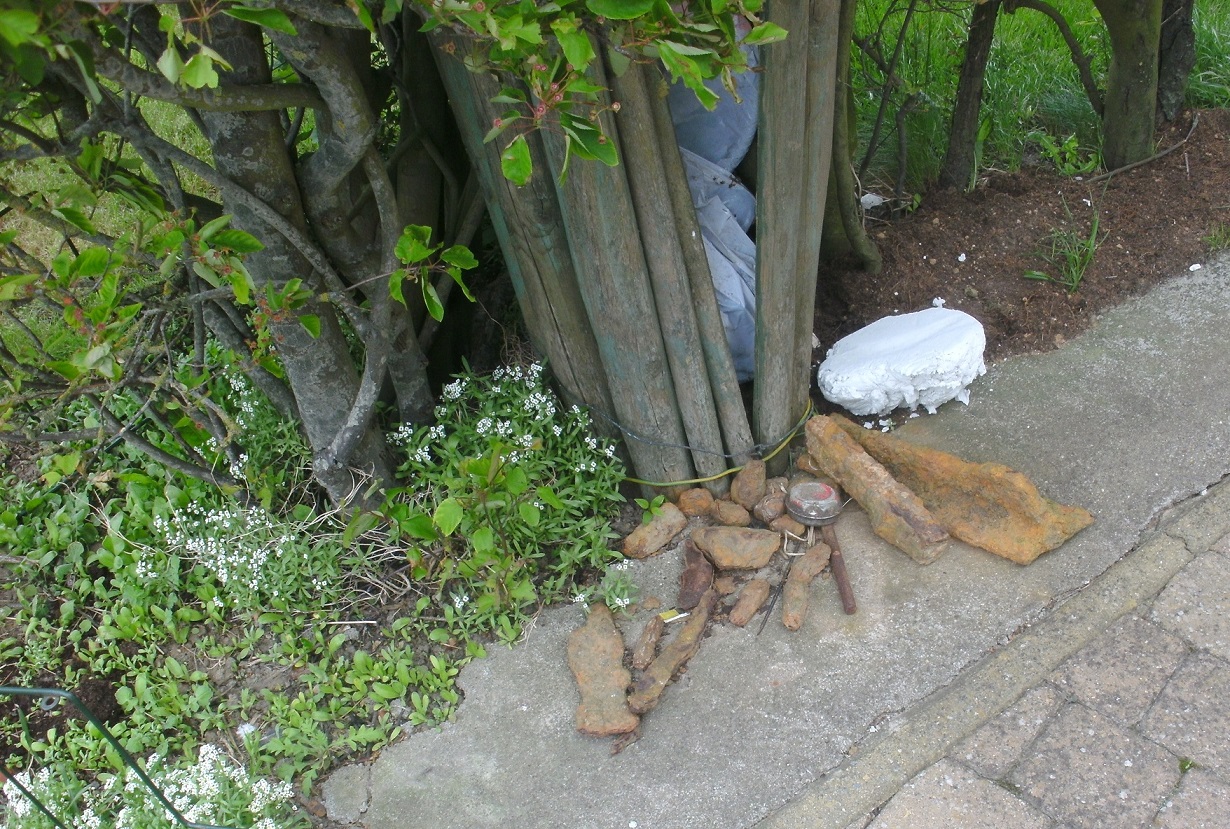
More than 110 years after the First World War, farmers in the fields around Ypres, in the Flanders region of Belgium, still pull artillery shells out of the soil every year alongside their crops, according to a report by Joel Reichenberger, senior editor at DTN/Progressive Farmer.
The Butaye family has farmed land near Ypres for three generations and finds dozens of shells a year, the report says. Many of the shells are still packed with gunpowder and shrapnel; others contain poison gas sealed in glass bottles more than a century ago, and they now often leak. Farmers who carry them without protection discover the mistake when their hands start to burn, so the family keeps gloves in every tractor.
The relics go beyond munitions. Stijn Butaye showed a German army boot, hobnailed and still heavy, dug from the clay. "At least there aren't any bones in this one," he said. "Sometimes, there are still bones."
The region was among the most fought-over ground of the war. German forces swept into neutral Belgium in August 1914 and the Allies held a line in front of Ypres; the front barely moved for four years. Nearly 200 cemeteries now break up the flat, fertile farmland, and a memorial arch in the city carries 55,000 names of soldiers whose bodies were never identified.
Below-ground danger is only part of the farmers' worry. The report describes frustration with politicians seen as unsupportive of agriculture, a shortage of young farmers across the continent and land prices high enough to shut out those who want to expand. "It's too expensive for us," said Xavier Claeys, who farms a few miles from the Butaye operation. "Now, we must have investors. The farmers become slaves again."
The result, the report says, is farmers who are discouraged by today's economics on the surface and anxious about what lies under it, and who can only work their fields with care.
Photo: ViennaUK / Wikimedia Commons (CC BY-SA 4.0)
Source: DTN / Progressive Farmer

Comments
(0)