
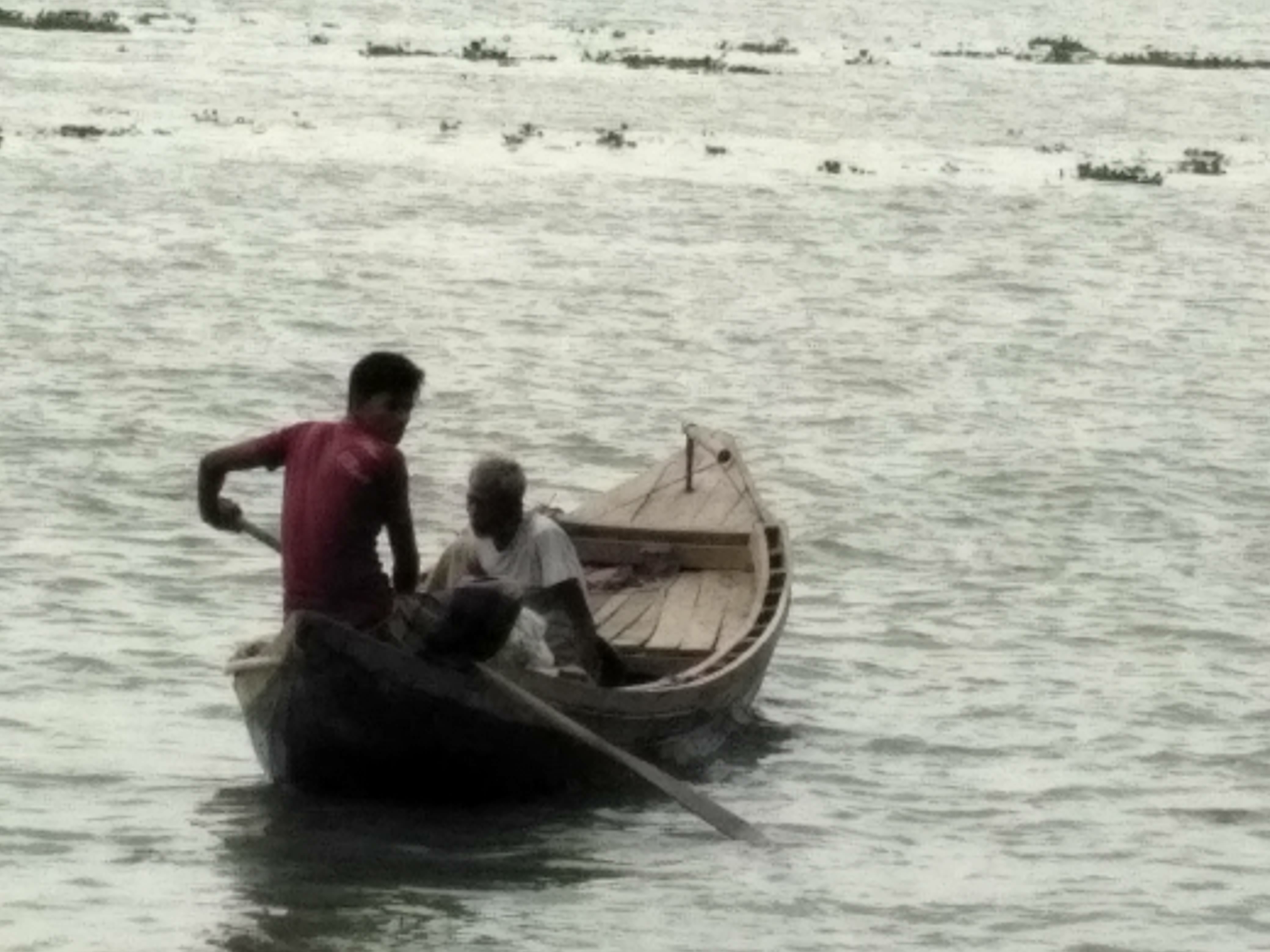
Seized jatka, the juvenile hilsa that Bangladesh protects for eight months of every year, was looted from the compound of the Barishal divisional office of the Department of Fisheries at around 10pm on Friday, 7 November 2025, Jagonews24 reported the next day. Hundreds of people entered the compound while the fish was being handed out, and four members of the Ansar who were on duty there tried but failed to bring the crowd under control. Witnesses alleged that officials had set cartons of fish aside and put out only a little for distribution; the Barishal district fisheries officer said some fish had been looted but denied that staff had held any back.
The incident came one week into the nationwide ban on catching and selling jatka, which began on 1 November 2025, and less than a fortnight after the end of the 22-day ban that protects breeding hilsa every October. It showed how much pressure surrounds a fish that is at once the country's national fish, the livelihood of hundreds of thousands of fishing households and, when seized from illegal catches, a free handout that poor families queue for.
What happened at the divisional fisheries office
According to the Jagonews24 report, the trouble began in front of the fisheries office, where jatka seized by the authorities was being distributed. Inquiries by the paper found that, during the distribution, fisheries officials were accused of setting cartons aside and handing out only a small amount of fish. That accusation caused an uproar at the gate.
At one point, the report said, an agitated crowd spent more than an hour looting the jatka. With men and women crowding in, the area went completely out of control, and the four Ansar members on duty could not stop it despite their efforts. The report did not say how much fish was taken, where the seized jatka had come from, or whether anyone was hurt.
Jagonews24's headline called the seized fish hilsa and its text called it jatka. Under the rules in force at the time, any hilsa shorter than 25 centimetres counted as jatka, and every stage of trade in it, from catching to storing, had been banned from 1 November 2025.
What witnesses alleged and what the fisheries officer said
Several women who said they had witnessed the incident told Jagonews24 that the officials had cheated. In their account, the officials kept cartons full of fish, put a small amount out in front and then opened the gate. They also alleged that sacks full of jatka had been given to people from several madrasas, while poor people who had stood waiting got nothing. These are the witnesses' allegations as the paper reported them; the report did not carry any independent finding on them.
A witness named Idris Howlader gave the paper his own count. "There were 10 to 12 cartons of fish," he said. "But when the gate was opened to distribute one carton's worth, the free-for-all began. The Ansar members could not stop it despite trying."
Barishal district fisheries officer Ripon Kanti Ghosh told the paper that some fish had been looted during the distribution among the needy, and that four Ansar members had been on duty at the spot. He denied the allegation that staff had set fish aside. The report did not say whether any inquiry into the incident had been ordered.
The eight-month jatka ban that began on 1 November 2025
The fish at the centre of the scuffle was protected by one of the longest fishing restrictions in the country. A countrywide ban on catching, trading and marketing jatka came into force on 1 November 2025 and was to remain in force until 30 June 2026, according to a press release of the Ministry of Fisheries and Livestock reported by The Daily Star that day. The ban aimed to boost the production of hilsa and to conserve the species sustainably.
During those eight months the ministry declared it an offence to do any of the following with hilsa smaller than 25 centimetres, which The Daily Star described as about 10 inches:
- catch it;
- transport it;
- market, buy or sell it;
- exchange it;
- store it.
According to the ministry, violations were punishable under the Fish Protection and Conservation (Amendment) Ordinance, 2025 and the Fish Protection and Conservation Rules, 1985, with up to two years of rigorous imprisonment, a fine of up to Tk 5 lakh, or both. To enforce the ban, district administrations, the Department of Fisheries, the Coast Guard and the river police were to run joint drives in rivers and coastal areas. Patuakhali district fisheries officer Kamrul Islam told The Daily Star that coordinated drives would continue throughout the period.
The jatka season is also when the Department of Fisheries holds its annual Jatka Conservation Week. In April 2025 the week was opened in Barishal at Bell's Park, where thousands of fishermen from across the division gathered under the slogan "Stop catching jatka today, catch nets full of hilsa tomorrow", followed by a boat rally on the Kirtankhola river, The Daily Star reported on 8 April 2025. At that event, fish traders' and small-scale fishermen's associations demanded a ban on the production and marketing of illegal nets and an end to irregularities in the distribution of relief rice.
How seized jatka is usually handed out
Reports from the same coast in 2025 show that fish seized during the bans was usually given away under official supervision. In June 2025 the Coast Guard seized 40 maunds of jatka at the Patharghata fish landing centre in Barguna, and the Patharghata upazila fisheries officer said the fish was later distributed among orphans under the supervision of the fisheries department, The Daily Star reported.
Days before the Barishal incident, The Daily Star reported on 6 November 2025 that a joint team in Amtali upazila of Barguna seized 1,500 kilogrammes of jatka worth around Tk 9 lakh the previous day from the luggage compartments of three passenger buses on the Amtali-Kuakata regional highway. The fish was being taken from Kuakata to Dhaka, and was later distributed among local orphanages and underprivileged families. The team, acting on a tip-off, was made up of members of the navy, the police and a senior fisheries officer.
Against that background, the allegation raised by the women in Barishal was about who received the fish: in their account, sacks went to madrasa representatives while poor people at the gate received nothing. The district fisheries officer described the handout as a distribution among the needy.
The October ban that protects breeding hilsa
The jatka ban follows the main spawning ban. In 2025 the government banned catching, transporting, storing, selling and marketing hilsa across the country for 22 days, from 4 to 25 October, to let brood fish spawn safely during their peak breeding season. The Daily Star reported on 3 October that the ban took effect at midnight under a notification issued by the Ministry of Fisheries and Livestock on 24 September, and the government called the drive the "Hilsa Conservation Campaign-2025".
When announcing it on 28 September, the fisheries and livestock adviser said the campaign would be enforced by fisheries officials together with the navy, the air force, the coast guard, the river police and other law enforcement agencies, UNB reported. To support affected fishermen, the government said it would distribute vulnerable group feeding (VGF) rice to 620,140 fishing households in 165 upazilas of 37 districts, 25 kg for each family, a total of 15,503.50 tonnes.
Enforcement in Barishal was hard. Between 4 and 7 October 2025, according to the Barishal divisional fisheries office, the authorities jailed 57 people, collected fines of Tk 2.08 lakh, and seized 604 kg of hilsa and illegal nets worth Tk 1.82 crore, after inspecting 832 markets, 810 landing stations and 467 river points. In early October, patrol teams in Bakerganj and Hijla faced resistance, with fishermen hurling stones, and seven people were arrested and local weapons seized, the district fisheries officer told The Daily Star. Officials said drone surveillance made the monitoring more effective that year.
Fishermen, for their part, said the help was not enough. The Daily Star reported on 7 October 2025 that Bangladesh had about 17 lakh registered fishermen, around 7.42 lakh of them involved in hilsa fishing, according to the Department of Fisheries, but that limited allocations meant assistance could reach only 6.2 lakh. A proposal to raise the rice support during the 22-day ban from 25 kg to 30 kg per fisherman had not been approved because of budget constraints, an assistant director of the department said.
Why the young hilsa matter
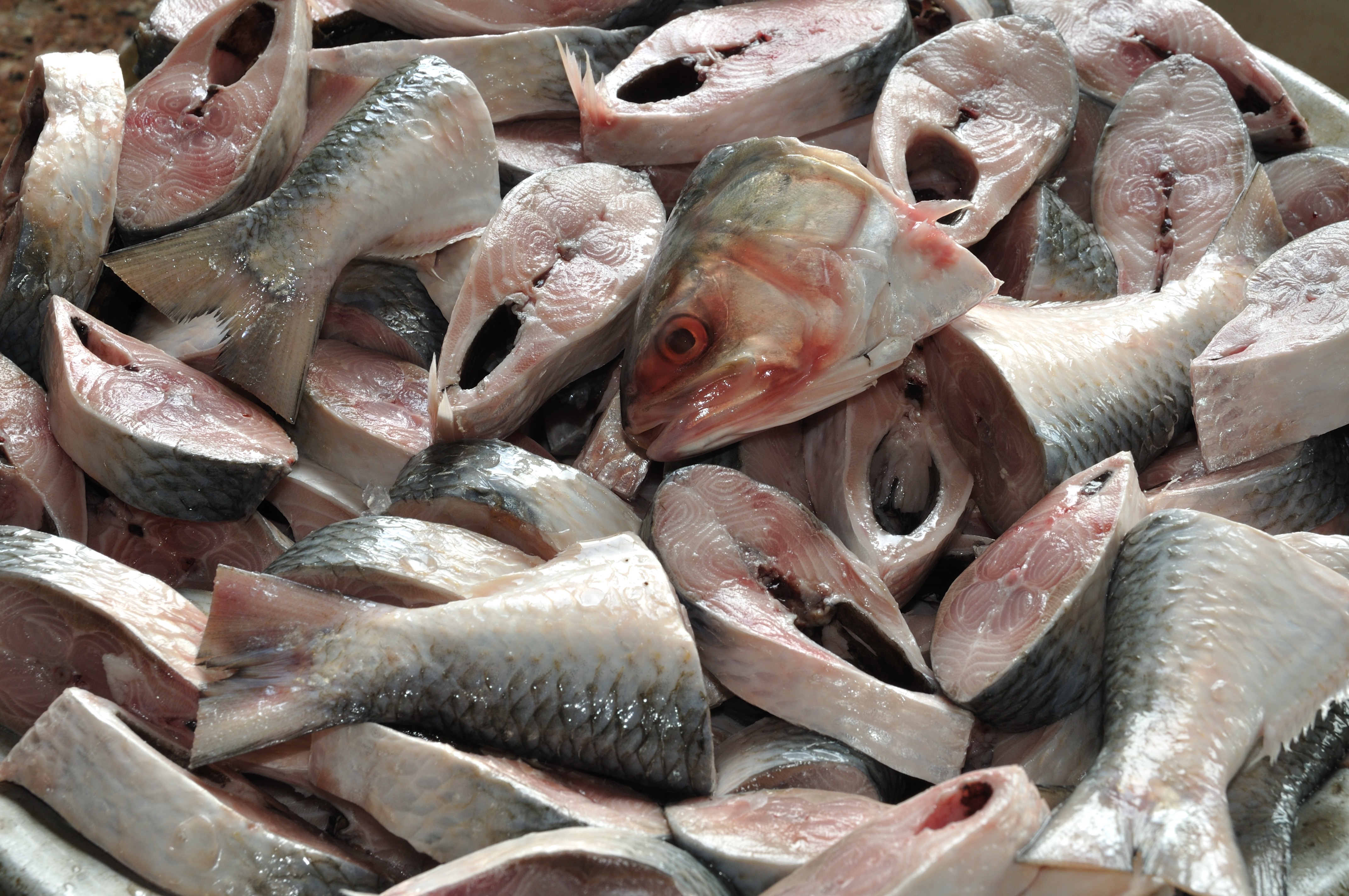
The hilsa (Tenualosa ilisha), locally known as ilish, is the national fish of Bangladesh. Banglapedia describes it as a fast-swimming member of the herring family whose body can reach 60 cm, though commonly found fish measure 35 to 40 cm, and which matures in one to two years. It lives in the sea, estuaries and rivers, and is anadromous: adults migrate up rivers to breed in fresh water, and the eggs float freely. Although hilsa spawn more or less all year, the major season is September to October, with a minor one in February and March.
After hatching, the larvae stay in their nursery grounds in rivers such as the Padma, Jamuna and Meghna. In about six to ten weeks they grow to roughly 12 to 20 cm, when they are known as jatka, and start descending to the sea to grow and mature, Banglapedia says. Catching them on that journey takes fish out of the stock before they can return as breeding adults; Banglapedia lists the indiscriminate exploitation of jatka among the causes of the decline of the hilsa fishery, along with siltation, disrupted migration routes, lost spawning and nursery grounds and river pollution.
The problem of jatka catching is not new. Banglapedia notes that a Bangladesh Fisheries Research Institute survey in 1992-94 estimated that every year, in the fishing season from January to April, about 3,500 to 4,000 metric tons of jatka were caught with gears such as jagat berjal, current jal and behundi jal, more than half of it in the Meghna. Local fishermen catch migrating adults from May to October and juveniles from February to May; adults are taken mainly with fixed or drifting gillnets (chandi jal), and in lesser quantities with berjal and lift nets (shangla jal). Although fishing regulations do not permit catching jatka, because it is very damaging to the hilsa fishery, the practice continued unabated, Banglapedia says.
FishBase, the global fish database, records that the species schools in coastal waters and ascends rivers usually 50 to 100 km, sometimes as far as 1,200 km, that it feeds mainly by filtering plankton, and that it is known as a fast swimmer, covering 71 km in one day. Its length at first maturity is given as 31.3 cm, and the species is listed as Least Concern on the IUCN Red List, in an assessment dated 23 January 2013, so it is not globally threatened even as Bangladesh worries about its river catch. Dr Muhammad Abdur Razzaq, an associate professor of aquaculture at Patuakhali Science and Technology University, told The Daily Star in October 2025 that a single hilsa can release up to 10 million eggs a year, mostly between September and October, and that catching hilsa before spawning disrupts the breeding cycle.
Research by the Bangladesh Fisheries Research Institute (BFRI) cited by the government in September 2025 found that the 2024 October ban had enabled 52.5 per cent of brood hilsa to spawn safely, adding an estimated 44.25 billion juvenile hilsa, or jatka, to the population. Those juveniles are the fish the November-to-June ban is meant to protect until they grow into full-sized hilsa.
Barishal and a falling hilsa catch
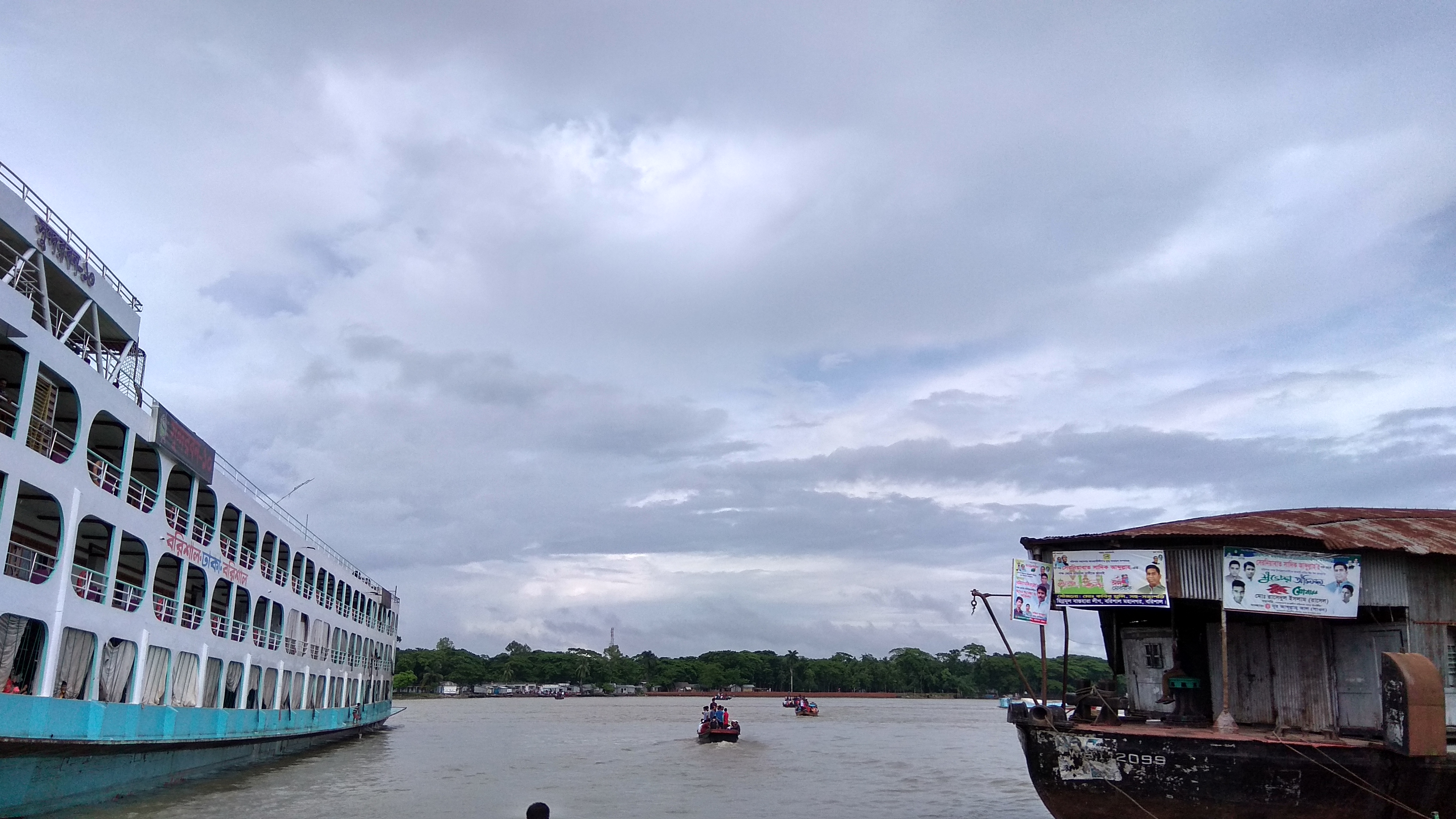
Barishal is the heart of the hilsa fishery. Opening Jatka Conservation Week in Barishal in April 2025, the fisheries and livestock adviser said that around 65.88 per cent of the country's total hilsa came from the Barishal division, The Daily Star reported. Barishal district alone covers 2,784.52 square kilometres; its main rivers include the Meghna, the Arial Khan, the Kirtankhola and the Tentulia, and of its ten upazilas Hizla is the largest, according to Banglapedia, which gives the district's population in the 2011 census as 2,324,310. Barishal became a division on 1 January 1993, and Barishal town stands on the Kirtankhola, an old river of about 160 km that is now also called the Barishal river.
Even so, the catch had been falling. According to Department of Fisheries data reported by the Barishal divisional fisheries office in April 2025, hilsa production in 2023-24 stood at 5.29 lakh tonnes, around 42,000 tonnes less than the year before and the lowest in seven years. The series, as The Daily Star reported it, ran as follows:
- 2018-19: 5.32 lakh tonnes
- 2019-20: 5.50 lakh tonnes
- 2020-21: 5.65 lakh tonnes
- 2021-22: 5.66 lakh tonnes
- 2022-23: 5.71 lakh tonnes
- 2023-24: 5.29 lakh tonnes
A BFRI scientific officer at the institute's riverine station in Chandpur blamed bad weather that kept fishermen ashore, overfishing, and a navigability crisis along migration routes such as the Meghna-Tetulia and Payra-Bishkhali, where depth had fallen to two or three metres although hilsa typically prefer water deeper than five metres. The deputy director of the Barishal divisional fisheries office acknowledged then that many fishermen continued to harvest jatka illegally, saying that guarding hundreds of kilometres of rivers and estuaries was nearly impossible. In August 2025 the fisheries and livestock adviser also named the continuous use of illegal nets and indiscriminate catching of jatka among the reasons for the decline.
The Ansar members on duty
The four guards at the fisheries office belonged to the Ansar. Banglapedia describes the Ansar and Village Defence Party as government-recognised disciplined voluntary forces, and explains that the Ansar was formed under the Ansar Act 1948, after partition, to help keep law and order, and has been under the Ministry of Home Affairs since 1973. The Ansar Bahini Act, the Battalion Ansar Act and the Village Defence Party Act, all of 1995, declared the Ansar Bahini and the Battalion Ansars disciplined forces.
The main function of the embodied Ansars, Banglapedia says, is to guard important installations such as industries, export promotion zones, airports, seaports, power stations, railway lines, bridges and launches, and the Ansar Bahini's duties include assisting the government or any concerned authority to maintain public order. In Barishal on 7 November 2025, that meant four members facing a crowd of hundreds at the gate of a government office.
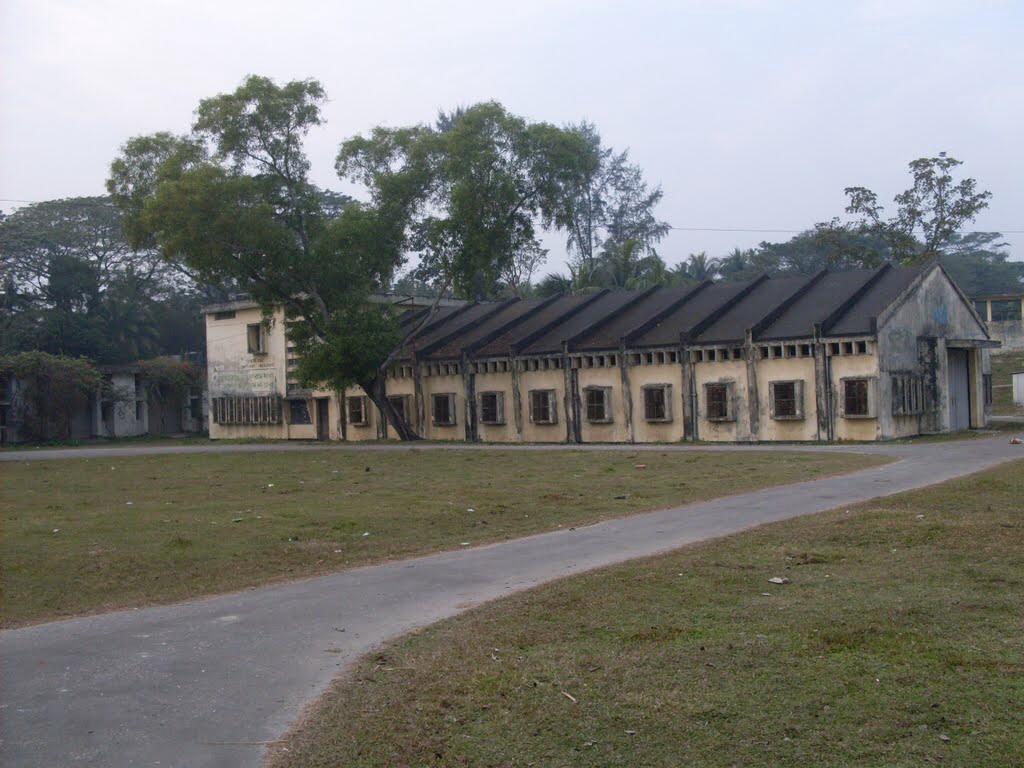
Photo: Jotiii / Wikimedia Commons (CC BY-SA 4.0)
Sources: Jagonews24, The Daily Star, United News of Bangladesh (UNB, via The Daily Star), Banglapedia, FishBase
Comments
(0)