

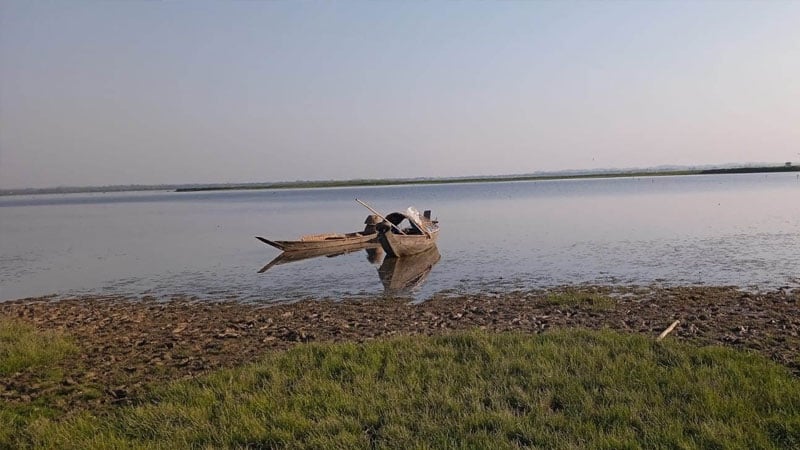
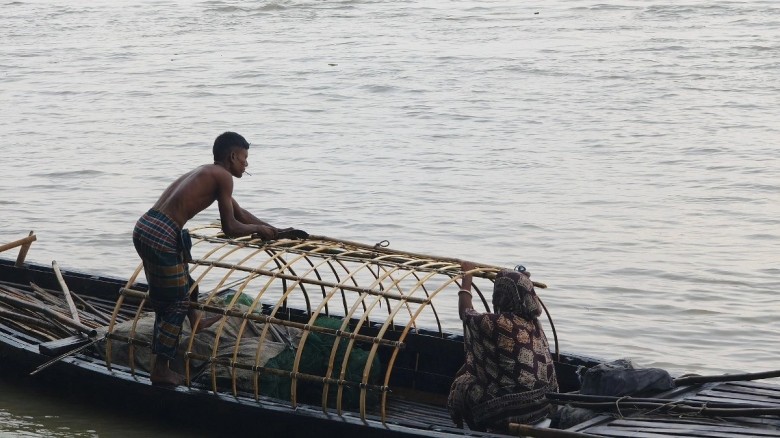
From June to October, the peak monsoon season, Barishal's rivers should be yielding plenty of hilsa, but the fish is not being found. Fishermen go out on the rivers regularly but return empty-handed, and the familiar bustle is missing from Barishal's wholesale hilsa markets.
Fisheries officials blame the adverse weather for the shortfall. They say such hostile weather has never been seen before and is why fewer hilsa are being caught in the rivers. Once the weather settles, they say, hilsa will be caught in shoals within a few days.
Empty markets, high prices
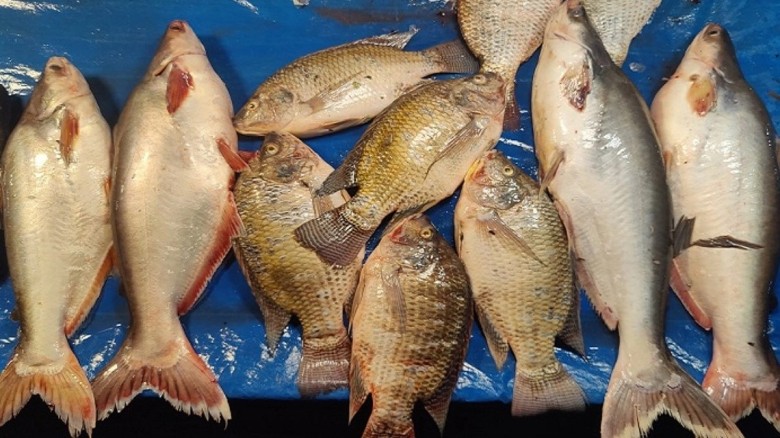
A visit to Port Road in Barishal city on Wednesday (3 July) morning found the wholesale markets empty of hilsa, and what fish did arrive was very expensive. Hilsa weighing one kilogram sold for nearly Tk 2,000. Fish of 800-900 grams sold at Tk 1,400-1,800 a kg, and those of 500-800 grams at Tk 1,000-1,250 a kg.
According to the Department of Fisheries, the hilsa season began on 1 July. The familiar monsoon conditions are the right time for hilsa to be caught in the rivers, so the markets should now be full, yet workers at the markets were seen sitting idle.
Shafiq, a Port Road worker, said that in past years the markets would be flooded with hilsa at this time. "We were so busy we did not even get time to eat. Now there is no fish and we sit idle. The fish that comes in does not even cover the cost of a meal," he said.
Worker Iqbal said there was no fish in the market even in the peak season, so they pass the time playing ludo and carrom.
Abdul Salam, a fishermen's leader from Tumchar in Chandramohan union of Barishal Sadar upazila, said he had never seen such a scarcity of hilsa in the month of Asharh. He claimed that the rivers have risen sharply, so nets are not catching as many fish as needed.
Md Robin, manager of wholesaler M/s Dulal Fish on Port Road, told Jago News that although fishing at sea is banned until 23 July, plenty of hilsa used to be caught in Barishal's local rivers at this time. But for about two years, hilsa has not been found even in the peak season, leaving wholesalers, traders and workers in trouble.
Wholesaler Jahangir Kabir said: "Year after year we have seen the Port Road market flooded with hilsa as soon as Asharh arrives. But even a week into the peak season, we are not getting the fish we hoped for."
Officials blame the weather
Dr Bimal Chandra Das, fisheries officer (hilsa) at the Department of Fisheries in Barishal, told Jago News that the hilsa shortage is now seen across all the rivers of the southern region, and it has hit the market. With no supply, hilsa prices have gone beyond the reach of ordinary people.
He said the 65-day ban on fishing at sea ends on 23 July, so the local rivers are now the only hope for hilsa, but the desired catch is not coming from them either. Rising river water from continuous rain and the adverse weather are why fewer hilsa are being caught, he said.
Nripend Nath Biswas, deputy director of the Department of Fisheries for Barishal division, also blamed the adverse weather for the poor catch in the peak season.
He told Jago News that global warming, the lack of water in the rivers at the right time and then sudden rises are causing this. "But there is plenty of hilsa in our rivers. Once this adverse weather is over, a lot of hilsa will be caught in shoals within the next few days, and prices will then come somewhat within reach of ordinary people," he said.
Source: Jagonews24. First published in Bengali on The Agro News.
Comments
(0)