

"I cast my net for six hours from morning and got one hilsa. There aren't fish in the river like before. If this goes on, I'll have no way to repay my debts except by selling my net. On top of that I hear the fishing ban starts in a few days. The ban doesn't work anyway; it should be set a little later." Yunus Majhi, a registered fisher in Mehendiganj upazila of Barishal, said this to Jagonews24, frustrated at not finding fish in the river as before.
He said that even after the government ban ends, every hilsa caught seems to have roe in its belly. So what does the government base the ban on when it fixes the spawning season, he asked. The ban should be set a month later, otherwise all the arrangements for it will be of no use.
Fishers want the dates tied to the river
Jalal Uddin, a fisher in Hizla upazila of the district, made the same demand. There are still few hilsa in the river and few roe-bearing fish, he said; allowing a few more days would bring better results. If the 22 days of the ban do not fully match the real breeding time of hilsa, there will be no benefit, so the government should reconsider.
Khorshed Alam, who fishes the Kirtankhola river in Barishal, said the same: "For the past few years I've seen large numbers of roe-bearing hilsa caught after the government ban. If hilsa still have roe after the ban, what is the breeding season based on? Setting the time just by looking at the calendar won't do. The ban must be set by looking at the real picture in the river."
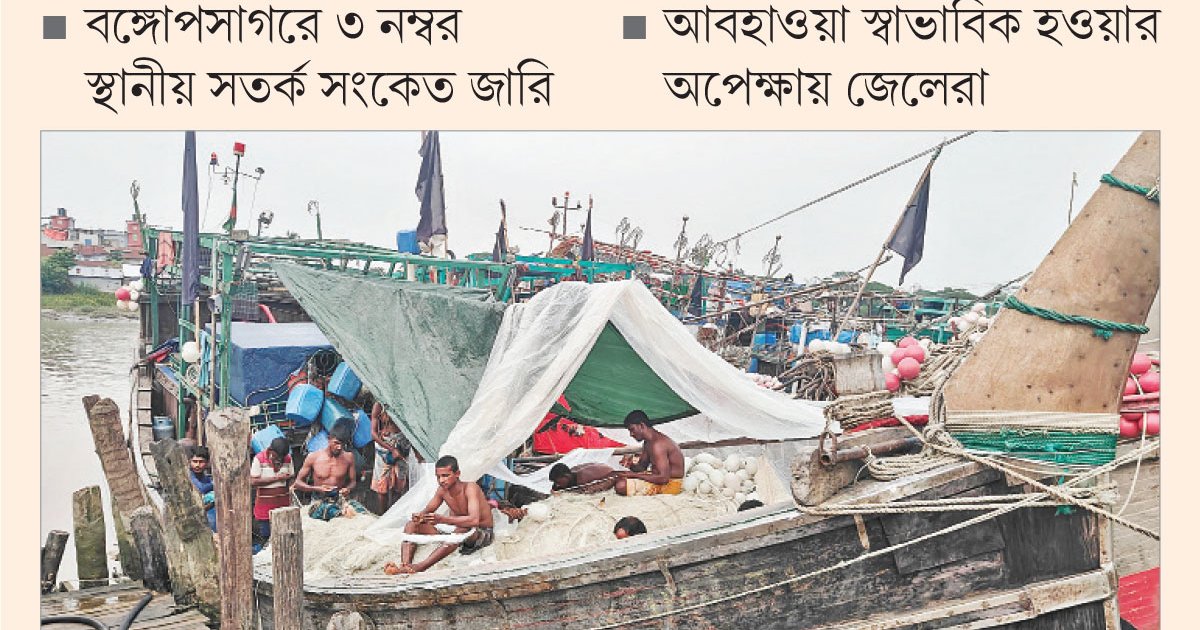
Fishers say hilsa are still not being found in the numbers expected. Some nets bring in a few hilsa, others come back almost empty. Meanwhile a 22-day ban to protect mother hilsa is due to start on 4 October. So, they say, the ban should be set not by fixed calendar dates but by taking account of river water conditions, hilsa movements and the actual spawning time.
The fishers say they have no objection to the purpose of the ban. They too understand that protecting mother hilsa will increase hilsa production in the rivers in future. But if the 22 days do not fully match the hilsa's real breeding time, how much benefit will there be?
Fishers said this period is more important for their income than other times of the year. If the ban starts now, they will miss fishing at the most important time. When it starts, workers connected with boats, nets and fishing will also have to sit at home. So they want the ban pushed back a few more days.
Traders raise support payments
Md Abdul Kader, a fish trader and dadan lender in Hizla upazila, told Jagonews24 that the government needs to work on setting the right time for the hilsa breeding season. For several years the ban has been imposed in October, but hilsa still carry roe at the end of October. If the breeding season were pushed back a little, everyone would benefit, he said.
He added that although government support is given during the ban, it is less than fishers need. So during the ban they worry about running their households, boat costs, net repairs and repaying debts, and support for fishers should also be kept in mind.
Another wholesaler, Md Rafiqul Islam, said the ban should stay, but it should be centred on the real breeding time of mother hilsa. That would ensure hilsa breeding and make it easier for fishers to accept the logic of the ban.
Proposal to delay by 15 days
Department of Fisheries officials say the matter is being considered without compromising the main aim of protecting mother hilsa, and the fishers' demand to delay the ban is being discussed at the relevant level.
Anisuzzaman, senior assistant director of the Department of Fisheries in Barishal, told Jagonews24 that discussions are under way at the relevant level on deciding in light of fishers' demands and conditions in the river. So that both fishers and hilsa benefit, a proposal to delay the ban by 15 days is before the divisional level, he said.
Source: Jagonews24. First published in Bengali on The Agro News.

Comments
(0)