
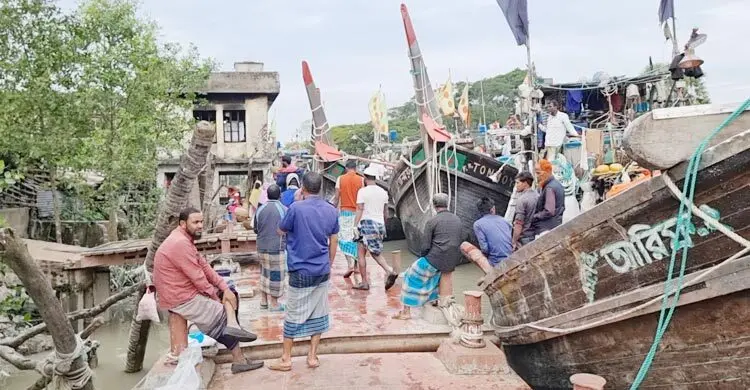
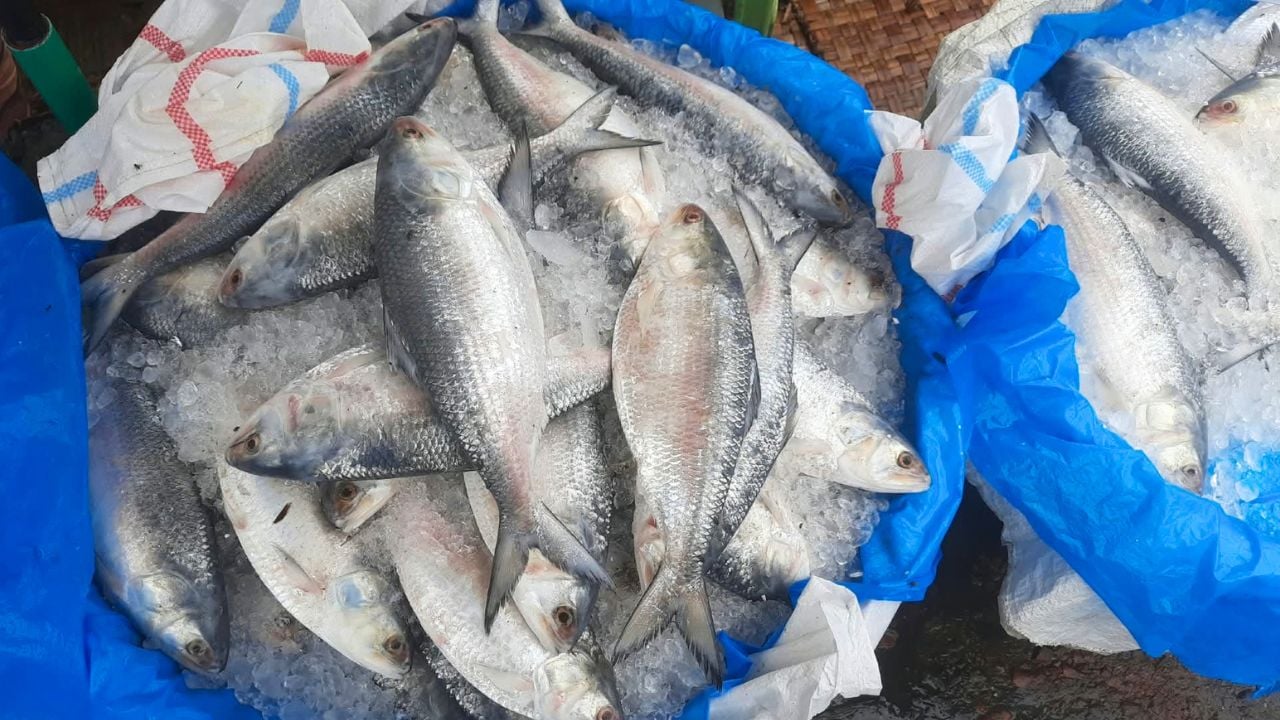
Fishermen in Barguna are at a loss after failing to catch the hilsa they expected at sea. Not only fishermen but others linked to the trade are also suffering. Burdened with debt, many trawler owners have stopped fishing, and the shortage of fish has caused a large shortfall in revenue at Patharghata, the country's second largest fish landing centre.
At the Patharghata landing centre, which should be buzzing with traders' calls, there is not enough fish. Fishermen and traders are frustrated by the small catches on trawlers returning from the sea. With costs not being recovered, their debt grows with every trip. Let alone repaying loans, fishermen are worried about feeding their families. Rows of trawlers have been tied up at the ghat.
Revenue down at the landing centre
According to the landing centre, the government collects revenue of 1.25 percent of the total value of fish sold there each day. Fish worth around a crore taka was sold daily on average, but now sales are only Tk 40-45 lakh. Revenue has fallen as a result: in the past two days it was only Tk 1 lakh.
Fishermen allege that because Bangladesh's fishing ban is not aligned with that of the neighbouring country, Indian fishermen fish freely during the Bangladeshi ban. And while some hilsa get a chance to spawn during the ban, eggs and small fry are caught in the nets of illegal trawling boats afterwards. As a result, hilsa and all species of fish are heading towards extinction, they say. The fishermen allege the administration stays silent because the trawling boats belong to influential people.
Fisherman Md Yunus told Jagonews that there used to be plenty of fish at sea after the ban, but this time there is none. Hilsa usually spawn during the ban and the young stay small, he said, but so many trawling boats operate at sea that even small amounts of eggs get caught in their nets and all the small fish die with them. If this continues, there will be no hilsa in future.
Trawlers tied up
On the plight of trawler owners, Abdul Jabbar Majhi told Jagonews that after the 22-day ban many owners have tied up their boats because there are no fish at sea. It now takes supplies worth about Tk 5 lakh to send one trawler to sea, yet many boats are not getting even Tk 50,000 worth of fish. He said many owners he knows have lost Tk 10-15 lakh in this one month, and unable to cope, many are keeping their trawlers idle.
Ismail, a wholesale fish seller at the landing centre, said trawling boats along with ghop, bada and net fishing gear are killing fish of all sizes. "We Bengalis used to be called 'mache-bhate Bangali' (fish-and-rice Bengalis); now we say 'pani-bhate Bangali' (water-and-rice Bengalis)," he said. The main reason there are no fish at sea is the trawling boats, he said, and unless they are stopped, future generations will have to be content with only stories about a resource as important as hilsa.
Lt Cdr GM Masum Shikder, manager of the Patharghata fish landing centre, said fishermen are not getting much fish at sea and are coming back empty-handed, so less fish is arriving at the centre and revenue collection has fallen. There is almost no hilsa, he said, adding that he believes the crisis will be overcome very soon.
Source: Jagonews24. First published in Bengali on The Agro News.
Comments
(0)