
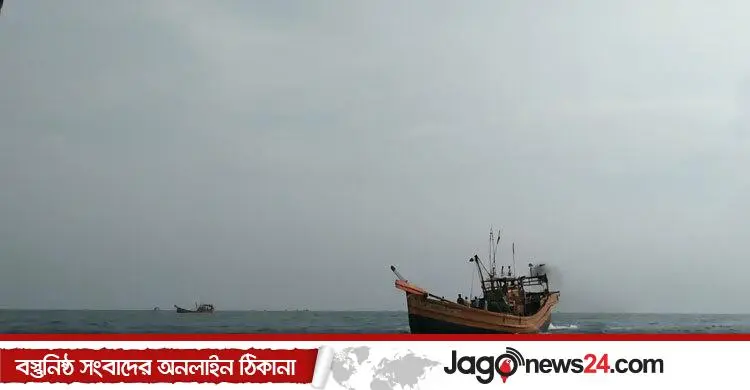
Indian fishermen keep fishing in their own waters while Bangladesh's fishing ban is in force. Fishermen in Barguna allege that Indian fishermen often break the law to fish in Bangladeshi waters, and that they use the ban as a chance to enter freely and take the fish. The fisheries department, however, says the navy is watching the sea and the air force the skies, so there is no scope for such complaints.
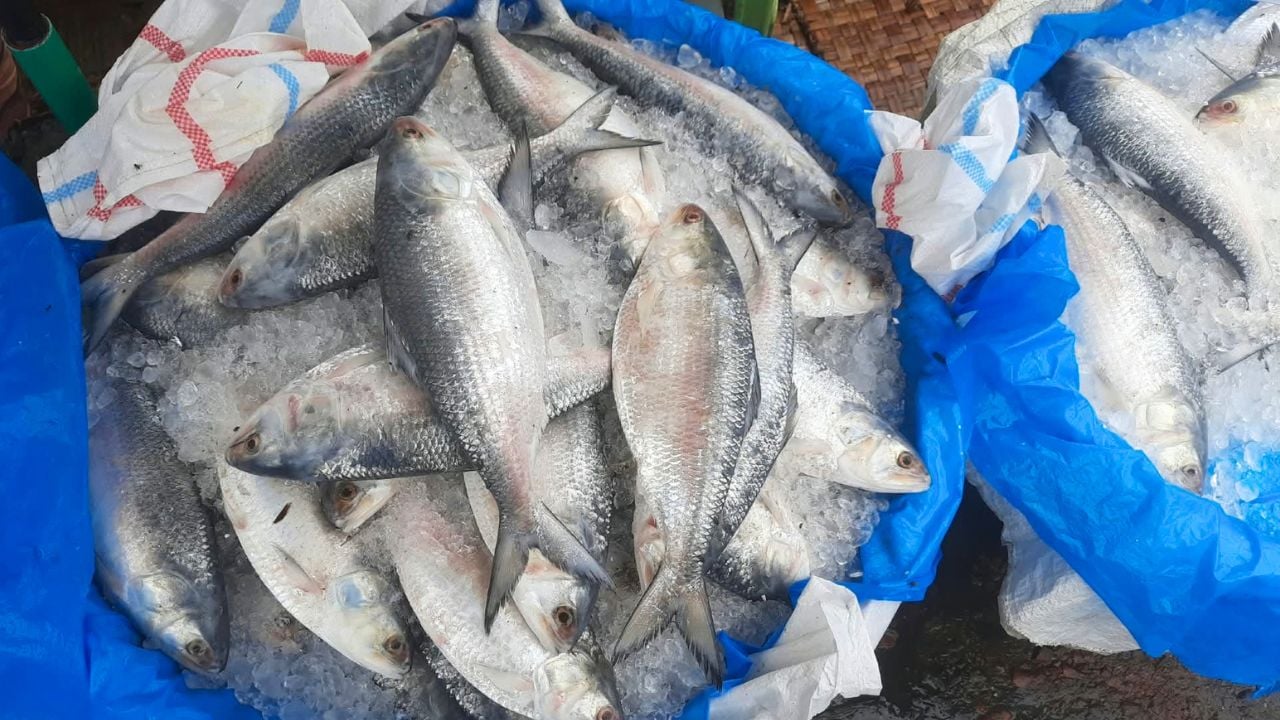
According to the fisheries department, the government has banned fishing in the sea and rivers for 22 days, from 4 October to 25 October, to protect hilsa and their breeding. In this period mother hilsa come from the sea into the fresh water of the rivers to spawn, then return to the sea. Catching, transporting, storing and selling hilsa in the sea and rivers is therefore completely banned.
Law broken, fish taken
About 86 per cent of the world's hilsa is produced in Bangladeshi waters and only 14 per cent in India and Myanmar. In 2014 an international court settled Bangladesh's 200-nautical-mile economic zone over 1,18,813 square kilometres of coastal sea, which is mainly where Bangladeshi fishermen are allowed to fish. But Indian trawlers have at various times entered Bangladeshi waters in groups in breach of the law, using advanced technology and small-mesh nets that take everything from large fish to fry. Most recently, on 14 July, the Bangladesh Navy detained two Indian trawlers and 34 fishermen for fishing illegally in Bangladeshi waters.
Abdur Rahim, a fisherman from Patharghata, told Jagonews: "When the government imposes a ban we follow the rules, but fishermen from the neighbouring country do not. Even outside the ban they come into our waters to fish. If we say anything they often beat us. Now that we are not at sea, they will take all the fish."
Rafiq Majhi of Barguna Sadar upazila described the same experience. "Every time the ban ends and we go to sea, we find no fish. Indian fishermen use advanced equipment and small-mesh nets and catch a whole shoal from one spot. We have one demand of the government: whatever it takes, do not let Indian or other neighbouring fishermen into our waters."
Call for an international agreement
Trawler owner Riaz Mridha called for international law to protect hilsa. "We observe the ban under Bangladeshi law, but fishermen from neighbouring countries fish the sea at that time. So there are two rules in one sea. Illegal local and foreign trawling boats are also changing where the fish feed. We want the Bangladesh government to sign agreements with all countries to protect hilsa, so that fishermen of every country observe the ban."
Golam Mostafa Chowdhury, president of the Barguna District Fishermen Trawler Owners' Association, said the 22-day ban is in force in Bangladesh but not in India. "So we fear Indian fishermen may use the chance to enter Bangladeshi waters as they did before. At one time Indian trawlers had taken over the sea. That is no longer the case, but it has not stopped completely. We want no fishermen from any neighbouring country to be able to enter our waters again."
District fisheries officer Md Mohsin said the navy and air force are patrolling regularly so that trawlers from other countries cannot enter Bangladeshi waters. "There is no scope for such complaints. This year we are working together to enforce the ban," he said.
Source: Jagonews24. First published in Bengali on The Agro News.
Comments
(0)