
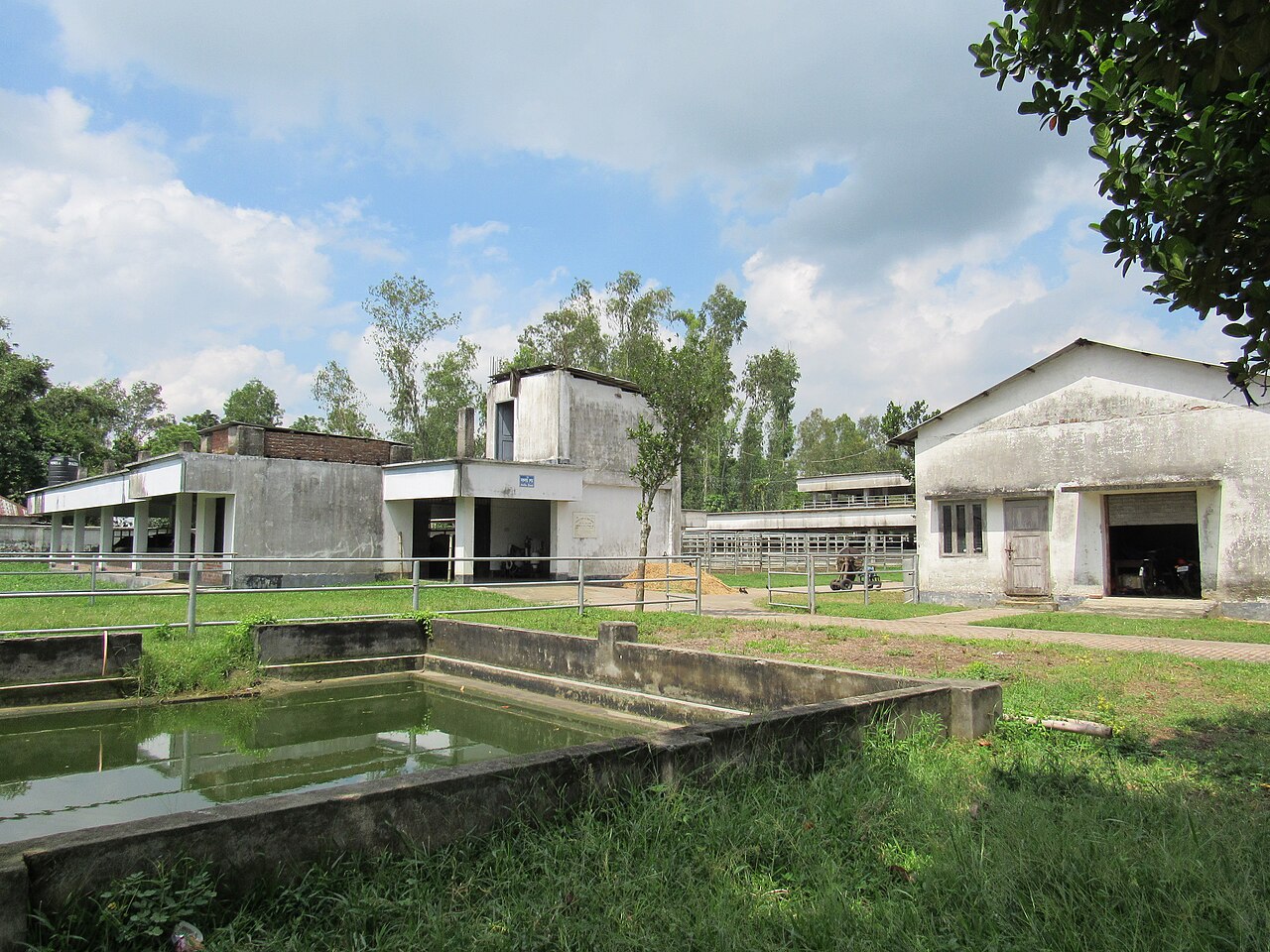
National Livestock Week 2026 runs until 28 November under the theme of building the country through export-oriented livestock. For the occasion, a senior information officer of the Ministry of Fisheries and Livestock set out the sector's latest figures in Desh Rupantor. In the 2025-26 fiscal year livestock contributed 1.81 percent of GDP, grew 3.30 percent, accounted for 16.56 percent of agricultural GDP and was worth about Tk 94,009 crore.
The same year the country produced 157.53 lakh tonnes (15.75 million tonnes) of milk, 90.70 lakh tonnes (9.07 million tonnes) of meat and about 2,509 crore (25.09 billion) eggs. At this year's Eid ul-Adha, 9,367,418 animals were sacrificed, all met from domestic production.
Private investment in the poultry industry is about Tk 48,000 crore. More than 200,000 commercial and smallholder farms produce some 68.8 million eggs a day, and about 6 million people work directly or indirectly in the industry, 40 percent of them women.
Vaccines are the weak point. The Livestock Research Institute (LRI) now makes vaccines against 17 diseases, but only 15 percent of national demand is produced at home. To cut the dependence, a new vaccine plant is planned in Bogura and the capacity of the existing plants in Mohakhali and Cumilla is being raised. To raise productivity, 13.6 million cattle were brought under artificial insemination in 2025-26, producing 7,057,000 calves.
Exports are the new opportunity. From July to October of the 2026-27 fiscal year, 8,649 tonnes of animals and animal products were exported for Tk 309 crore, to destinations including the United States, Canada, Vietnam, China, Hong Kong, Italy and Korea. Since 28 June, 93,900 hatching eggs have been exported to Nigeria for Tk 2.14 crore.
To compete abroad, the article says, the sector needs disease-free farms and zones, processing plants of international standard, cold chains, food safety and quarantine standards and international certification, as well as self-sufficiency in vaccines. As part of greener production, 87,536 biogas plants have been installed. The week's fair is open free from 9am to 8pm daily, with separate pavilions for exportable animal products and for technology.
Photo: Ibrahim Husain Meraj / Wikimedia Commons (CC BY-SA 3.0)
Source: Desh Rupantor

Comments
(0)