
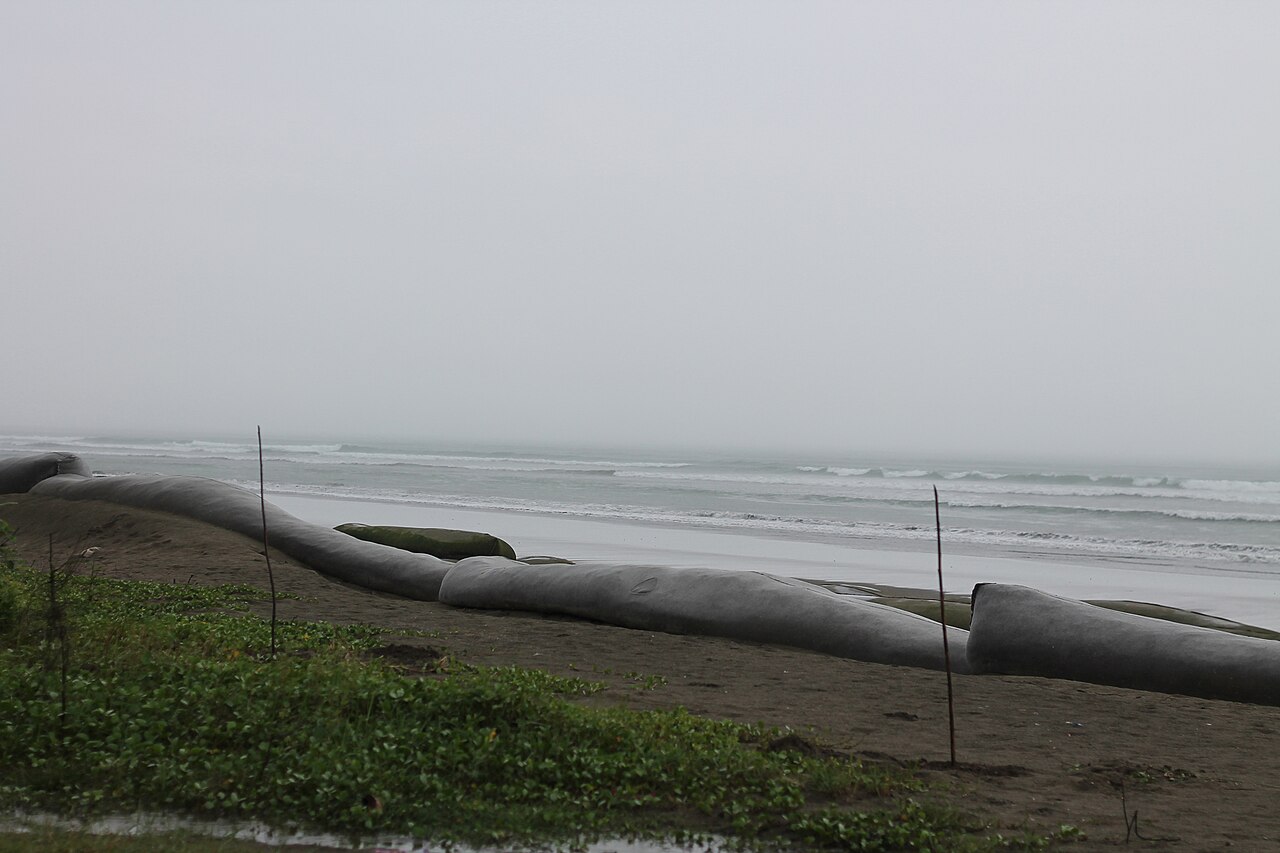
When a cyclone signal goes up, the first worry of the roughly 40 million people on Bangladesh's coast is the embankment. For people in Shyamnagar in Satkhira, Koyra in Khulna, Sarankhola in Bagerhat, Kalapara in Patuakhali and Patharghata in Barguna it is a long-familiar reality. Over the past two decades several thousand crore taka a year has been spent on building, repairing and maintaining coastal embankments, yet the same stretches keep breaking, Samprotik Deshkal reports.
Under the government's coastal zone management strategy, the coast covers 19 districts, and 48 upazilas in 11 of them are at high risk from cyclones, storm surges, salinity and tidal water. According to government and development agency figures, about 6,000 kilometres of embankment protect settlements, farmland and infrastructure in 139 polders.
The damage bills are large. Cyclone Sidr in 2007 partly or wholly damaged about 2,290 kilometres of Water Development Board embankment across 15 districts; the damage was put at about US$70.76 million and the cost of rehabilitation at US$104 million. Cyclone Remal in May 2024 hit 20 districts with losses of more than Tk 6,880 crore, and about 96 kilometres of embankment broke; farmland, fish enclosures and homes were also damaged.
The report cites Banshkhali in Chattogram: a project approved in 2015 at about Tk 251 crore grew in several stages to Tk 293.60 crore and was finished in 2022. Breaches were later reported in several sections, and a further embankment project worth Tk 874.57 crore has been reported for Banshkhali and Anwara.
Reliance on emergency repair is a large part of the problem: a breach is plugged for the moment with earth, sandbags or geobags, and the same spot fails again in the next monsoon. Water Development Board figures for one 122-kilometre coastal embankment show repairs at 6 to 22 places every year from 2018 to 2023, costing between Tk 71 lakh and Tk 2.44 crore a year, and a further Tk 1.25 crore allocated in 2024 for eight places damaged by Remal.
A 2020 study by Transparency International Bangladesh (TIB) put the financial loss in four climate and disaster projects at about Tk 191.45 crore, alongside alleged breaches of procurement rules, substandard materials and collusion. The report stresses that these are irregularities identified by research, not crimes proven in court, and that audits and investigations are needed to establish responsibility. Maintenance budgets have also lagged need: Tk 100 crore in 2003-04 and Tk 402 crore in 2009-10.
TIB executive director Iftekharuzzaman said investment in coastal embankments protects people's lives and property, farming and fisheries, but when the same embankment breaks again and again and needs repair every year, questions about value for money and long-term performance are natural. Success, the report argues, should be judged not by money spent but by how many years an embankment protects lives and property. The report is by Manik Muntasir.
Photo: Mohammad Rafi Saad / Wikimedia Commons (CC BY-SA 4.0)
Source: Samprotik Deshkal

Comments
(0)