
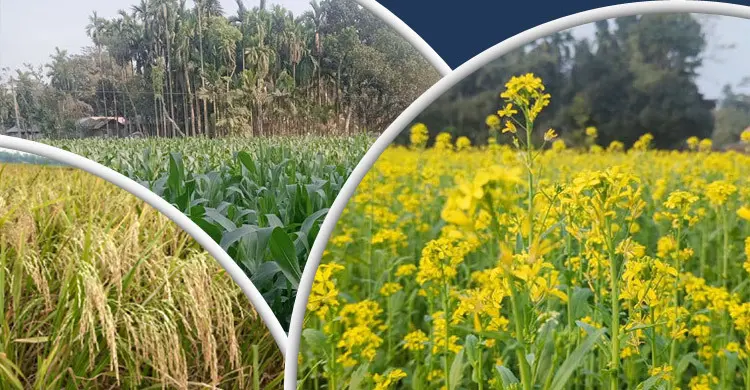
A touch of change is everywhere, so change in agriculture is urgent too. In my childhood I saw that almost every village home had granaries that never ran short. People used to say that a shed full of cattle, a granary full of paddy, a pond full of fish and fields full of crops were the timeless picture of our villages. That picture is now fading. Even village people are turning away from farming on the excuse of a modern lifestyle, and perhaps a terrible time lies ahead of us because of it.
I think that to face any disaster we must give agriculture priority and make the sector productive through collective effort. Suppose you have plenty of money but there is no food in the market. What will you do with it? What will you buy to eat? If everyone in our villages goes abroad, they may earn plenty of dollars, but if nobody is left to till the land, what will your family buy with those dollars?
A lesson from a short story
In 'Tamasabrita', a story by the writer of everyday life Subodh Ghosh, the farmers sell all their produce in the market town at double the price. The moneylender in the town then raises his prices too. Within three months all their savings are gone, food runs short and they cannot even get clothes to wear. They must wait another seven months for the next harvest. Though they grew the crops, they went hungry through their own mistake. The women of the households worked the fields naked in the dark of night and had to return home before sunrise, while the world was still dark. Only in want did they understand, and they looked for a way to correct their mistake.
Our forefathers grew paddy, jute, sugarcane, onion, garlic, chilli, coriander, tomato, sesame, linseed and vegetables on their own land. They tended the land and worked it whenever they had time. Their own harvest carried them through the year, and they sold the surplus in the market. Homes had plenty of fruit trees too, with mango, jackfruit, guava, gab and jamun; nothing was lacking. Apart from fish and meat, little had to be bought from the market. But we, the next generation, have moved away from farming. We have moved to the cities and become highly educated. Now we have to buy everything we eat, and even with jobs we struggle.
From the village to the city
My father farmed alongside his teaching. In the rainy season he caught fish and he knitted good nets. We hardly had to buy rice or lentils. I saw my mother grow vegetables on the empty spaces around the house, and she still does, on a small scale; for lack of hands she cannot do as much as before. Those of us who live in cities now buy all this from the market, struggle with rising prices and find our wallets empty halfway through the month. Yet village people can still, if they wish, live well for a year on the crops from their own land.
But the urban touch has reached the villages too. Some have turned their backs on farming. Farm workers cannot be found, and people look down on day labour in the fields. Everyone is rushing to the city or abroad. One day they too may come back and regret it, lamenting the past, because money grows in concrete, but crops do not.
The good news is that educated young people are now contributing to our agriculture through various ventures. I hope that one day the number of farmers will rise and the number of unemployed will fall. In many films we see how much importance is given to farming, how people love crops more than life itself. Through such films they honour agriculture and inspire others.
What needs to be done
People create crises, and people resolve them; all it takes is sincere effort. The earth is generous and gives to us constantly, but it needs care, and we are neglecting it. We all know that if you study well you get good results. How will you get a good crop if you do not farm the land well? So alongside creating an educated population, it is essential to create educated farmers. Farming is not a disgraceful job; it is part of a great industry. Other industries require hard work, and so does this one. There is no shame in being covered in mud and water, but rather pride, the pride of loving one's country.
The government must therefore also prioritise agriculture. Farmers should be given incentives every year and successful farmers rewarded. The agriculture office should visit farmers in the field, advise them and help them with seed and fertiliser.
The Creator has given us land to cultivate, so we should increase our cropland and bring every kind of land under farming, whether for grain or for vegetables. Producing farm goods ourselves is wiser than buying them. Agriculture can be a country's main industry; all we need is a better mindset and a positive role. May every misfortune be removed, and may our surroundings fill with flowers, fruit and crops.
Source: Jagonews24. First published in Bengali on The Agro News.

Comments
(0)