
15 August is a day of mourning: National Mourning Day, the darkest and most painful day in the life of the Bengali nation. On this day in 1975, the Bengalis lost the architect of independent Bangladesh, the Father of the Nation, Bangabandhu Sheikh Mujibur Rahman. In the early hours, a group of misguided army personnel killed Bangabandhu and his family at Road 32 in Dhanmondi, leaving a stain on the nation from which the country has still not freed itself.
Bangabandhu had an unbreakable bond with people from every walk of life in Bengal; all were his kin. His image lived in every Bengali heart and still shines in people's minds. He was a leader with no personal wealth to speak of, who gave everything for the people. The people's love was his only wealth, a wealth no one could ever take away, and that is felt deeply every 15 August.
No one ever believed that a Bengali could kill him, and neither did Bangabandhu. So, ignoring countless pleas from intelligence agencies and those close to him, even as president he did not live somewhere as secure as Bangabhaban but stayed like an ordinary man in his unguarded home in Dhanmondi, spending every moment among the poor and suffering. That proved his undoing: the killers opposed to independence murdered him, a tragic event rare even in world history.
What even the barbaric Pakistani occupation forces had not dared to do was done by a few wretches of this country. The great hero of the independence struggle fell victim to a conspiracy by domestic and foreign forces opposed to independence, at a time when he was working tirelessly day and night to rebuild a war-ravaged country. As long as the Bengali nation exists, Bangabandhu's name and work will endure. Let us turn our grief into strength and devote ourselves to building the country. The Father of the Nation dreamt of a Golden Bengal rich in agriculture; our duty is to fulfil that dream by making the country happy and prosperous. Only then will his soul rest in peace and will we pay due respect to this great leader.
A special care for farming
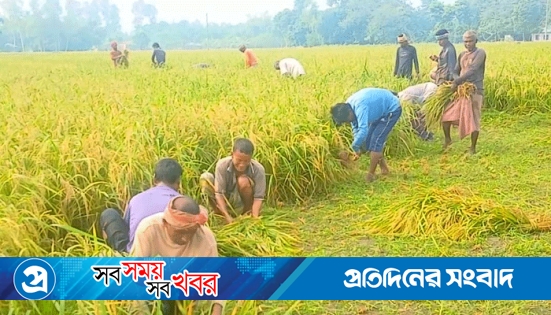
Bangabandhu was a man of many qualities, and he had a special love and sincerity for agriculture, because he knew that this agricultural country must be developed and made prosperous through farming. Following his policies, his worthy daughter, Prime Minister Sheikh Hasina, is advancing along that path, and remarkable success in agriculture has established the country as a role model in the world. He wanted to see this Bangladesh, won at the cost of three million lives, full of golden crops, which is why after independence he called for a green revolution. If his plan is implemented properly, all of Bengal will turn green and its people will live in happiness. If the dreams Bangabandhu had after independence are properly realised, we can advance far in agricultural development, and if agricultural development is ensured, our country too will be developed and self-reliant.
The Father of the Nation dreamt of a Bangladesh free of hunger and poverty. In his Golden Bengal he wanted to see all-round development and self-reliance for the country's agriculture and farmers. Fulfilling that dream is now the responsibility of all of us. Let our ongoing pledge be to strengthen the economy by eradicating hunger, malnutrition and poverty through agricultural development. We can say with certainty that agriculture is the main vehicle for fulfilling this pledge.
The 1973 speech at Mymensingh
On 13 February 1973, Bangabandhu gave a special speech at Bangladesh Agricultural University in Mymensingh. In it he spoke of an agricultural revolution and said attention must turn to the villages, because the village is the centre of all development; when rural development and economic prosperity gather pace, all of Bangladesh will move forward. His firm wish was to protect farmers' interests by any means, because farmers, who feed us all through their sweat, are the real heroes of this country. If farmers' needs are properly met, they will invest themselves in farming with enthusiasm and a tide of development will follow; once farmers develop, the country's development is only a matter of time. Bangabandhu believed that under exploitation and oppression we had not been able to use our talents, and that the time had come to use our own knowledge, talent and skills fully in our own country and stand tall in the world. Then we could proudly say: this is my self-reliant Golden Bangladesh.
On his broad plan for overall agricultural development, Bangabandhu said a total survey was needed first of all, because no plan could succeed without one. A proper survey must come before all work, and the overall plan must be based on it. Because of socio-economic factors, land in the country is being divided more and more. If integrated farms cannot be built, agricultural development will be held back, the desired production cannot be ensured and we will fall far behind. Moving ahead through cooperative societies would boost both farm production and overall development. To grow more crops, the highest priority must be given to an integrated farming system, with proper coordination among field crops, livestock, fish and the environment; otherwise we cannot advance as we wish.
Farmers must be made far more educated, and everyone involved must be educated in agricultural learning, experience and knowledge; development will then speed up by itself. Bangabandhu said village farmers are very experienced and skilled, and modern agriculture must advance by sharing with them and coordinating with them. Only then will we achieve the success we want with ease.
Bangabandhu knew very well that nothing can be forced on people. So he said it must be shown by doing, so that farmers learn for themselves and apply it on their own land. If 20 people in a village are shown the work hands-on in the field, other farmers nearby will copy it on their own land and production will rise. Then others across Bengal will come forward and join the mainstream of development, because our farmers are used to believing what they see.
Addressing agriculturists, he said: those of you being educated in agriculture must go to the villages and mix with farmers, paying attention to their needs and work; only then will they become bold and eager and make progress, and golden crops will fill the fields. Forget about heading for the cities now. If the villages develop, the country will develop, and you will develop along with it. The development of village-based Bengal means the development of the country, and your own development will then be a matter of time. There is no reason to look at the gentlemen of the city and worry or regret; all of us must throw ourselves into developing the rural economy. Farmers must be saved and production raised, or Bangladesh cannot survive.
At the convocation of Bangladesh Agricultural University on 13 February 1973, Bangabandhu said that food does not mean only paddy, rice, flour and maize, but also fish, meat, eggs, milk and vegetables, so improving agriculture means improving the integrated production of all these foods. In 1972–73, Tk 500 crore was allocated for development, of which Tk 101 crore was set aside for agricultural development alone, showing his commitment to agriculture from the very start. Bangabandhu believed food came first: without food security all development work would fail, so we must produce our own food. He also used to say that talking about a green revolution was not enough; the problems that come with it must be examined and solutions found, and only then would the green revolution succeed.
Institutions and inputs
Thinking of institutional agricultural development and of farming and farmers, Bangabandhu Sheikh Mujibur Rahman took revolutionary steps in agricultural development after independence to free the people of Bangladesh from hunger and poverty, taking agricultural foresight to an extraordinary level. To establish, reform, develop and manage agricultural institutions, he created many new bodies, including the Bangladesh Agricultural Research Council, the Bangladesh Agricultural Development Corporation, the Horticulture Development Board, the Cotton Development Board, the Seed Certification Agency, the Sugarcane Research Institute and the Fisheries Development Corporation. He took landmark steps to overhaul the structure and work of existing agricultural institutions and to attract talent into technology. The Father of the Nation said we cannot depend on others for food; we must produce the food we need ourselves. Why should we beg others for food? By combining our fertile land, our abundant natural resources, our hard-working people and our research and extension work, we will achieve self-sufficiency in food; it is only a matter of time. Bangabandhu also always said we must control floods, because if we cannot, our production, happiness and peace will all be at risk, so floods must be controlled through everyone's combined efforts.
Bangabandhu's thinking on agricultural inputs is still astonishing after so many years. He placed full emphasis on agricultural education, the production and distribution of quality seed, proper fertiliser and irrigation management, farm subsidies, pest management, integrated crop management, farm-based crop management, cooperative farming, rebuilding the shattered economy, rebuilding Milk Vita, and fertiliser, irrigation and seed programmes, because he knew that without doing these properly we would fall far behind. He spoke in particular about chemical fertiliser, saying the existing fertiliser factories must be made to produce more reliably and that new fertiliser factories should be built if necessary to carry out the agricultural revolution. We too firmly believe that before adopting development programmes and plans, we must take up well-coordinated programmes based on real conditions. If we move forward investing our utmost labour and talent, we will surely succeed.
He made special mention of livestock, urging even then that cattle be used for ploughing and cow dung applied to the land to increase its fertility. He also spoke of pests and pesticides, stressing that the country should build its own pesticide factories and use pesticides properly. He said we must produce our own seed; if needed, quality seed should at first be imported to meet the country's initial demand, and later we would develop and produce improved quality seed ourselves. He stressed winter crops, knowing that winter is our most reliable and secure season for crop production and that more crops, in greater quantity, are grown in this season than in the other two. So winter crop production must be raised to fill our granaries to the brim.
Bangabandhu Sheikh Mujibur Rahman adopted inspiring and attractive development policies, and Prime Minister Sheikh Hasina has followed them in recent years, giving the farm sector the highest priority. Although about 30 per cent of cultivable land has been lost in the 45 years since independence, production of food grains including rice has risen from 1.10 crore tonnes in 1972 to about 3.85 crore tonnes under the leadership of Bangabandhu's daughter Sheikh Hasina. The Father of the Nation took effective steps to modernise the farming methods of the day. To ensure farmers got a fair price for their grain, he took some firm decisions so that they could live well. He raised the status of field workers and government officials in the farm sector. To achieve self-sufficiency in food production, he took steps to support improved and short-duration farming methods, the supply of quality seed, irrigation and other farm inputs. He waived the farm loans of marginal farmers, withdrew certificate cases against them and distributed khas land among the landless.
Building the Golden Bengal
For agriculture-dependent Bangladesh, the importance of farming to socio-economic development is boundless. We have fertile soil, endless natural resources and hard-working people, and by coordinating them properly we can achieve the impossible and build Bangabandhu's Golden Bengal, where the people of Bengal and Bangladesh will live in happiness. Bangabandhu's lifelong dream was to bring a smile to the faces of this country's exploited, deprived and neglected farmers. So, along with giving the farm sector the highest importance and priority, he gave agriculturists, the soldiers of agricultural development, their due honour and status. We are all determined to build the Golden Bengal of Bangabandhu's dreams, and what we need are coordinated, sincere and effective steps. Bangabandhu wanted a new map, a new territory, a new national identity, and a golden land of self-reliant, happy people.
Our combined, sincere and effective efforts will take us to the highest level of achieving our targets, and in the near future we will be able to build a self-reliant, happy and prosperous Golden Bangladesh. But a self-reliant Golden Bengal cannot be built just by loving or respecting Bangabandhu. His words must be put to work bit by bit and his cherished dream effectively realised; only then can we proudly say we have kept his word. Let our sincere pledge be more work than words and more implementation than planning, and let the dream of Bangabandhu, the Father of the Nation and the greatest Bengali of a thousand years, be realised through our heartfelt will and effective action.
Source: Online Desk. First published in Bengali on The Agro News.
Comments
(0)