
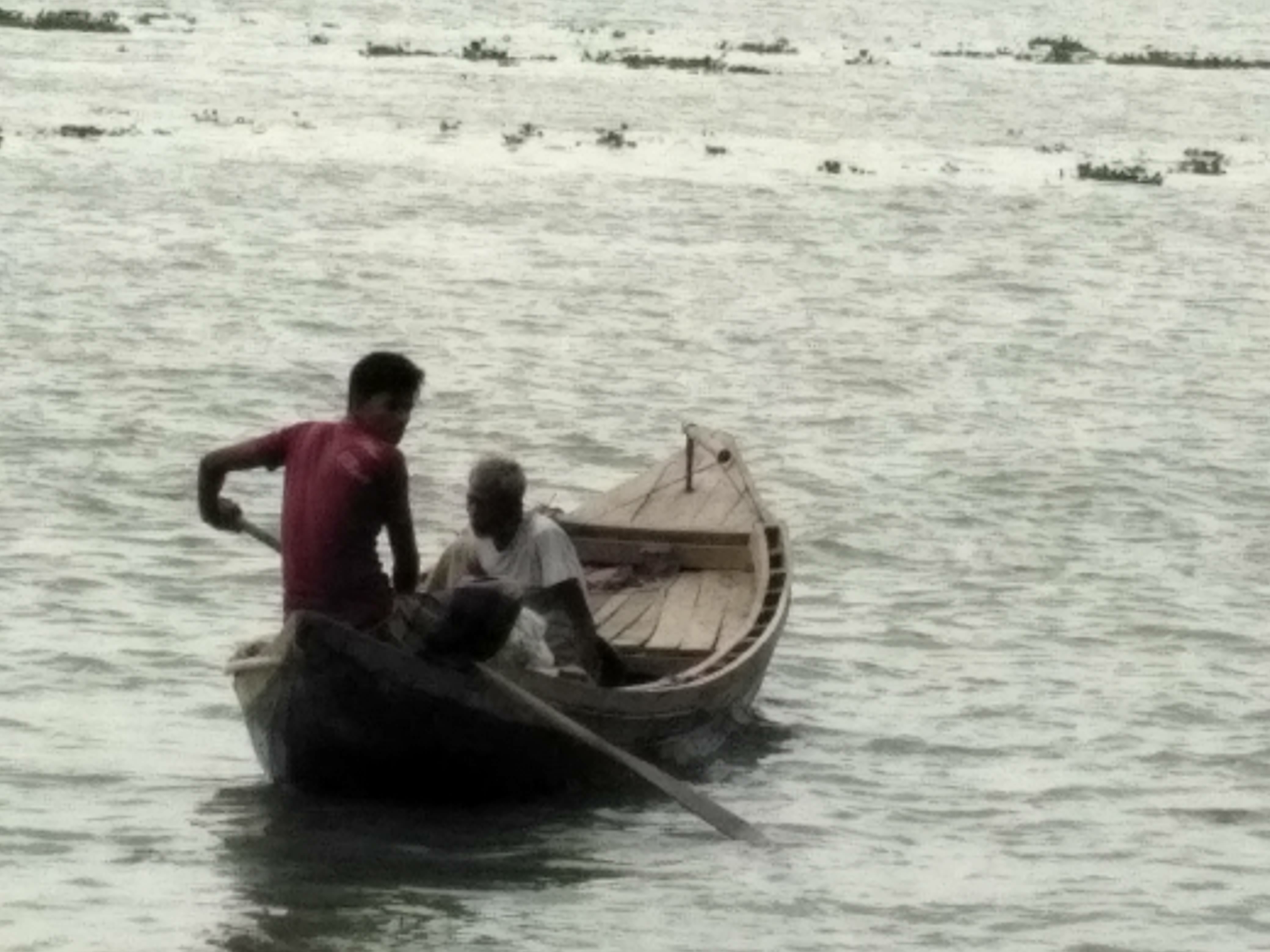
A hilsa weighing about three kilograms was caught in the Arial Khan river in Bakerganj upazila of Barishal district on Friday, 7 November 2025, and sold the same day to a local fish wholesaler for Tk 10,700, Jagonews24 reported the next morning. The fish was netted by Sohel Molla, a local fisherman from Bisharikathi village in Bakerganj, and bought by Monir Paloan, owner of the Paloan fish aarat (wholesale depot). The trader said fish of that size were rarely seen in Barishal's rivers and credited the government's hilsa conservation measures for the return of large fish.
The catch and the sale at the aarat
According to the report by Jagonews24's Barishal district correspondent, published at 11:56 am on 8 November 2025, the hilsa came up in Sohel Molla's net in the Arial Khan river within Bakerganj upazila on Friday. The fisherman took it to the Paloan fish aarat, where the owner, Monir Paloan, bought it for Tk 10,700. The fisherman himself gave the price. While the fish was at the aarat, many curious people crowded in to look at it.
Monir Paloan told the paper that hilsa of this size were not usually seen in the rivers of Barishal. River hilsa, he said, normally weighed between one and one and a half kilograms, and finding a three-kilogram fish was a rare event. He attributed the return of big hilsa to the rivers to a set of government measures: strict surveillance against the killing of jatka (young hilsa), the ban on fishing in the breeding season, the removal of illegal nets and the expansion of sanctuaries.
Fishermen in the area, the report said, believed that more effective action to control river pollution and encroachment would increase the movement of hilsa in the rivers and raise production. Sohel Molla was pleased with the sale. "A hilsa this big comes into the net only once or twice in a lifetime," he told Jagonews24. "I got a good price. I have to say I was lucky."
The report did not give the fish's length or say whether it was male or female.
How big a three-kilo hilsa is
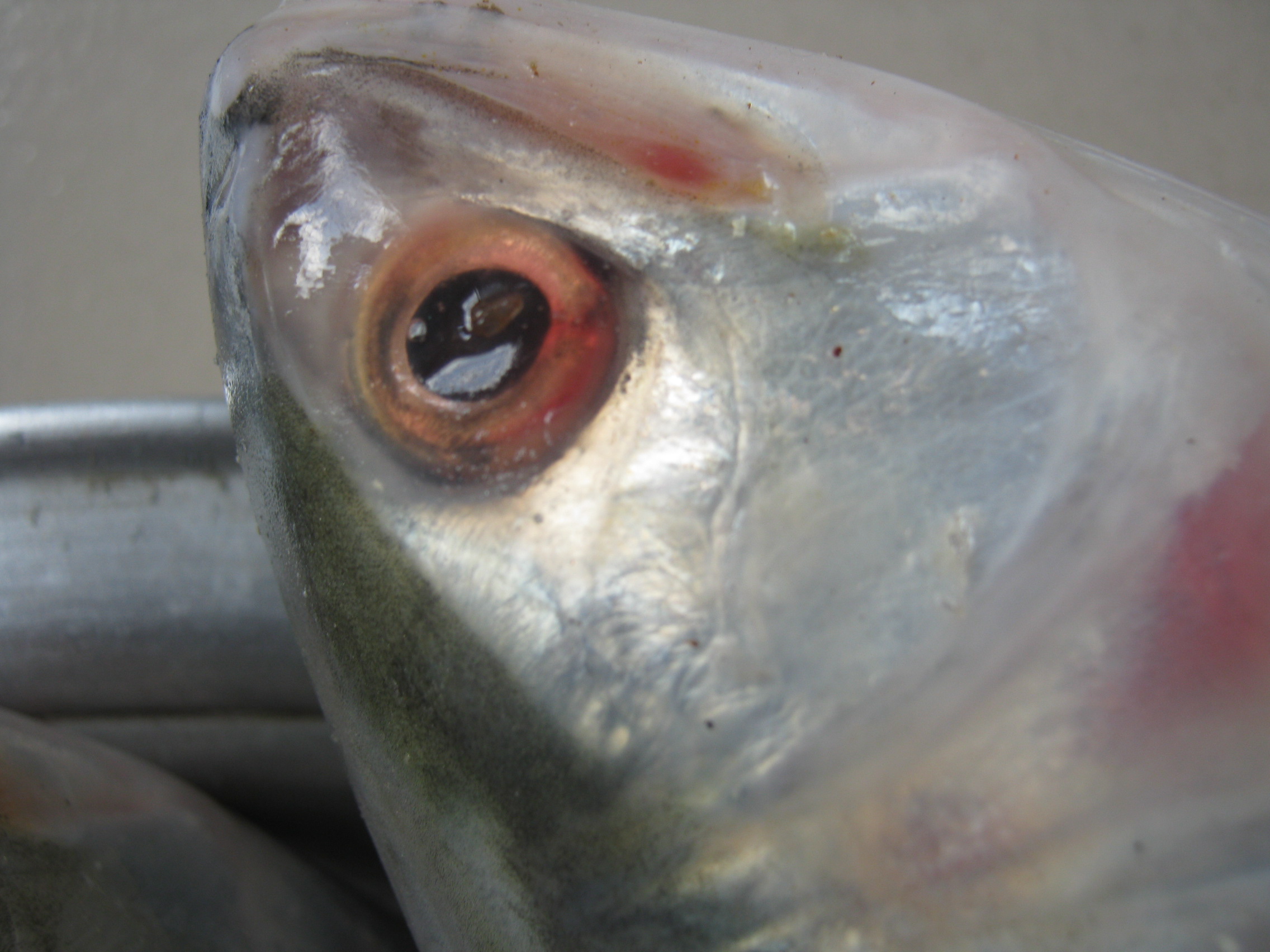
The hilsa (Tenualosa ilisha), locally ilish, is the national fish of Bangladesh. Banglapedia, the national encyclopedia published by the Asiatic Society of Bangladesh, describes it as a member of the herring family with a strongly compressed, moderately deep body covered in regularly arranged, metallic silver scales, and a distinct notch in the middle of the upper jaw. Its body may reach 60 cm in length, but the fish commonly found measure 35 to 40 cm. The encyclopedia puts the weight of a large-sized hilsa at about 2.5 kg, which is why a fish of around three kilograms drew a crowd. Females grow faster than males and are usually larger, and the fish reaches maturity in one to two years.
Research by the Bangladesh Fisheries Research Institute (BFRI), reported by The Business Standard in July 2022, filled in the picture of size. The institute found that hilsa grow fast in their first two years, reaching up to about 30 cm in the first year and about 40 cm in the second, while the maximum size in Bangladesh waters could be 57 to 61 cm, a size that takes five to seven years to reach. Almost all the big hilsa in the market, the institute said, were female; most 30 cm hilsa were female and fish of 40 cm were almost all female.
The same BFRI work said the average size of hilsa caught had risen to 37 cm from 28 cm, and that fish of 800 grams to 1 kg made up 22 per cent of the catch in 2019 and 25 per cent in 2021. By region, the largest hilsa on average came from Cox's Bazar, with an average length of 42 cm and weight of 850 grams, while Barishal's hilsa ranked with Chandpur's in second place, the Barishal fish averaging about 800 grams.
Hilsa prices in 2025
The sale came in a year of unusually high hilsa prices. A survey by the Bangladesh Trade and Tariff Commission (BTTC), reported by The Business Standard on 28 September 2025, found that fishers spent between Tk 471 and Tk 504 to catch a kilogram of hilsa, depending on the type of boat: Tk 484 for small boats, Tk 504 for medium boats and Tk 472 for large trawlers. By the time the fish reached consumers, it had passed through five stages, from fishers to wholesale agents, then to aratdars (warehouse owners), wholesalers and finally retail outlets, with the price rising by about 59 to 60 per cent at each stage. Retail prices ranged from Tk 700 to Tk 3,000 a kilogram.
The commission's study covered major markets in Chandpur, Bhola, Barishal, Patuakhali, Chattogram and Cox's Bazar. In Dhaka it recorded hilsa of 1 to 1.5 kg selling for Tk 2,200 to Tk 2,400 a kilogram and fish of 1.5 kg and above for Tk 3,000. Among the causes of high prices it listed supply and demand imbalance, artificial scarcity, syndication, hoarding in storage, high fuel costs and rising operating expenses, and the practice of dadon, under which middlemen who advance money to fishers impose floor prices at river ghats.
A Business Standard report of 7 October 2025, drawing on Department of Agricultural Marketing and Dhaka market data, said hilsa over 1.5 kg had cost Tk 1,800 to Tk 2,000 a kilogram in August 2024 but Tk 2,800 to Tk 3,000 in 2025, and that retail prices had risen by 28 to 52 per cent in a year depending on size. Fishermen and traders told the paper that large hilsa had largely not appeared in the sea or rivers that year, leaving mostly smaller fish in the market. Although 1,200 tonnes had been approved for export to India for Durga Puja, only 145 tonnes were shipped, the lowest in seven years.
Single large fish had drawn attention before. On 10 March 2025 The Business Standard reported that a hilsa of 2.4 kg, caught in the Bishkhali river near Dalbhanga in Barguna Sadar upazila, was auctioned at the Barguna fish market; a fish trader bought it from the wholesaler at Tk 4,600 a kilogram and set a retail price of Tk 6,000 a kilogram, valuing the fish at Tk 14,000. The trader said Bishkhali hilsa were in high demand for their taste and aroma.
The conservation measures the trader credited
The measures Monir Paloan listed were the main tools of hilsa management in force in 2025. The sale came after the year's 22-day ban for the main breeding season had ended. On 29 September 2025 the Ministry of Fisheries and Livestock announced that a campaign to protect mother hilsa would run from 4 to 25 October, with a gazette notification prohibiting the catching, transporting, storing, marketing, buying, selling and exchange of hilsa across the country. The Department of Fisheries (DoF) said the dates were set in consultation with BFRI, other organisations and fishermen, to cover the full moon and the new moon of the Bangla month of Ashwin, when breeding peaks.
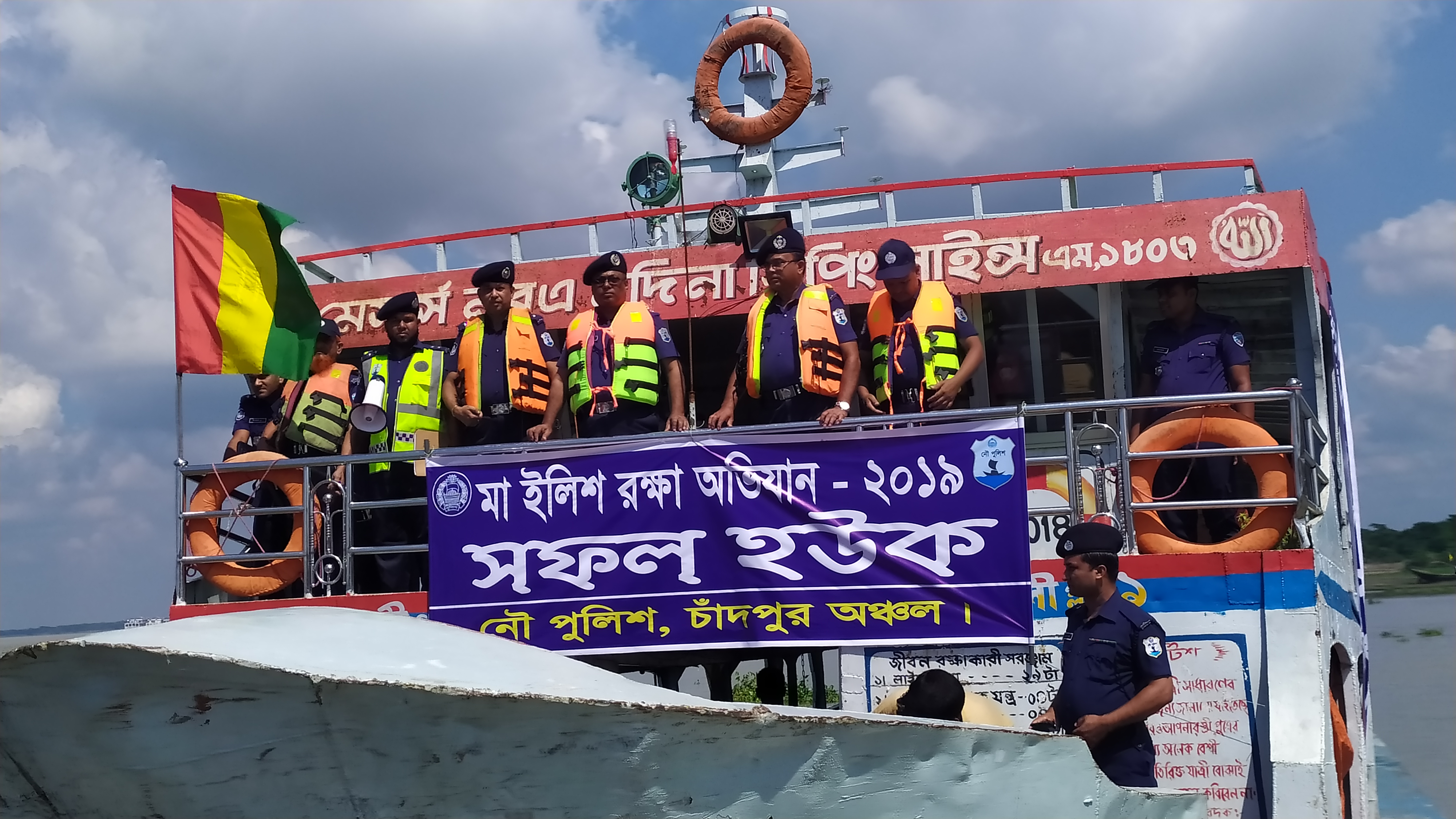
During the ban, fishing for hilsa in rivers, coastal areas, estuaries and the sea was prohibited, and the Naval Police, Coast Guard, Navy and Air Force took part in enforcement. Under the Vulnerable Group Feeding (VGF) programme, 620,140 fishing families in 165 upazilas of 37 districts were to receive 25 kg of rice each. The ministry said BFRI's research showed that the 2024 ban had allowed 52.5 per cent of mother hilsa to spawn, adding an estimated 44,250 crore jatka to the population, and that the 22-day campaign of 2024 had seen 2,169 mobile courts and 9,813 raids, the seizure of 54.86 tonnes of hilsa and the destruction of 612.11 lakh metres of net. The ban ended at midnight on 25 October 2025. Earlier in the year a separate 58-day ban on fishing in the Bay of Bengal had been enforced from 15 April to 11 June.
The next stage of protection began on 1 November 2025. From that day, the Ministry of Fisheries and Livestock said in a press release carried by the state news agency BSS, catching, transporting, marketing, buying, selling and storing hilsa smaller than 25 centimetres (jatka) was banned across the country for eight months, until 30 June 2026. The ministry said the fry hatched from eggs laid during the October campaign were then moving through coastal rivers and estuaries, and that if they could grow safely, hilsa production would increase. Under the fish protection law as amended by an ordinance of 2025 and the Protection and Conservation of Fish Rules, 1985, a violation was punishable by up to two years' rigorous imprisonment, a fine of up to Tk 5 lakh, or both. The DoF was to enforce the ban with district and upazila administrations, the Navy, Coast Guard, river police and the Rapid Action Battalion.
Sanctuaries are the third tool. By 2021 the ministry listed five hilsa sanctuaries closed to all fishing from 1 March to 30 April, including an area of about 82 km of the Kalabadar, Gazaria and Meghna rivers flowing through Hizla, Mehendiganj and Barishal Sadar upazilas of Barishal district. The Dhaka Tribune had reported in June 2018 that the stretch of the Meghna from Hizla to Mehendiganj was being declared the country's sixth sanctuary; another, on the Andharmanik river, follows a November-January closure. Control of nets is the fourth: according to The Business Standard's report of July 2022, nets with a mesh smaller than 6.5 cm are banned so that jatka are not killed. Banglapedia notes that the fishery for adults uses fixed or drifting gillnets (chandi jal), while jatka have been taken with gear such as current jal and behundi jal.
A national catch under pressure
The trader's optimism about big fish came against figures showing a smaller overall catch. According to the Department of Fisheries, cited in the BTTC study, 5.29 lakh tonnes of hilsa were harvested in 2023-24, down from 5.71 lakh tonnes in 2022-23. The same study said 42 per cent of the country's fish came from open waters, with hilsa representing 12 per cent; that the highest hilsa availability was in Barishal and Chattogram divisions, with Bhola alone yielding the most; and that 60 per cent of hilsa came from the sea, 25 per cent from river mouths and 15 per cent directly from rivers. The commission found that in July 2025 river hilsa supply had fallen to two-thirds of the level of earlier years, and it said pollution had reduced the number of spawning female hilsa in rivers such as the Padma, Meghna, Tetulia and Kirtankhola.
Sea landings showed the steepest fall. The Business Standard reported on 8 October 2025, from Department of Marine Fisheries statistics, that hilsa landed by commercial trawlers in the Bay of Bengal fell from 8,138 tonnes in 2022-23 to 1,790 tonnes in 2024-25. The fisheries and livestock adviser told a press conference that hilsa catches had declined by about 10 per cent over five years, and that catches in July and August 2025 were 33 and 47 per cent lower than in the same months of 2024.
Earlier research had set limits on what the fishery could yield. In April 2022 the director general of BFRI told The Business Standard that the institute's study found that a maximum of 7 lakh tonnes of mature hilsa could be produced a year, and that the hilsa biomass in the breeding grounds could be increased in a few years if the catching of jatka were reduced quickly. In 2018 the Dhaka Tribune, citing the Fisheries Statistical Report of Bangladesh 2016-17, said hilsa made up around 12 per cent of the country's fish production, equivalent to around 1 per cent of GDP, and that around half a million fishermen depended directly on it for their livelihood and another two million indirectly.
The fishermen's call for action on pollution and encroachment echoes a long-standing finding. Banglapedia lists among the causes of the hilsa's decline in earlier decades low water discharge from the Ganges after the Farakka Barrage and the heavy siltation that followed, indiscriminate catching of jatka, the disruption of migration routes, the loss of spawning, feeding and nursery grounds, and increasing river pollution. It also notes that flood control and irrigation projects damaged nursery grounds, and that the hilsa fishery, once spread through upstream rivers, became concentrated in the downstream rivers, estuaries, coastal areas and the sea.
The hilsa's life cycle and how it is fished
The hilsa is anadromous: it lives in the sea and runs up the rivers to breed. According to Banglapedia, adults breed upstream in fresh water and the larvae hatch from free-floating eggs; the young grow in the river channels and then descend to the sea to feed and grow before returning to the rivers as mature adults. The fish spawns more or less throughout the year, with a minor season in February and March and a major one in September and October, which is why the main ban falls in October. A large female may produce up to two million eggs. The hilsa feeds mainly on plankton, including blue-green algae, diatoms, copepods and rotifers.
The young stage is jatka. In six to ten weeks after hatching, Banglapedia says, the young grow to about 12 to 20 cm and start descending to the sea, and it is at this stage that they are caught in large numbers in the major rivers. A BFRI survey in 1992-94 estimated that 3,500 to 4,000 tonnes of jatka were caught each January-April season, more than half of it in the Meghna. For the ban that began on 1 November 2025, the ministry defined jatka as hilsa smaller than 25 cm.
The trade that carried Sohel Molla's fish to the Paloan aarat is part of an old system. Banglapedia describes river fishing for hilsa as mostly carried out from non-mechanised single boats or two-boat teams, while sea fishing uses mechanised boats of 10 to 13 metres or trawlers, and says a system of collector boats, wholesale markets and transporter-traders supplies inland markets with the fish. In the BTTC's account of 2025, the aratdar sits in the middle of that chain, buying from fishers or their agents and selling on to wholesalers and retailers.
Bakerganj, Barishal and the Arial Khan
Bakerganj is the upazila that gave the district its old name. Banglapedia records that Bakerganj district was established in 1797 and later renamed Barisal district, and that Barisal was declared a division on 1 January 1993. The district covers 2,784.52 square kilometres and, at the 2011 census, had a population of 2,324,310. Its main rivers are the Meghna, Arial Khan, Kirtankhola, Tentulia, Naya Bhanga, Jayanti and others. Barishal's river port stands on the Kirtankhola.
Bakerganj upazila covers 411.36 square kilometres, with one municipality and 14 unions, and had a population of 313,845 at the 2011 census. It is bounded by Nalchity and Barishal Sadar to the north, Mirzaganj, Dumki and Bauphal to the south, and Bauphal and Bhola Sadar to the east, and Banglapedia lists the Tentulia, Khairabad, Pandab, Bishkhali and Karkhana among its rivers. Bakerganj thana was formed in 1874 and became an upazila in 1983. Agriculture is the main source of income, followed by commerce; paddy, wheat, jute, mustard, potato and betel leaf are the main crops, and the upazila had 487 fisheries at the time of the encyclopedia's survey.
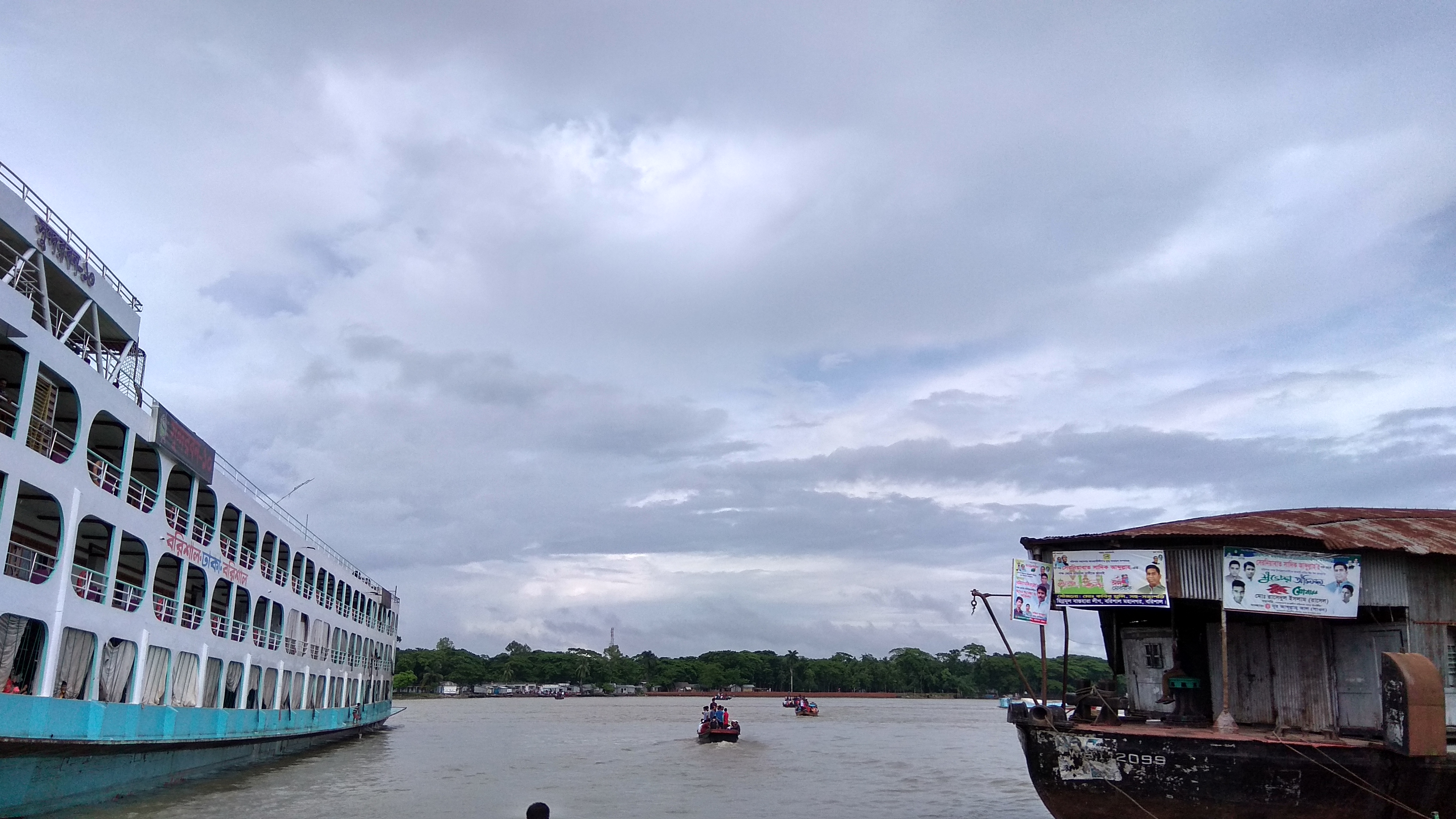
The Arial Khan is one of the main south-eastward outlets of the Padma. According to Banglapedia, it branches off the Padma 51.5 km south-east of Goalanda in Rajbari district, flows through Faridpur and Madaripur districts and falls into the Tentulia at the north-eastern corner of Barishal. The river is about 160 km long, navigable throughout the year and under tidal influence, with a normal tidal range of 0.32 metres at Madaripur. It keeps its link with the Padma through streams and canals such as the Naria, Palang and Kumar, follows a meandering course and is prone to bank erosion; the Bangladesh Water Development Board took up an Arial Khan rejuvenation project to improve irrigation and agriculture in the area it serves.
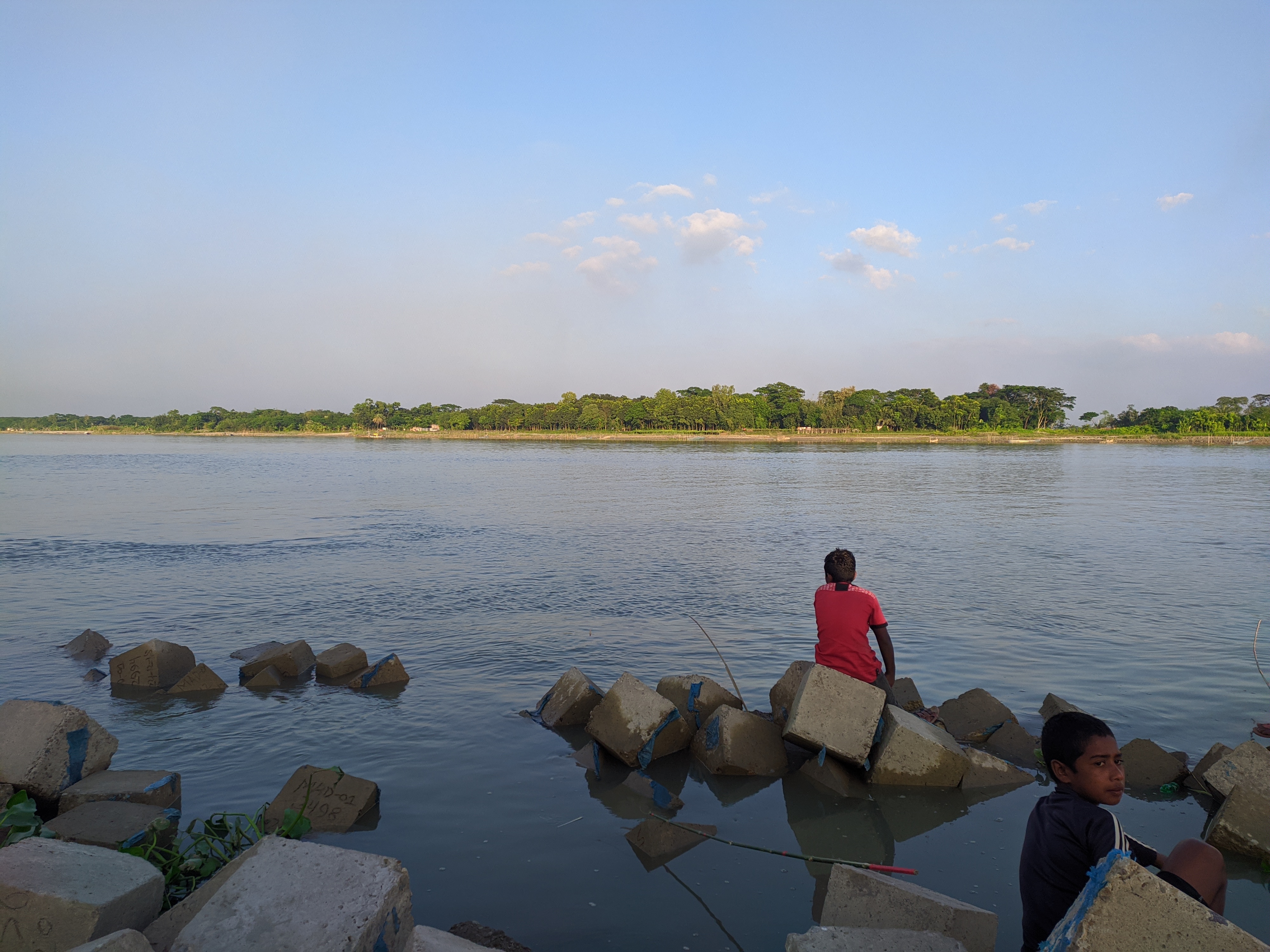
Photo: Jotiii / Wikimedia Commons (CC BY-SA 4.0)
Sources: Jagonews24 (8 November 2025), The Business Standard (28 and 29 September, 7, 8 and 25 October and 1 November 2025, citing the Ministry of Fisheries and Livestock, the Department of Fisheries, BSS and the Bangladesh Trade and Tariff Commission; 10 March 2025; 13 July 2022 and 18 April 2022, citing the Bangladesh Fisheries Research Institute; 28 February 2021), Dhaka Tribune (25 June 2018), Banglapedia (Hilsa, Arial Khan River, Bakerganj Upazila, Barisal District)
Comments
(0)