
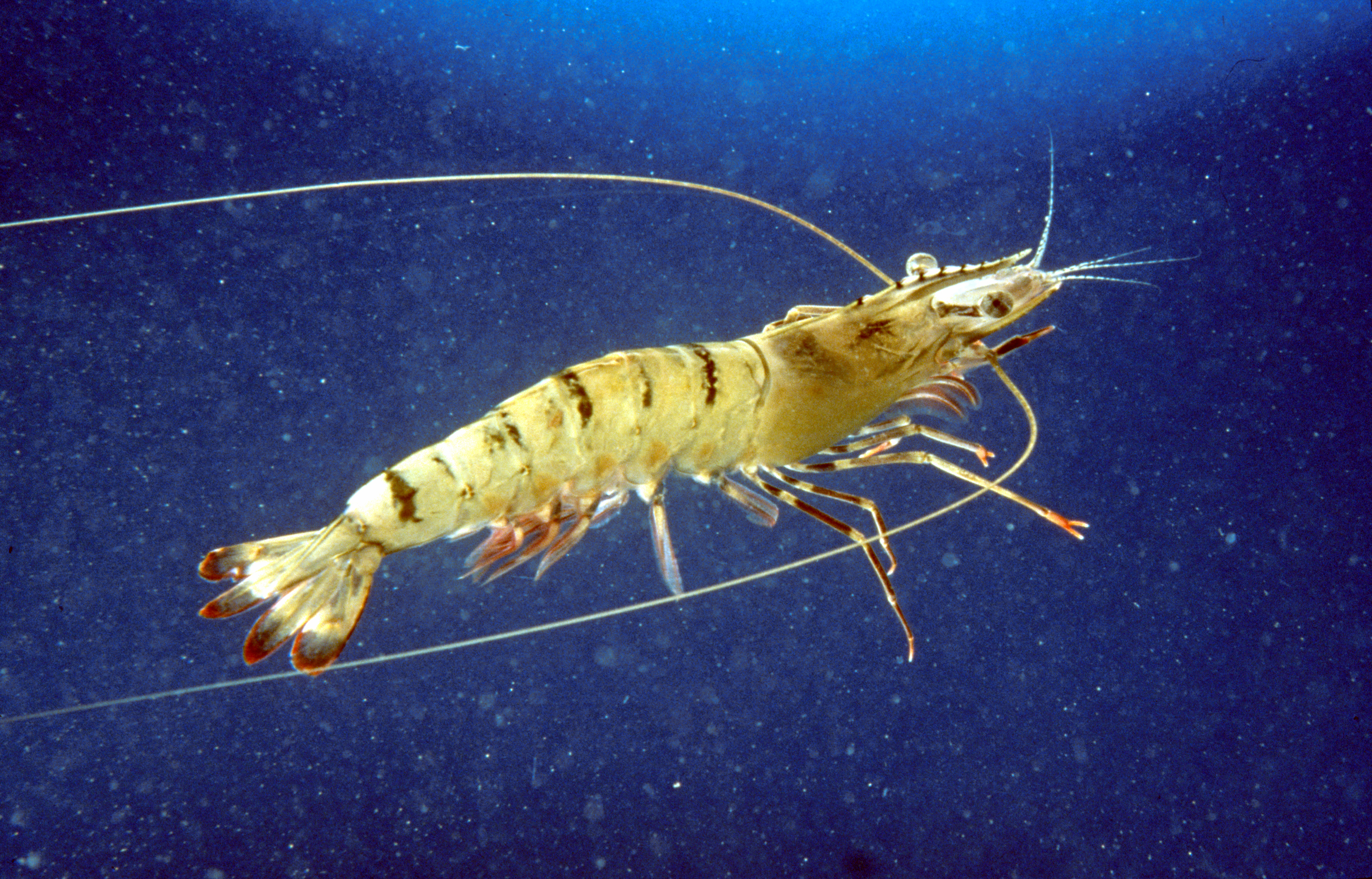
In the coastal ghers of Khulna, Satkhira and Bagerhat, the bagda shrimp has long been called "white gold". It is the giant tiger prawn the country sells abroad, and a favourite on home tables too. Our earlier report suggested that a family without a pond could still raise bagda in a medium-sized, deep tank (chaubachcha) at home, at any time of the year, as long as the young shrimp were released in the cool of the morning or the evening.
This guide keeps that idea and checks it against the authorities. It explains what the bagda is, how it is farmed in Bangladesh, what the Food and Agriculture Organization (FAO) and its regional training manual say about water, fry, feed and disease, and what the published figures on stocking, yields and costs show. It also makes clear where a home tank differs from the earthen ponds in which this shrimp is normally grown.
What the bagda shrimp is
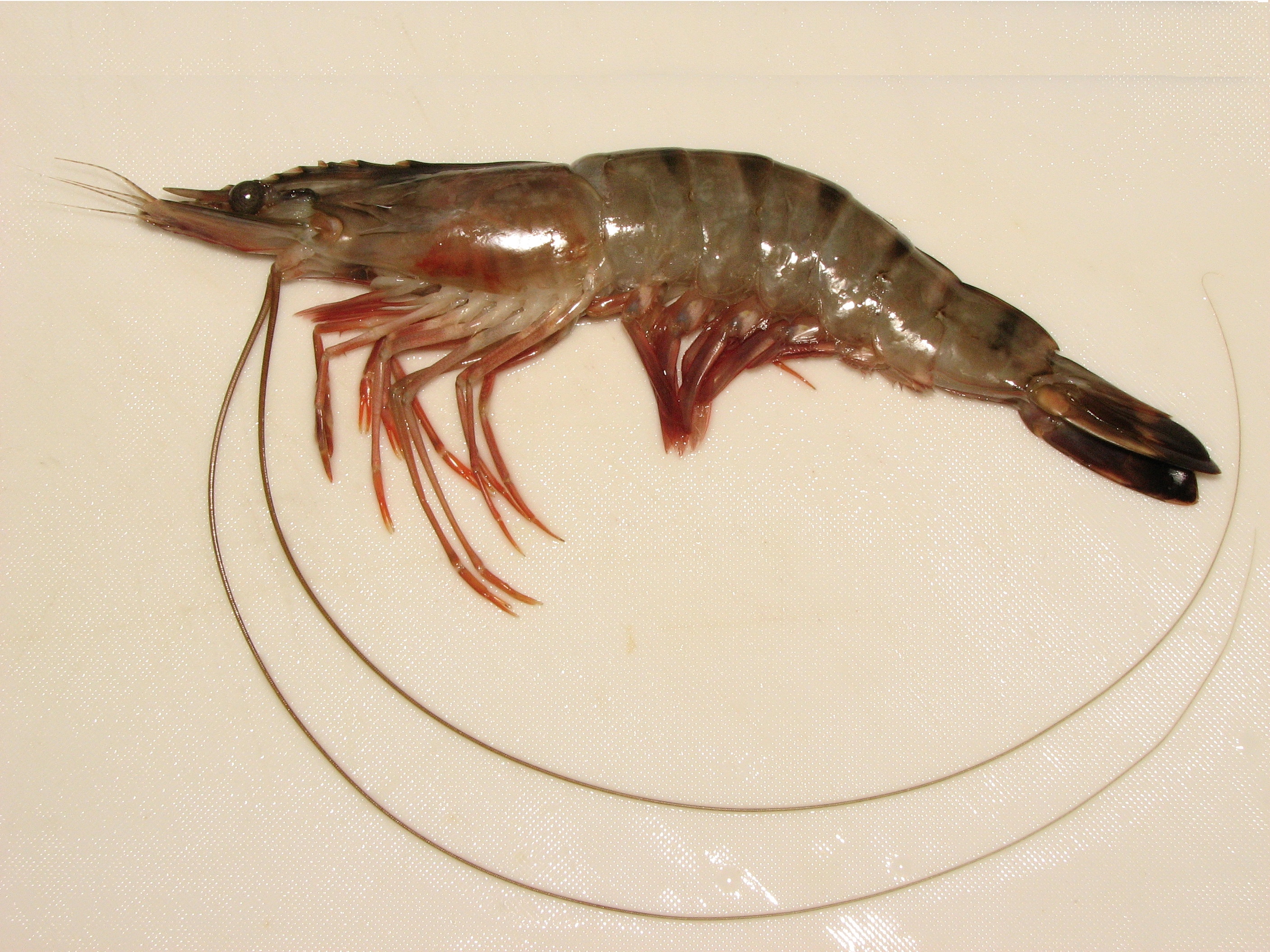
Bagda is the Bengali name of Penaeus monodon, known in English as the giant tiger prawn or black tiger shrimp. It was first described by Johan Christian Fabricius in 1798. Although many people call it a fish, it is not one: Banglapedia, the national encyclopedia, describes prawns as crustaceans related to crabs and lobsters, in the order Decapoda, the ten-legged animals.
Our original report said there are 540 species of bagda shrimp in seven families. That figure belongs to a much larger group. The 540 living species in seven families make up the whole suborder Dendrobranchiata, the prawns that release their eggs into the water instead of carrying them. The bagda is one species within it, in the family Penaeidae, and it is the largest member of the group: it can reach 336 millimetres in length and 450 grams in weight.
FAO's species profile says adults may reach 33 cm and that females are usually larger than males. Its body colour changes with the bottom, the feed and the turbidity of the water, from green and brown to red, grey or blue, with dark and yellow bands across the shell. In the wild it lives on the coasts of East Africa, South Asia, South East Asia and Australia. It breeds only in tropical seas and spends its young stages in estuaries, lagoons and mangroves. By day it burrows into the bottom; after dark it comes out to feed.
Banglapedia records 56 species of prawn and shrimp in Bangladesh: 37 in salt water, 12 in brackish water and 7 in fresh water. In its table of commercial species, the bagda has an average size of 29.8 cm for males and 30 cm for females, lives in the Bay of Bengal and its estuaries, and breeds from November to March.
Bagda farming in Bangladesh: the background
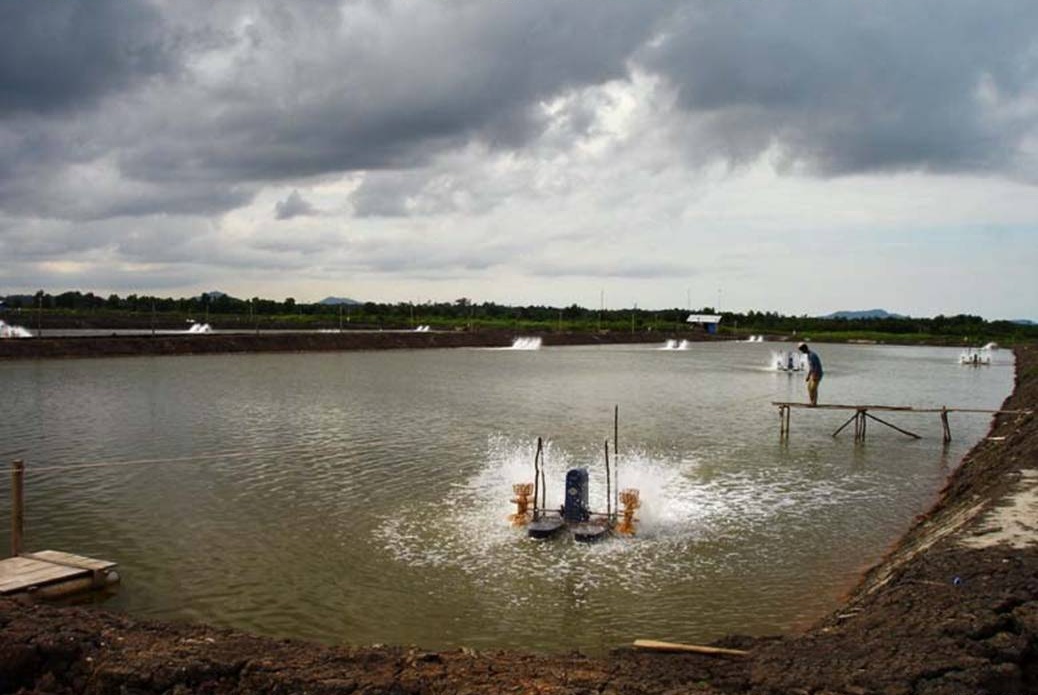
Banglapedia states that bagda was being cultivated on about 145,000 hectares of coastal and tidal land, in some 25,000 to 30,000 farms in Satkhira, Khulna, Bagerhat and Cox's Bazar. It was grown alone, with other fish, with paddy in the Khulna area and with salt in the Chakaria area. Brackishwater shrimp ponds had covered less than 20,000 hectares in 1980. Most of the mangroves of the Chakaria Sundarbans were cleared for ponds, the encyclopedia records.
Department of Fisheries (DoF) data reported by Dhaka Post on 30 December 2020 show a sector under pressure. Shrimp production peaked at 252,523 tonnes in 2011-12 and had fallen to 239,213 tonnes by 2018-19. Exports peaked in 2006-07 at 53,361 tonnes, worth Tk 2,992 crore, and stood at 33,362.52 tonnes, worth Tk 3,088.85 crore, in 2018-19. Bagda was grown on about 1.70 lakh hectares of coastal ghers and farms, often together with rice, fish or salt.
Banglapedia describes the usual calendar for extensive and improved extensive culture in Bangladesh: the gher or pond is prepared from December to February, fry are stocked in February and March, and harvesting and restocking run from June to November.
People in the shrimp trade quoted by Dhaka Post said Bangladeshi bagda sold abroad for about 7 dollars a pound, against about 5 dollars for vannamei, the Pacific whiteleg shrimp that India and Vietnam farm in large quantities. In April 2021 Prothom Alo reported that the first trial of vannamei in Bangladesh had begun at Paikgachha in Khulna, with 8 lakh imported fry stocked in ponds provided by the Bangladesh Fisheries Research Institute (BFRI).
Can bagda be raised in a home tank?
The original report gave three practical points. Use a medium-sized tank. Make sure it is deep. And release the fry either in the morning or in the evening, because the temperature is moderate then and the young shrimp may otherwise die. The authorities support the last point directly, and they explain what a tank must provide before the first two can work.
The most important fact is that bagda is a brackish-water and marine animal, so fresh tap or tube-well water alone does not suit it. FAO notes that juveniles can tolerate salinity as low as 1 to 2 parts per thousand (ppt). The training manual of FAO and the Network of Aquaculture Centres in Asia (NACA) says that in ponds the giant tiger prawn tolerates 5 to 40 ppt and grows fastest at 15 to 30 ppt. A home tank therefore needs a supply of saline water; FAO describes inland hatcheries in Thailand that buy seawater or brine brought by truck.
The second fact is the animal's habit. FAO's profile says that, because it feeds on the bottom, the giant tiger prawn is commercially cultured only in earthen ponds. It also warns that nursing young shrimp in concrete tanks gives poor survival, because the post-larvae eat one another at high densities. A small backyard tank is better treated as a trial with a few shrimp than as a farm that will pay its way.
Tanks do have a place in shrimp culture. The FAO and NACA manual describes nursing fry in concrete tanks filled with filtered sea water, with aeration, diatoms added to keep the water in condition, and polyethylene netting as extra surface because post-larvae cling to walls and the bottom. Half of the water is changed every day. The suggested density in such a nursery tank is about 5,000 fry per cubic metre for Penaeus monodon, and the fry stay there only until they move to ponds.
Water: salinity, temperature, pH and oxygen
Water is where a tank succeeds or fails. The FAO and NACA manual gives the ranges that shrimp farmers check, and recommends field water analysis kits, which it calls inexpensive and easy to use, and a simple thermometer.
- Salinity: fastest growth at 15 to 30 ppt; tolerated from about 5 to 40 ppt in ponds. It should stay steady and must not fall suddenly, as it can after heavy rain.
- Temperature: the optimum for penaeid shrimps is about 25 to 30 degrees Celsius. The manual says Penaeus monodon can be cultured throughout the year, which supports the original report's point that bagda can be raised in any season.
- pH: water of pH 7.5 to 9.0 is generally suitable. Growth slows below pH 5.0, and water above pH 9.5 can be harmful.
- Dissolved oxygen: preferably not below 4 ppm. Oxygen is lowest at daybreak, after plants and animals have used it all night.
- Ammonia: 0.45 mg of un-ionised ammonia nitrogen per litre was found to cut shrimp growth by half. It comes from waste and rotting feed.
- Hydrogen sulphide: at 0.1 to 0.2 ppm the shrimp lose their balance, and at 4 ppm they die at once. It forms in black, rotting sludge on the bottom.
The manual adds that warm water holds less oxygen while the animals need more, because biological reactions roughly double in speed with every 10 degree rise. That is the reason behind releasing fry in the cool hours, and it shows why a small, still tank in a hot courtyard is risky: there is little surface for air to mix in, and waste builds up fast. For intensive culture the manual describes changing one third of the water daily.
Getting fry and releasing them
The original report said the first step was to collect fry, and where they come from matters. Banglapedia records that in the 1980s and 1990s the main source in Bangladesh was wild fry netted in coastal waters, and that about 48 tiger shrimp hatcheries in the Cox's Bazar and Teknaf area were producing about 4 billion fry a year. FAO says the use of wild seed has fallen because of overfishing and white spot disease in nursery grounds, so most farms now rely on hatchery seed.
FAO recommends testing post-larvae before stocking: the polymerase chain reaction (PCR) test for white spot and other viruses is widely used. In December 2020 the DoF director general told Dhaka Post that farming of virus-free bagda had started at two hatcheries. FAO says it takes about 26 days from hatching to reach the post-larval stage PL 15 at which fry are usually stocked. The FAO and NACA manual explains how fry should travel and be released:
- Transport: fry usually travel in polyethylene bags with oxygen. A 60 by 40 cm bag holds 6 to 8 litres of seawater and 3,000 to 5,000 fry, cooled to about 22 to 25 degrees Celsius with crushed ice and sawdust, which keeps them alive for more than 12 hours.
- Acclimation: fry are very sensitive to sudden changes in temperature and salinity. Mix the bag water gradually with the pond or tank water, or float the closed bags until the temperatures match, then let the fry out slowly.
- Time: stock preferably in the early morning, 7 to 10 am, or late in the evening, 9 pm to midnight, when the water is cool. This matches the original report's advice.
- Nursing: young fry are often nursed for about a month to 45 days in a nursery pond, tank or net cage before release, because handling, transport and acclimation stress cause losses in the first days.
Feeding and daily care
In nature the giant tiger prawn eats small crustaceans, molluscs, worms and other slow bottom animals, picking food up with its legs and nibbling slowly. The manual calls it omnivorous and a scavenger, but warns that shrimp turn cannibal when food is short or poor.
Feed is given at 5 to 10 percent of the estimated shrimp weight per day, falling as the shrimp grow; the manual cites a sliding ration from 10 percent down to 4 percent in the fourth month. The usual frequency is 2 to 5 meals a day. If shrimp are fed five times, two meals should be given by day and three at night, because they are more active in the dark.
A feeding tray shows whether the ration is right. Part of the feed goes on a tray lowered into the water; if the tray is empty at the next feeding, a little more is added, and if feed is left, the ration is cut. FAO notes that pellets usually stay intact for no longer than two hours, so leftover feed quickly fouls the water. In a small tank, uneaten feed should be removed. Checks are best made every morning, when oxygen is lowest. After moulting, while the new shell is soft, shrimp can be eaten by their companions, one reason a crowded tank loses stock.
Diseases and how farms prevent them
Banglapedia lists the diseases that cause mass deaths in Bangladeshi shrimp farms: white spot syndrome virus, vibriosis caused by Vibrio bacteria, soft shell, black gill, muscle necrosis, and fungal and protozoan infections. It links outbreaks mostly to poor pond management, poor bottom and water quality and a lack of technical knowledge.
White spot disease is the most serious. FAO describes infected shrimp that stop eating, become sluggish and die in large numbers, with losses that can reach 100 percent within 3 to 10 days of the first signs. Many have a loose shell with white spots of 0.5 to 2.0 mm, most visible on the inside of the head shell, and dying shrimp may turn pink or reddish brown. Yellowhead disease can also kill up to 100 percent within 3 to 5 days.
FAO states that no chemicals or drugs can treat these viral infections. White spot outbreaks follow sudden changes in temperature or salinity, for example after heavy rain, and stress from poor water. Prevention therefore rests on management:
- Stock only post-larvae screened for viruses, preferably by a PCR test.
- Avoid sudden changes in the water and keep the bottom clean of waste.
- Avoid fresh feeds, particularly crustaceans, which can carry the virus.
- Keep crabs and other crustaceans out, and disinfect nets and equipment.
- Report unusual deaths to the upazila fisheries officer instead of adding medicines on guesswork.
Stocking, yields and costs: what the sources show
FAO's profile groups giant tiger prawn farming into three systems. Extensive farms, common in Bangladesh, India and Viet Nam, use tidal ponds usually larger than five hectares, stock no more than 2 shrimp per square metre, and harvest shrimp of over 50 g after six months or more; yields are 50 to 500 kg per hectare per year. Semi-intensive ponds stock 5 to 20 post-larvae per square metre and yield 500 to 4,000 kg. Intensive ponds stock 20 to 60, need heavy aeration and yield 4,000 to 15,000 kg.
The FAO and NACA manual reports a field example for extensive culture: at 1 shrimp per square metre the harvest size was 35 g, at 2 it was 30 g, and at 4 it fell to 15 g. It concludes that 2 per square metre gave the best yield and return for the preferred export size of 30 to 35 g. More fry in the same water means smaller shrimp, which is why a crowded home tank produces little.
No authority we consulted gives a yield or income figure for bagda raised in a home tank, so this guide gives none. The projections that exist are for ponds. When the vannamei trial began at Paikgachha in 2021, fisheries officials told Prothom Alo they expected the 8 lakh fry to produce 16 tonnes, which could sell for Tk 65 to 70 lakh against costs of about Tk 40 lakh. That was an official estimate for a pond project, not a promise for a tank.
Where to get help
Anyone who wants to try bagda culture, in a pond or a tank, should first speak to the upazila fisheries officer of the Department of Fisheries. Its director general told Dhaka Post in December 2020 that farmers were being trained in modern shrimp culture, and the DoF listed extension services, farmer training and demonstration farms among its plans for environment-friendly shrimp farming. The officer can advise on local water, a reliable hatchery and virus-tested fry.
BFRI, the government's fisheries research body, provided six ponds at Paikgachha for the 2021 vannamei trial.
Photo: CSIRO / Wikimedia Commons (CC BY 3.0)
Sources: The Agro News (Staff Correspondent), FAO Cultured Aquatic Species Information Programme (Penaeus monodon), FAO and NACA training manual "Shrimp Culture: Pond Design, Operation and Management" (1986), Banglapedia (Prawn), Dhaka Post (30 December 2020, Department of Fisheries data), Prothom Alo (28 April 2021), Wikipedia (Dendrobranchiata, Penaeus monodon)
Comments
(0)