
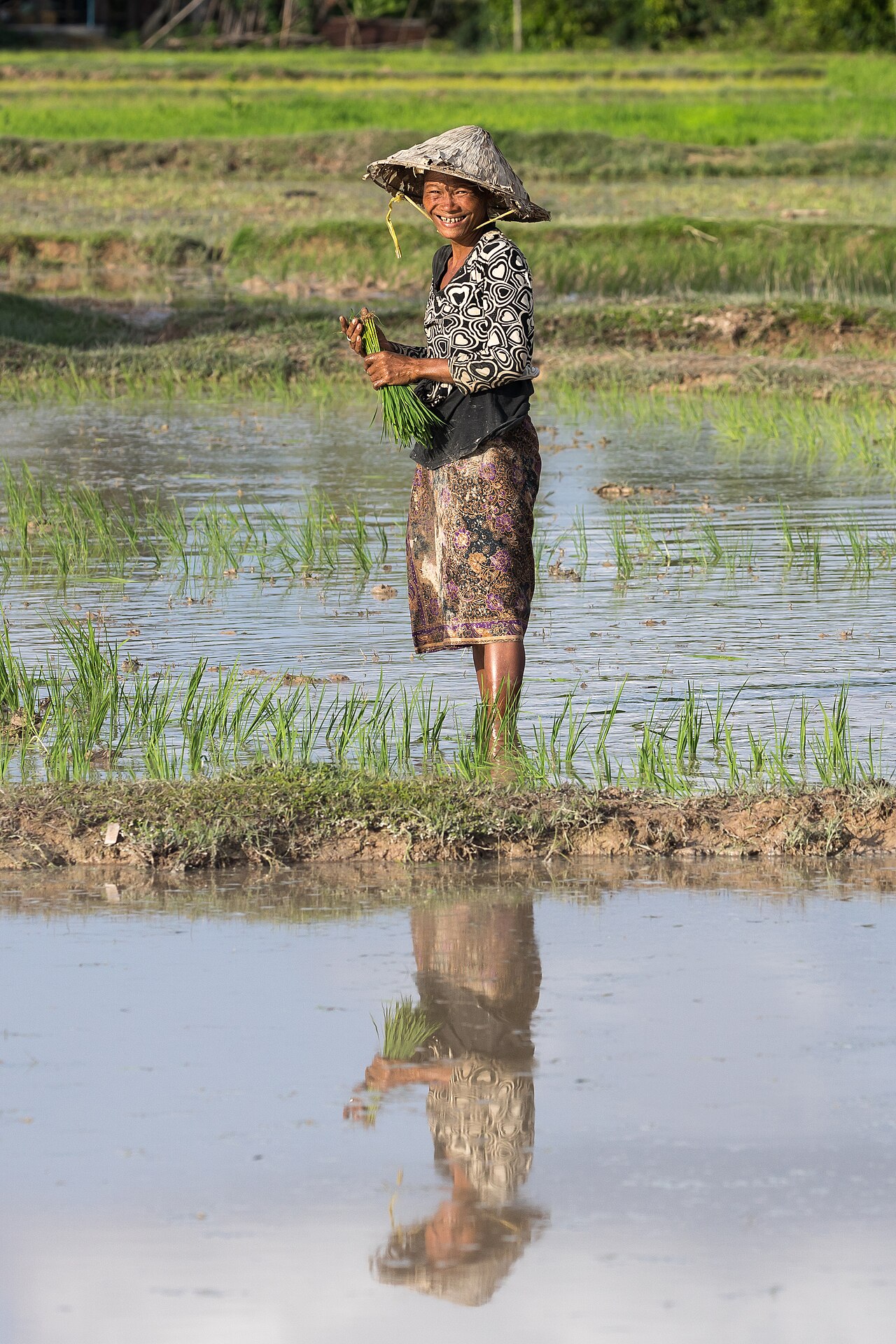
Women make up more than half of the agricultural workforce in ASEAN countries but have lower smartphone ownership, less access to digital financial services and less contact with extension and training networks, according to the report Accelerating Smallholder Digital Adoption at Scale in ASEAN.
The report was presented at the 26th meeting of the ASEAN Ministers on Agriculture and Forestry Plus Three (AMAF+3) in Singapore on 30 October. It was co-authored by Erika Balzarelli of The Sustainable Smallholder and produced through the SEEDS project (Smallholder Economic Empowerment through Digital Solutions), run by Grow Asia and the International Fund for Agricultural Development (IFAD) with funding from South Korea's Ministry of Agriculture, Food and Rural Affairs.
Balzarelli told AgNavigator that representative data on women's digital inclusion in rural ASEAN is scarce and fragmented, so it is hard to say which barriers matter most. In many households a smartphone is available but controlled mainly by men; women who use digital tools less get fewer chances to build skills; and many training schemes still do not put women first. Caregiving means some women can only attend at certain times, and in some places they cannot join mixed-gender sessions.
Frederique Glazener, regional programme lead at Grow Asia, pointed to a financial literacy course for women in Indonesia that was rescheduled around caregiving hours. Another approach that has worked is to find community "digital arrowheads", local people who show neighbours what digital tools can do.
Citing evidence from programmes for women in Africa, Balzarelli said every dollar invested in women can return three times as much in wider development outcomes.
For digital farming to narrow inequality rather than widen it, the report gives government extension services the central role, since they already reach dispersed rural communities. Balzarelli said their approach is often too generic, treating young and old, men and women alike, and the report calls for tailored training, differentiated outreach and targeted support for particular groups.
Photo: Basile Morin / Wikimedia Commons (CC BY-SA 4.0)
Source: AgNavigator

Comments
(0)