
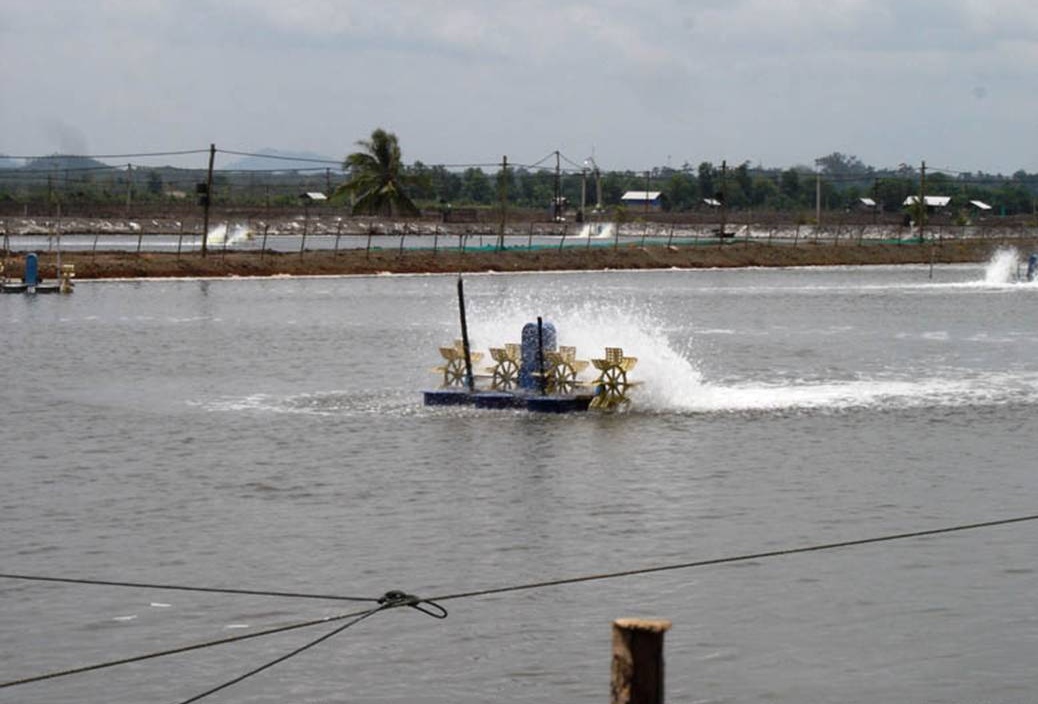
Aqua Exchange, an Indian aquaculture technology company, is aiming for $40 million in revenue in the year to March 2027, a 33% rise on the previous year, as it sells monitoring and automation equipment to shrimp farmers in India and abroad. Cofounder and chief operating officer Hemasundar Dhavili gave the figures to AgFunderNews reporter Elaine Watson.
The six-year-old firm began with the aim of bringing formal loans, insurance and buyers to smallholder shrimp farmers, and built its devices to tackle the day-to-day problems those services ran into. Dhavili said it now monitors close to 100,000 acres of shrimp farms in India, which he estimates at around 35% of the country's active shrimp acreage. The company has been EBITDA positive for two years.
The devices target the first 45 days of a crop, the period shrimp must survive to reach a marketable size. Automatic feeders, which Dhavili claims can improve feed conversion by up to 10%, are paired with units that track the electricity drawn by each aerator and send an alert to the farmer or supervisor when one stops, so that a motor can be fixed or a generator switched on before oxygen in the pond runs low. A power factor controller, he claims, can cut electricity bills by 20-25%.
To deal with disease and weak stock, the company scores microscope images and videos of shrimp post-larvae before a farmer buys them; a score of about 85% gets a green signal. Technicians also visit farms weekly to take water and tissue samples, which AI models analyse for early signs of trouble so that a farmer can act or harvest early. Dhavili stressed that this cannot prevent white spot syndrome (WSSV) or EHP, but gives an advance warning that can reduce losses. According to him, Indian shrimp crops succeed only 55-60% of the time.
The pond data also opens the door to credit. More than 90% of Indian shrimp farmers lease their land, Dhavili said, which keeps them out of ordinary farm loans. Lenders now extend unsecured working capital through Aqua Exchange, with the money held in escrow and spent on inputs of the farmer's choice. The company says crop success among farmers on its full platform has risen to 83%, and that its two insurance partners have issued more than 1,500 shrimp disease policies and settled over $300,000 in claims in the past year.
In India, smallholders farming 5-10 acres rent the devices on a subscription; larger overseas farms buy them outright. The firm has a subsidiary in Ecuador, has set up close to 5,000 auto feeders in Latin America, and also works in Mexico, Panama, Saudi Arabia and Madagascar. Technology brought in about 15% of revenue last year, the rest coming from farm inputs and from selling harvested shrimp to processors; Dhavili expects technology's share to reach 30% this year.
The next steps, he said, are to cover more than 70% of India's shrimp acreage, grow abroad and move into species such as tilapia, with systems that switch feeders and aerators by themselves. Dhavili estimates that 60-70% of the existing technology could carry over beyond shrimp, though a move into tilapia might need a fresh funding round. Aqua Exchange has raised $18 million in equity and $5 million in debt so far.
Photo: Herman Gunawan / Wikimedia Commons (CC BY-SA 3.0)
Source: AgFunderNews



Comments
(0)