
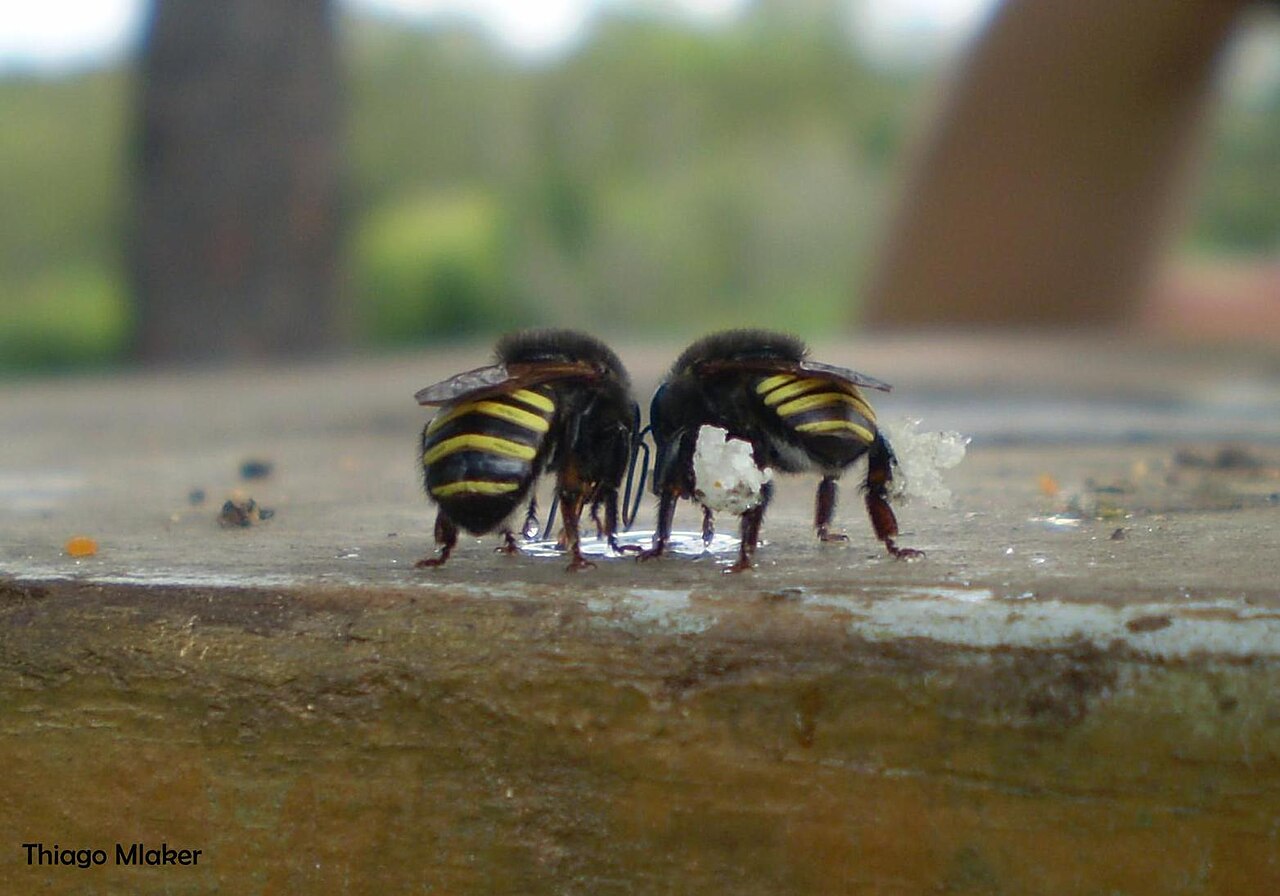
For the first time anywhere, insects have been given legal rights: local authorities in Peru's Amazon region have recognised the rights of stingless bees to exist, to reproduce, to live in a healthy environment and to legal protection. Ittefaq carried the news citing a CNN report.
Between October 2025 and January 2026, two Peruvian municipal governments approved separate declarations on the bees' rights, with emphasis on protecting their natural habitat and the conditions they need to live.
Peru's Amazon has more than 175 species of stingless bee, important pollinators of forest plants. Deforestation, heavy pesticide use and climate change now threaten them.
One of the people behind the move is Rosa Vásquez Espinoza, a chemical biologist and founder of the research organisation Amazon Research Internacional. She began studying the bees in 2020 and found that, although native, they had no specific protection in Peruvian law. Her conservation work won her a 2026 Rolex Award.
Despite the name, stingless bees do have a sting, but it is too small or weak to use in defence; some species buzz in groups when threatened and some bite. Nesting in tree hollows or underground, stingless bees also live in Bangladesh, and Peru's step is a reminder that protecting pollinators is also about protecting crops.
Photo: Thiago Mlaker / Wikimedia Commons (public domain)
Source: Ittefaq



Comments
(0)