
Akij Agro Feed Limited, the animal feed company of the Bangladeshi industrial group Akij Resource, honoured 34 of its top business partners at a ceremony at a hotel in Banani, Dhaka, on Saturday, 11 April 2026. Jagonews24 reported the event as the company's 'Best Business Partner Award'. According to a press release from Akij Resource, the awards recognised the partners' contribution to the company's business.
The chief guest was Sheikh Jasim Uddin, managing director and CEO of Akij Resource. The company, which makes feed for cattle, poultry and fish, said in the release that it had started operating in January 2025 and that it now sold 67 products across those three sectors. The Business Standard, The Daily Star and Prothom Alo carried the same press release on their corporate news pages between 11 and 13 April.
This report sets out what was said at the ceremony and what the company had reported about itself since its launch, and then describes the industry it works in: the size of Bangladesh's commercial feed sector, the maize and soybean meal that feed is made from, the livestock and fish farms that buy it, and the 2010 law under which feed makers are licensed. Statements about the company's own performance are its claims, made in press releases and interviews, and were not independently verified by the newspapers that carried them.
The ceremony in Banani
According to the press release, Akij Agro Feed had set 'an unprecedented example' in Bangladesh's feed industry within a year of starting in January 2025. The Business Standard's version said the company had 'rapidly secured a prominent position' in the industry. These are the company's descriptions of itself; none of the reports of the ceremony gave sales, market-share or profit figures for the company.
Speaking at the event, Sheikh Jasim Uddin said, as The Daily Star reported: "The tireless work and trust of our business partners has made AKIJ Agro Feed a trusted organization in this short period of time. This award is a symbol of our gratitude and recognition for them."
A.T.M. Habib Ullah, chief executive of Akij Agro Feed Limited, said: "Our goal is to empower the country's farming community, add new dimensions to production, and establish AKIJ Agro Feed as a trusted name in the livestock industry. At the same time, we also encourage our business partners to maintain the continuity and excellence of their respective businesses."
Senior officials of Akij Resource also attended, among them chief people officer Md Afsar Uddin, chief business development officer Mohammad Towfique Hasan and Sabiha Yeasmin, chief financial officer of the group's consumer market cluster. The company said the programme had been organised to recognise its partners and to strengthen long-term business relationships, and that it would work towards a sustainable and wider partnership with them.
The press release did not name the 34 partners, the award categories or the districts the partners came from, and none of the published reports listed them. In the feed trade, a company's business partners are chiefly the dealers and distributors who buy feed in bulk and sell it on to farmers; Akij Agro Feed's own statements, set out below, repeatedly name dealers as the partners it relies on.
How Akij Agro Feed began
Akij Agro Feed was presented to the market on 21 December 2024, when the company unveiled its product catalogue at the Radisson Blu Water Garden Hotel in Dhaka, The Business Standard reported that day. The launch ran under the slogan 'Result Hit' and, according to the paper, gathered hundreds of business partners along with people from the agriculture industry. The company said it used advanced European machinery that worked 'without human intervention'; its website describes the technology as German.
The chief guest at the launch was Md Reajul Huq, director general of the Department of Livestock Services (DLS) at the time, the government body that licenses animal feed makers. He asked dealers and other stakeholders to work together instead of blaming each other, and to stand by farmers and agri-entrepreneurs. "In addition, we need to be more aware of the use of antibiotics," he said, according to The Business Standard. Faria Hossain, chairman of Akij Resource, told the audience that the group had always been uncompromising on product quality.
In September 2025 the company announced that it had passed 10,000 tonnes of feed sales in a month, eight months after its launch. The Business Standard reported the claim on 7 September 2025 and Prothom Alo on 10 September, both from the company's announcement. Prothom Alo's report gave the formal launch date as 21 December 2024. In the same announcement Habib Ullah credited the company's sales, technical service and 'farmer-friendly' methods with winning the trust of farmers and dealers, and said the company was committed to results at farm level in feed conversion, growth and consistency. Faria Hossain said the result came from the joint efforts of the company's dealers and of the farmers who had trusted it from the first day.
By the company's account the range covered broiler, layer and Sonali or deshi chicken, dairy and beef cattle, and fish. Its website lists floating and sinking fish feed and shrimp feed among its aquaculture products. The figure of 67 products given in April 2026 is the company's own count.
Habib Ullah, who led the feed company at both the September 2025 announcement and the April 2026 ceremony, had previously been executive director (operations) of the agro division of Islam Group and had held senior posts at Purbani Group, according to Akij Resource's announcement of his appointment, which said he brought more than two decades of leadership experience.
The dealers and sales teams behind the awards
The April ceremony was the company's second recognition event of 2026. On 6 February 2026 Akij Agro Feed opened a two-day annual sales conference, titled 'Super Hit Sales Meet', at a hotel in Cox's Bazar, bringing together about 250 sales representatives from across the country, The Business Standard reported. Faria Hossain and Sheikh Jasim Uddin inaugurated it.
"It is because of your unwavering efforts, dedication and relentless hard work that AKIJ Agro Feed has been able to reach a strong position in a short period of time," Faria Hossain told the sales staff. Sheikh Jasim Uddin said: "You have not only sold products; you have built the trust of farmers, built relationships and established AKIJ Agro Feed as a trustworthy brand." Best performers in various categories were given awards for the previous year's work, and the meeting set out guidelines on sales strategy, market expansion and customer service.
The February meeting rewarded the company's own sales staff; the April ceremony rewarded the outside businesses that sell its feed. When Akij Resource announced Habib Ullah's appointment, it listed 'building stronger partnerships with dealers, farmers, and industry stakeholders' among his priorities.
In an interview with Prothom Alo published on 26 April 2025, World Veterinary Day, Sheikh Jasim Uddin described what the company said it offers beyond the feed bag. He said the most common problem he saw among farmers was a lack of knowledge of correct nutrition and of cost and profit analysis, and that the company held seminars and field training and kept a technical service team that advised farmers on feed management, disease prevention, environment and housing. He said the company formulated its feed for a good 'feed conversion ratio', the amount of feed an animal needs to gain a unit of weight, so that farmers' costs fell.
A feed industry of about 150 registered companies
The best recent public figure for the size of the industry comes from the U.S. Department of Agriculture's Foreign Agricultural Service office in Dhaka. In its Grain and Feed Annual report dated 7 April 2026, four days before the ceremony, it said that, according to the Feed Industries Association Bangladesh (FIAB) and the Bangladesh Poultry Industries Central Council (BPICC), around 150 registered feed companies collectively produced about 7.5 million tonnes of commercial feed a year. Numerous unregistered companies produced an estimated 500,000 tonnes more. About 70 percent of all feed produced was poultry feed; the rest was aquaculture and cattle feed.
The same report said expanding poultry, aquaculture and cattle sectors had driven higher feed production in Bangladesh, which in turn kept demand for imported maize strong.
Akij's managing director had given his own estimates a year earlier. In the April 2025 Prothom Alo interview he said 6.5 to 7 million tonnes of feed were used every year, 90 to 95 percent of it produced in the country. In an interview with Bonik Barta published on 24 April 2025, ahead of the 2025-26 budget, he gave the same annual demand, said 85 to 90 percent of it was met by domestic production, and said Bangladesh had more than 250 registered and 83 unregistered feed makers. His counts differ from the FIAB and BPICC figures that the USDA cited in 2026.
In the Bonik Barta interview he named the industry's main problems as he saw them: a large share of raw materials, especially soybean meal and vitamin and mineral ingredients, still had to be imported, and the dollar shortage and difficulties in opening letters of credit had raised both the time and the cost of buying them; low-quality feed sold by what he called some dishonest traders had confused farmers; and many small and medium farmers did not yet fully appreciate the value of quality feed. He called for incentives for the feed industry, a strong regulator to control poor-quality feed, more investment in research and regular training for farmers. For the 2025-26 budget he sought duty and VAT relief on feed raw materials, tax relief on smart farming equipment and special loans for small and medium farmers. He also said the company had started an Internet of Things (IoT) based smart farming project in which sensors would monitor farm temperature, feed intake and animal health.
Maize, the main ingredient
Maize, called corn in the American report, is the second-largest grain crop in Bangladesh after rice, in both area and production, and around 90 percent of the harvest goes to the feed industry, with the rest processed into starch, the USDA's April 2026 report said. Winter maize accounts for about 85 percent of production: it is sown in November and December and harvested in March and April. Summer maize is planted in March and April and harvested in August and September.
Based on the Department of Agricultural Extension's latest crop report, the USDA office estimated maize harvested area for the 2025-26 marketing year at 660,000 hectares and production at 5.8 million tonnes, and forecast 670,000 hectares and 5.9 million tonnes for 2026-27. It said farmers were shifting to maize because its return was three times its cost of production and its input costs were lower than those of boro rice and vegetables in the same season. The main growing districts are in the north and north-west, including Lalmonirhat, Thakurgaon, Dinajpur, Nilphamari, Rangpur, Kurigram and Bogura, along with Jamalpur, Chuadanga, Natore, Kushtia, Meherpur and Jhenaidah; the crop is also spreading in coastal districts and on riverbank and char land.
Home production is not enough. The report estimated maize imports for 2025-26 at 1.8 million tonnes, 27.2 percent more than the previous year, driven by the expanding feed industry and lower world prices; in the first ten months of the marketing year Bangladesh imported nearly 1.5 million tonnes, mostly from Brazil, India and the United States. As of February 2026 Brazil supplied 78 percent of maize imports and India and the United States 11 percent each. India, long a major supplier, had less to export after 2024 because it was turning more maize into biofuel.
Feed companies were the buyers. Three Bangladeshi feed companies made the first purchase of American maize since 2018, about 60,000 tonnes, which arrived at Chattogram port in the first week of January 2026, and a consortium of feed companies brought in two more consignments, the report said. Feed millers store maize in their own silos, as the government does not procure or stock it. There is no import duty on maize apart from a 2 percent advance income tax; the government removed all duties on it to support the feed industry. Feed and residual use of maize was estimated at 7.1 million tonnes in 2025-26.
Soybean meal and the other ingredients
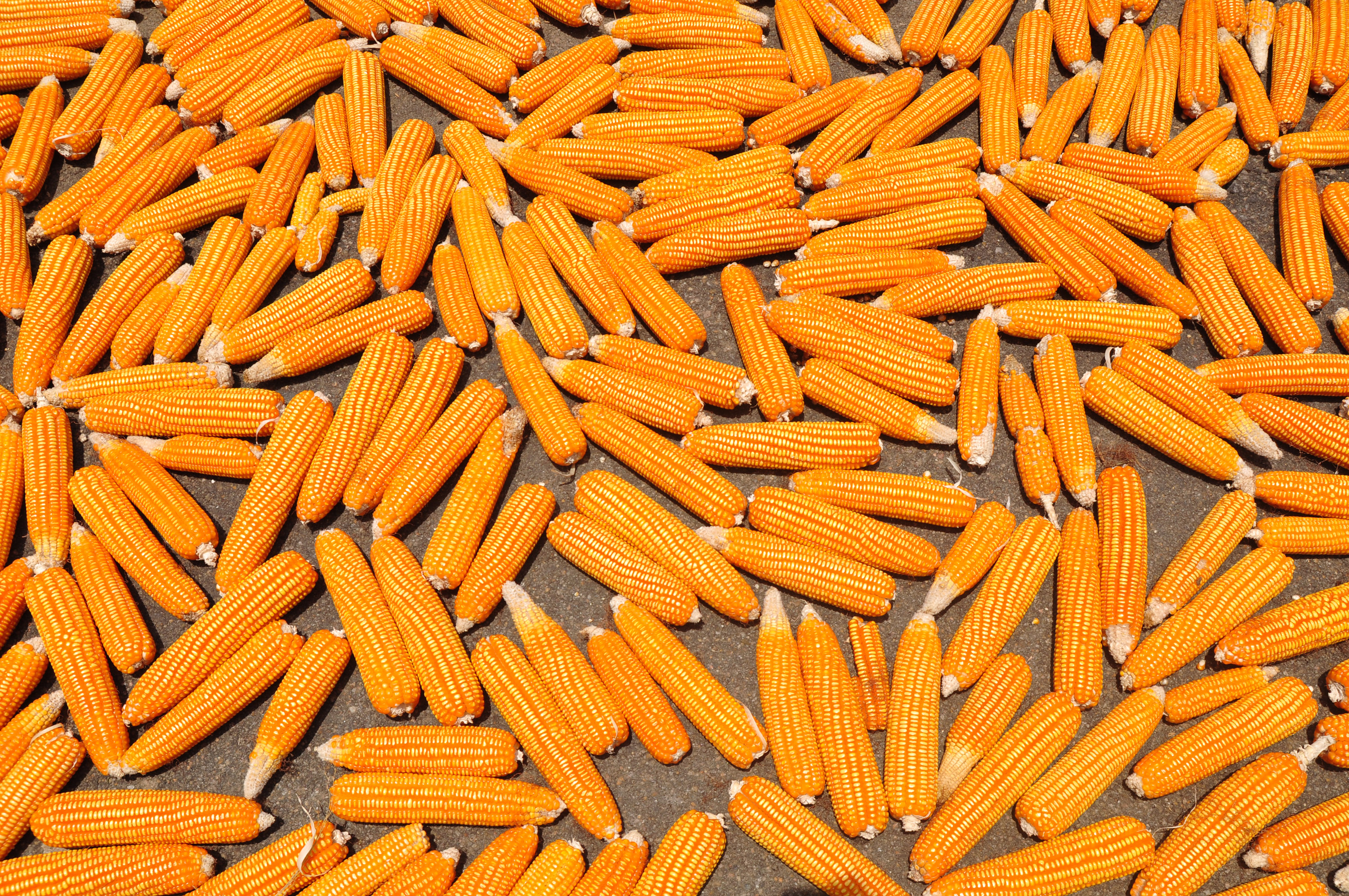
Poultry feed uses maize as its main raw ingredient, while aquaculture and cattle feed use more soybean meal along with maize, according to the USDA report, which put the maize share of commercial poultry feed at 50 to 65 percent, citing feed industry contacts. Other commonly used ingredients are fish meal, distillers' dried grains with solubles (DDGS), extruded full-fat soybeans, broken rice, rice polish, rapeseed and mustard meal, corn gluten meal, coarse limestone and de-oiled rice bran. Some feed mills also use about 4 to 5 percent wheat flour, and some use wheat bran. Companies design their formulas for the nutritional needs of poultry, dairy and fish customers, and the proportions change with ingredient prices and availability.
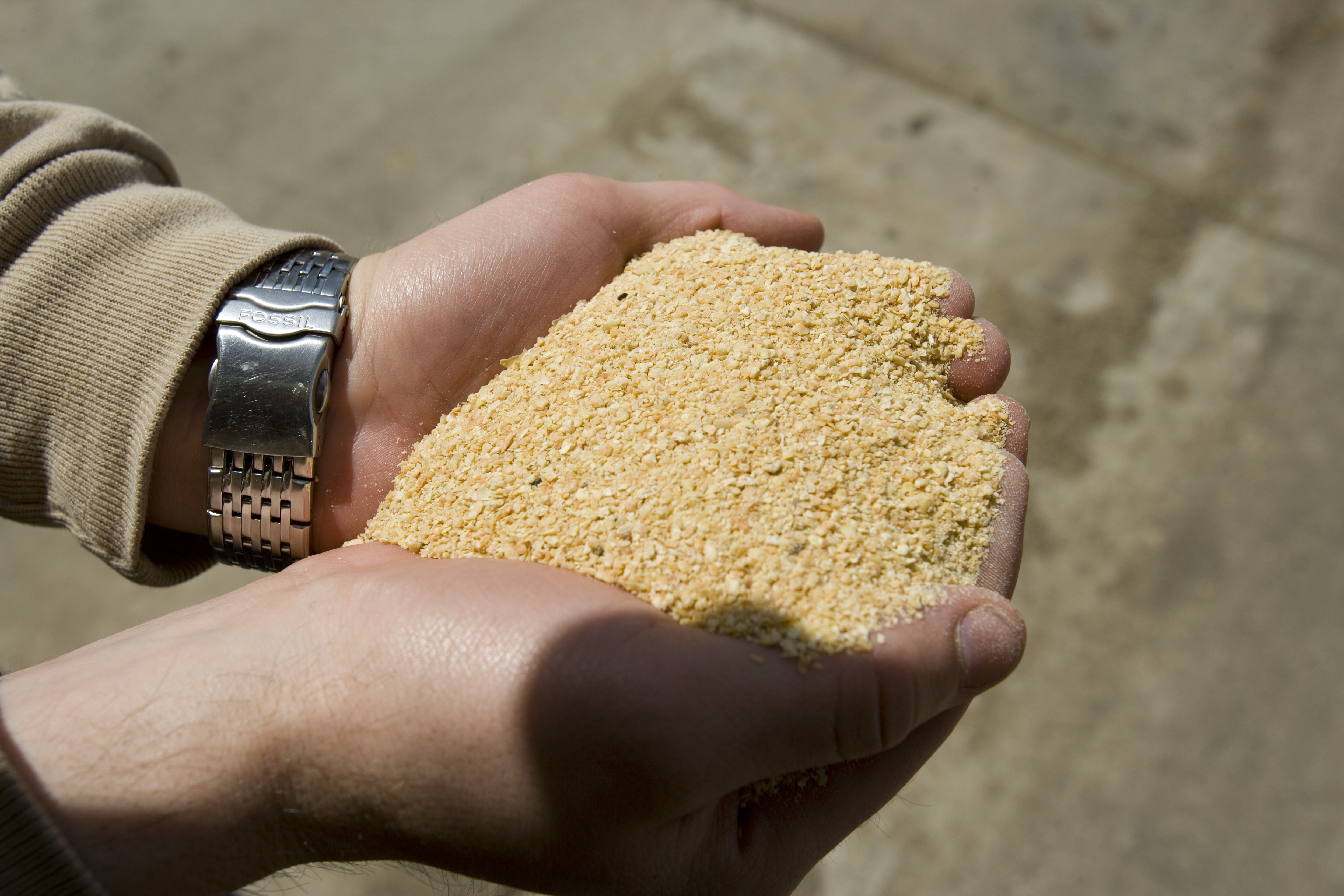
Soybean meal, the protein-rich material left after oil is extracted from soybeans, is a key protein source in floating fish feed, the report said, and the fisheries industry increasingly relies on feeds with high levels of soybean meal and DDGS.
In his April 2025 Prothom Alo interview, Sheikh Jasim Uddin said soybean meal, premixes and enzyme ingredients still had to be imported, and that rising world prices, the dollar crisis and letter of credit problems disrupted supply. He said the company brought in raw materials from local and international sources on its own 'mother vessel' to keep their quality consistent.
The livestock and fish farms that buy the feed
The feed industry serves a livestock sector that the DLS measures every year. Its 'Livestock Economy at a Glance 2023-2024' put the sector's share of gross domestic product at 1.80 percent at constant prices, with growth of 3.15 percent, and its share of agricultural GDP at 16.33 percent. The sector's output was worth Tk 82,014 crore at current prices. The DLS put the sector's share of direct employment at 20 percent and of partial employment at 50 percent. The USDA report of April 2026, citing DLS data, put the sector at 1.81 percent of GDP and 16.54 percent of agricultural GDP, with growth of 3.19 percent.
According to the same DLS summary, Bangladesh produced 150.44 lakh tonnes of milk in 2023-24 against a demand of 158.78 lakh tonnes, 92.25 lakh tonnes of meat against a demand of 76.21 lakh tonnes, and 2,374.97 crore eggs against a demand of 1,809.60 crore. The DLS calculates demand from a daily need of 250 millilitres of milk and 120 grams of meat per person and 104 eggs per person a year; it put availability at 234.45 millilitres of milk and 143.77 grams of meat a day, and 135.09 eggs a year, per person.
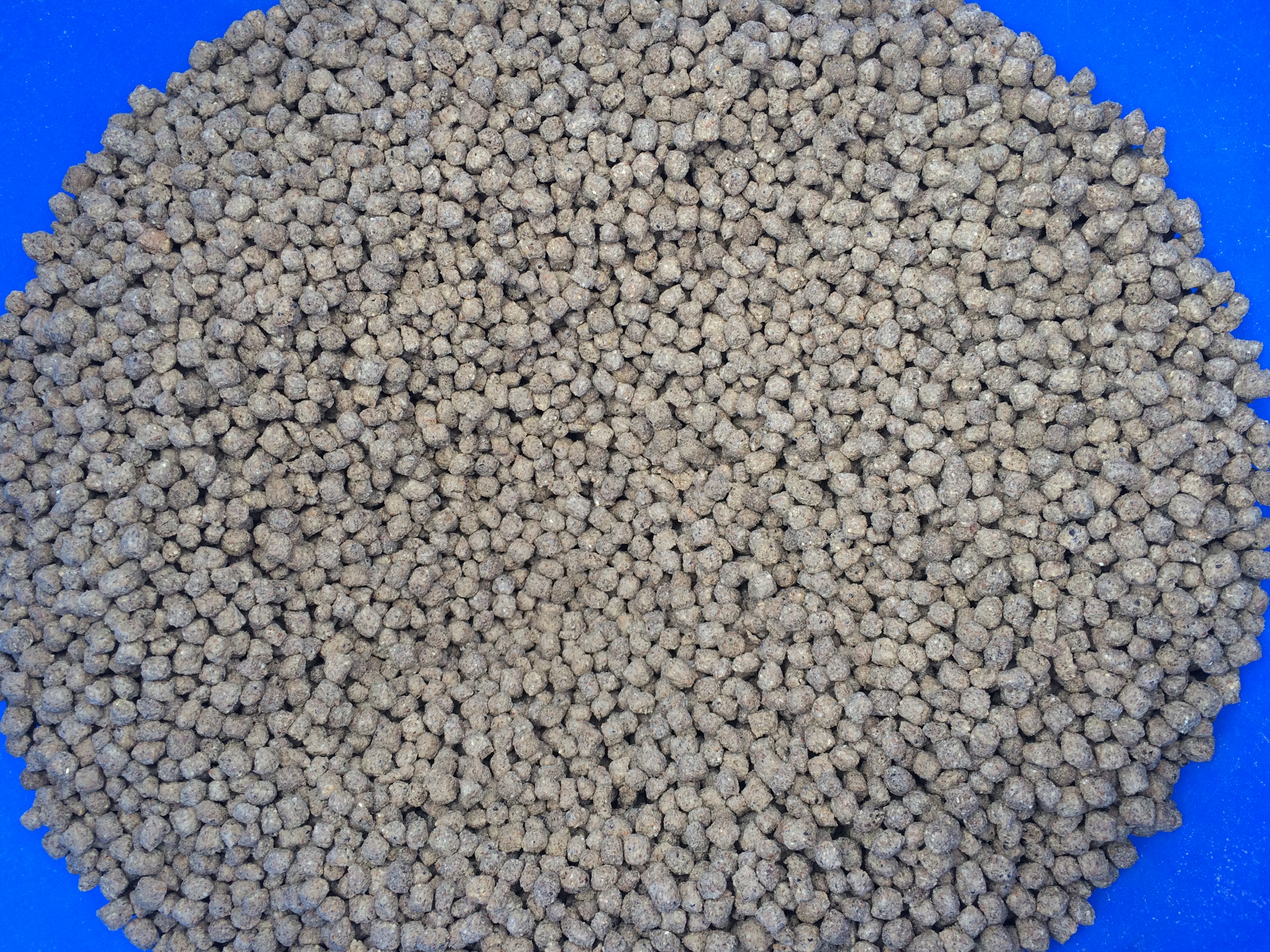
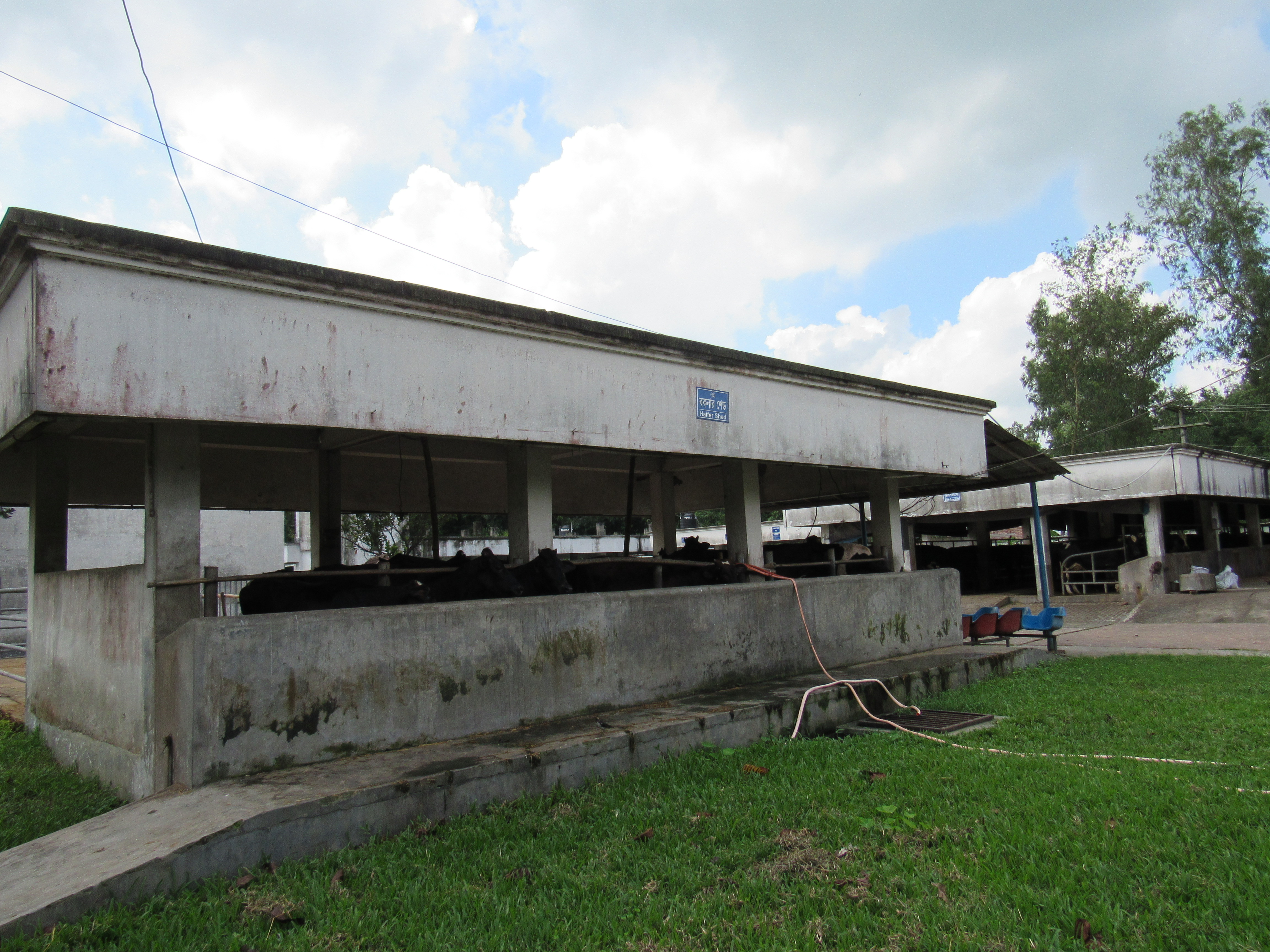
Most of these animals are on small farms. The USDA report said smallholders typically keep one to five animals, that poultry is the most commercialised part of the sector though many rural households still keep backyard chickens and ducks, and that most meat and milk still comes from millions of small-scale farmers. Commercial concentrate feed has limited use in dairy, it said, because most small and medium cattle farms prefer to feed handmade rations; one study in the south-west found that half of the dairy farms surveyed mixed their own feed. Many local layer farms also make their own feed from maize and premix, and this is not counted in commercial feed figures.
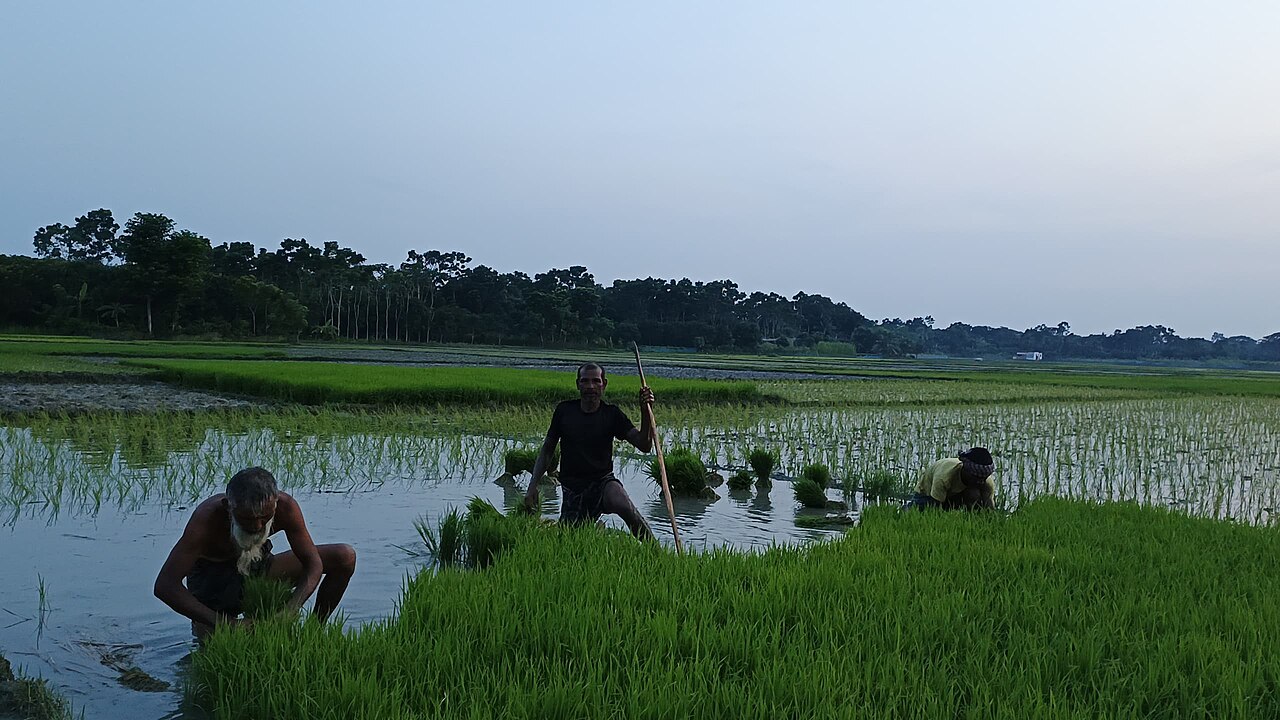
Fish farming is the other big market. Aquaculture is a livelihood for over five million households, and many farmers have moved to semi-intensive culture with controlled feeding, better water management and moderate stocking, the report said; carp and tilapia are the main farmed fish.
The law that governs feed makers
Feed makers and sellers in Bangladesh work under the Fish Feed and Animal Feed Act, 2010. Section 4 of the Act says no one may produce, process, import, export, market, sell or distribute fish feed or animal feed without a licence, so the requirement covers selling and distribution as well as manufacturing. Under section 5 the licensing authority for fish feed is the director general of the Department of Fisheries, and for animal feed the director general of the Department of Livestock Services, or a first-class officer each of them authorises. A licence is valid for one year and must be renewed (section 7).
The Act requires the government to set standards for feed ingredients by rules, and makes following them compulsory for commercial producers; if laboratory testing finds feed below standard, or containing anti-nutritional or harmful substances, the maker's licence can be cancelled (section 10). Authorised officers may take samples from any producer, importer or seller at any stage of marketing for testing (section 11), and may inspect factories, stores, vehicles and sales points (section 15). Feed found harmful or adulterated can be seized and destroyed (section 16).
Section 13 says feed may not be marketed unless it is sealed airtight in an approved container or packet whose label states:
- the name of the manufacturer and the country of manufacture;
- the name, address and registration number of the firm;
- the net weight;
- the names and percentages of the feed ingredients and nutrients;
- a lot number or other identification;
- a code identifying the source of the product;
- the kind of fish or animal the feed is for;
- the date of production and the expiry date.
Section 14 bans the use of antibiotics, growth hormones, steroids, pesticides and other harmful chemicals in fish and animal feed. An offence under the Act is punishable with up to one year's imprisonment, a fine of up to Tk 50,000, or both (section 20). Offences are non-cognisable and bailable, and a court may take up a case only on the written complaint of the director general or an authorised officer (sections 18 and 19).
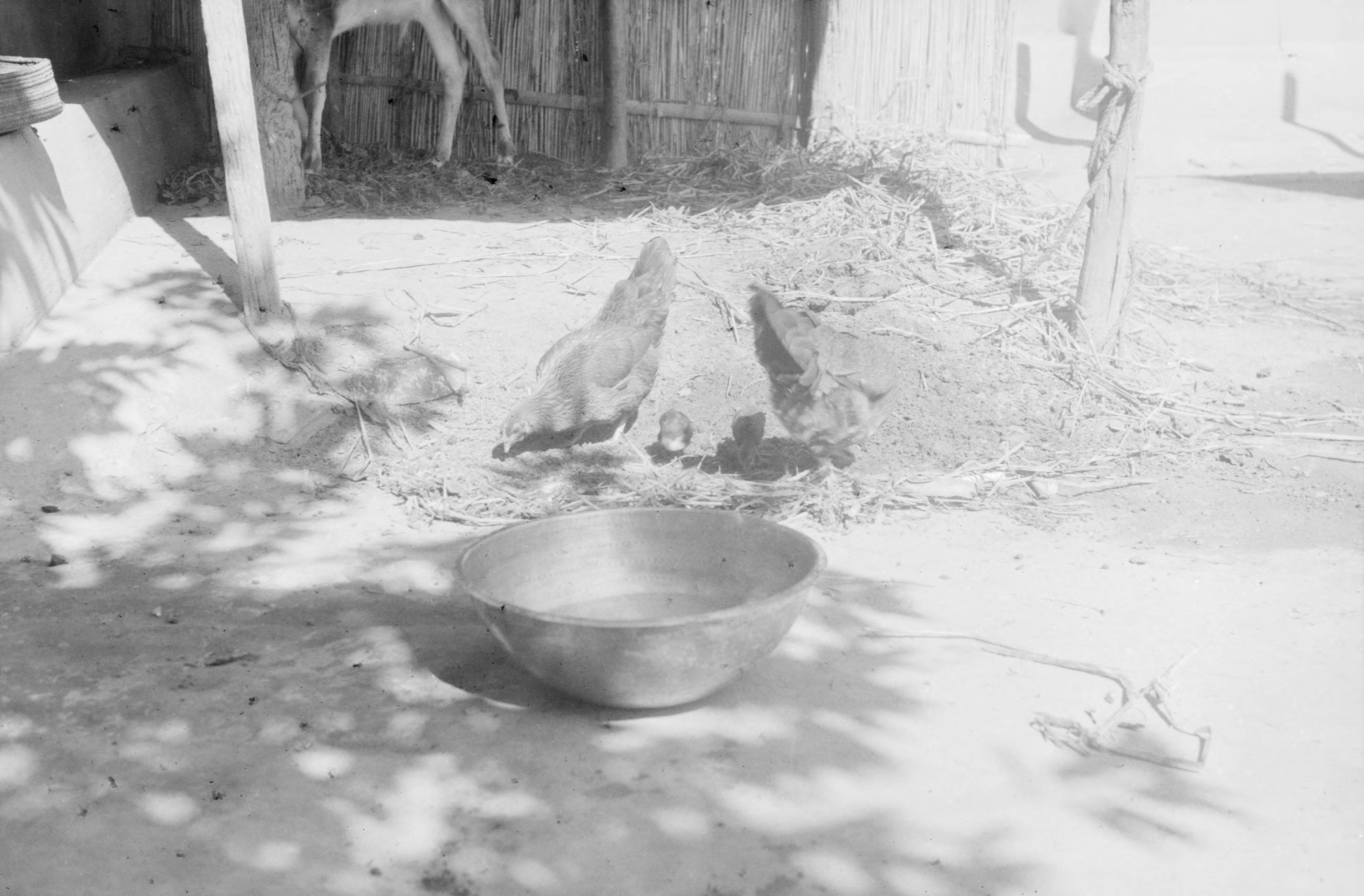
Photo: Khaleq / Wikimedia Commons (public domain)
Sources: Jagonews24, The Business Standard, The Daily Star, Prothom Alo, Bonik Barta, U.S. Department of Agriculture Foreign Agricultural Service (Grain and Feed Annual, Bangladesh, April 2026), Department of Livestock Services, Laws of Bangladesh (Fish Feed and Animal Feed Act, 2010), Akij Resource
Comments
(0)