
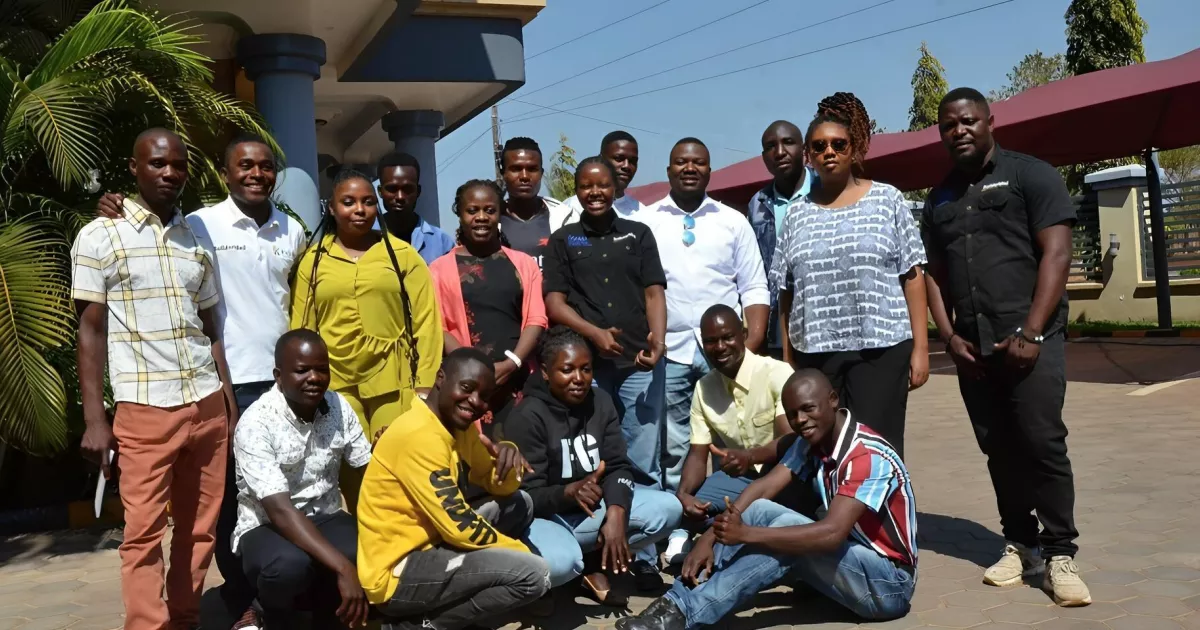
Five extension officers and ten lead farmers from Katete and Sinda districts in Zambia's Eastern Province have completed a three-day course on climate-smart agriculture (CSA) and climate information services, run in July 2026 by the Alliance of Bioversity International and CIAT with Solidaridad Zambia. Each lead farmer will now work with about 35 farmers through demonstration plots, field days and community meetings.
The training comes as the region braces for more bad weather. The 2023/24 El Niño drought, the worst in decades, wiped out harvests and led the government to declare a disaster, and meteorologists are warning of a similar El Niño pattern developing for the 2026/27 rainy season. Even the July weather was off: "We normally experience what we call the 'cold rains' at this time of the year. It's cold and foggy, even the Mphangwe hills are hidden from view," said Mpazi Siame, an extension officer with Solidaridad. This year the hills were visible and the days warmer.
Participants listed the hazards they face: heat that stresses crops through water scarcity, droughts that empty dams and boreholes and wipe out maize, floods that strip topsoil, hardpan soils that make land preparation difficult, livestock straying into fields, and rising pressure from fungal diseases in legumes, soybean aphids, ticks, tsetse, armyworm and uncontrolled bush fires.
Many are already adapting with local materials. Communities make Bokashi organic fertiliser from ash, cow dung, charcoal and maize husks. Extension officer Enock Nkhuwa described making biochar from crop stalks in cone-shaped pits: "Mixing biochar with fertilizer, bioliquid fertilizer or manure helps our soils retain moisture." Other practices in use include vetiver grass strips against erosion, treadle pumps for irrigation, conservation-agriculture ripping and agroforestry, backed by traditional leaders who restrict indiscriminate tree cutting. "CSA is a gamechanger in fighting against climate risks. Our farmers are already practicing these CSA practices," said lead farmer Thaulo Banda.
The group assessed these practices against the three pillars of CSA, productivity, adaptation and lower emissions, and designed bundles of complementary practices rather than single fixes. They also practised turning a seasonal forecast into farm decisions: a below-normal rainfall outlook calls for mulching, water harvesting and drought-tolerant varieties, while above-normal rain means raised beds and drainage channels. Forecasts currently reach farmers through extension officers and group representatives, a chain that works only if the message arrives before planting.
Only 2 of the 15 participants were women, a gap the group attributed to cultural expectations, household duties and the need for permission to attend, and discussed how to make CSA outreach more inclusive. Young farmers pushed back against the idea of farming as a last resort. "The youth are the future, and they need to be equipped with skills in CSA to cope with the challenges that are coming their way," said Banda Aaron.
Training materials will be translated into local languages. The workshop was supported by the IWMI Water and Soil Accelerator (WASA) project, and its authors describe CSA adoption as something that happens one conversation, one demonstration plot and one farmer cluster at a time.
Source: CGIAR

Comments
(0)