
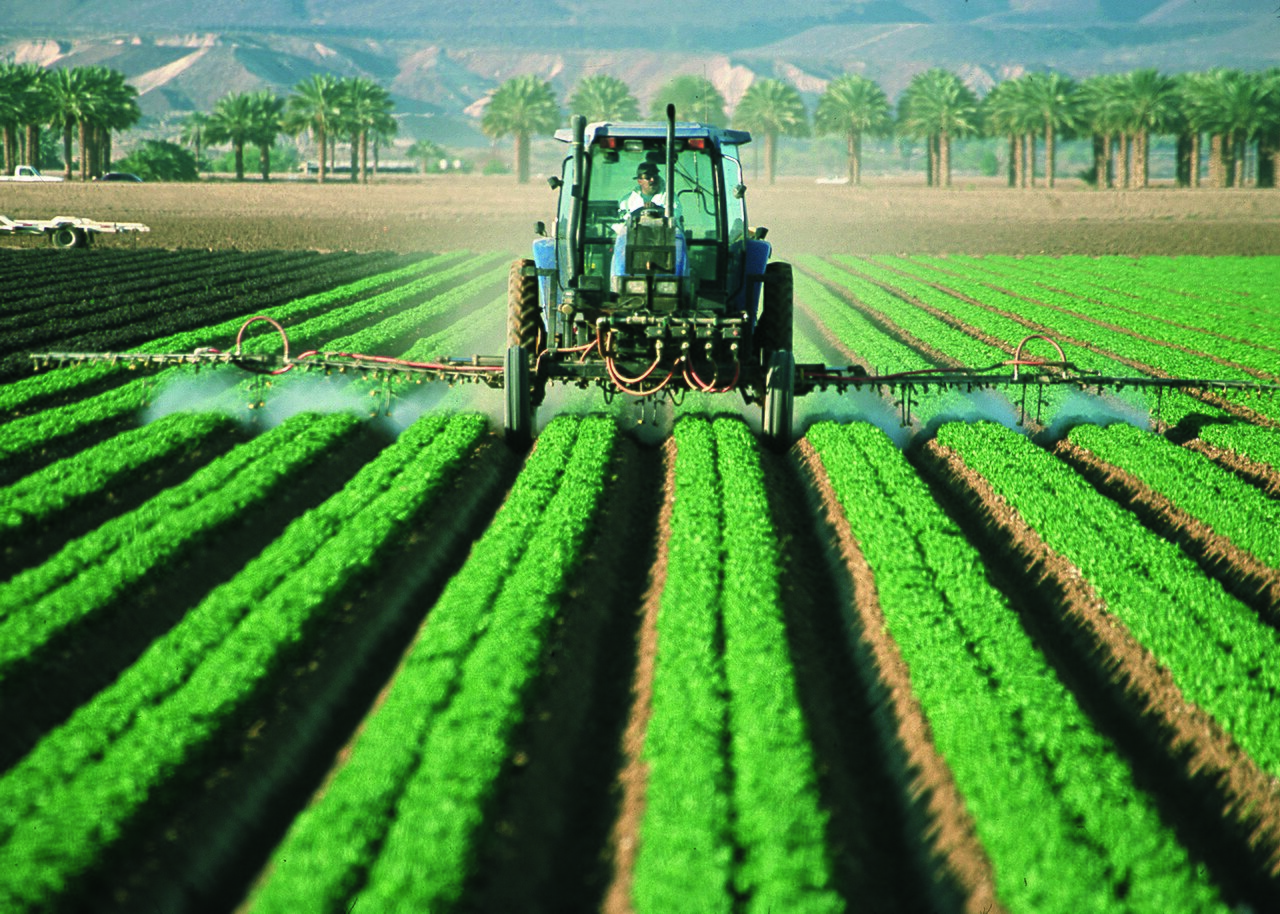
Children in South Africa's farming communities are exposed to pesticides around their homes as well as in the fields, according to a two-year study of 533 children aged nine to 15 in Grabouw, Piketberg and the Hex River Valley in the Western Cape, published in the journal Environmental Pollution.
The researchers, from the University of Cape Town (UCT), the Swiss Tropical and Public Health Institute (Swiss TPH), the University of Basel and Lund University, collected 1,814 urine samples over five rounds between 2017 and 2019 and measured 14 biomarkers, chemical traces that indicate recent exposure to different pesticides. The work is part of the Child Health Agricultural Pesticide Study in South Africa (CapSA) and the PhD thesis of first author Regina Molomo.
Recent household pesticide use was associated with increases of up to 57% in 12 biomarkers, and recent exposure to spray drift, when pesticides move beyond the area where they were applied, with increases of up to 30% in eight. These were common experiences: in every round more than 60% of children said they had noticed spray drift from nearby fields in the previous seven days, and about 60% reported recent household pesticide use in four of the five rounds. Children whose households drew water from open sources had higher levels of some biomarkers than those using taps, boreholes or bottled water.
"This analysis did not investigate if pesticides caused illness in the children. Instead, it identifies behaviours and environmental factors that were associated with measurable pesticide exposure," said co-author Professor Mohamed Aqiel Dalvie, director of UCT's Centre for Environmental and Occupational Health Research and principal investigator of CapSA. Most of the pesticides studied leave the body quickly, so urine shows recent exposure rather than a lifetime burden, he said, but children are re-exposed because the chemicals persist in the environment.
Of the children studied, 40% lived on farms and 80% had at least one family member working on a farm. Molomo said household exposure can come from farm chemicals brought indoors, household pest-control products or pesticides bought on informal markets. Co-author Samuel Fuhrimann, an epidemiologist at Swiss TPH, said reducing children's exposure needs joint action across farm and home, from stronger controls on spray drift to targeted education on safer handling, particularly of insecticides used in and around the home, and the authors support stronger routine biomonitoring and environmental monitoring.
The report is by Ridovhona Mbulaheni for Food for Mzansi.
Photo: Jeff Vanuga, USDA Natural Resources Conservation Service / Wikimedia Commons (Public domain)
Source: Food for Mzansi



Comments
(0)