
US agricultural exports are concentrated among a few established buyers, but growth in food and feed demand will increasingly come from developing and middle-income economies, according to a new report described by DTN.
The report, "Building the Next Generation of US Agriculture Export Markets", was written by Shawn Arita, associate director of the Agricultural Risk Policy Center at North Dakota State University, and published by the Farm Journal Foundation. It projects that by 2034 Africa will account for 38% of the increase in total food availability, India for 30%, South Asia for 10% and China for 2%.
Mexico, Canada, China, Japan and South Korea take about two-thirds of US farm trade. Japan and South Korea have ageing populations and capped food consumption, trade with Canada and Mexico is contentious, and dependence on China has shown how quickly a shift in Chinese demand moves prices and farm revenue. "A policy dispute, regulatory action, or sourcing shift in one major destination can move billions of dollars in exports within a single year," the report says.
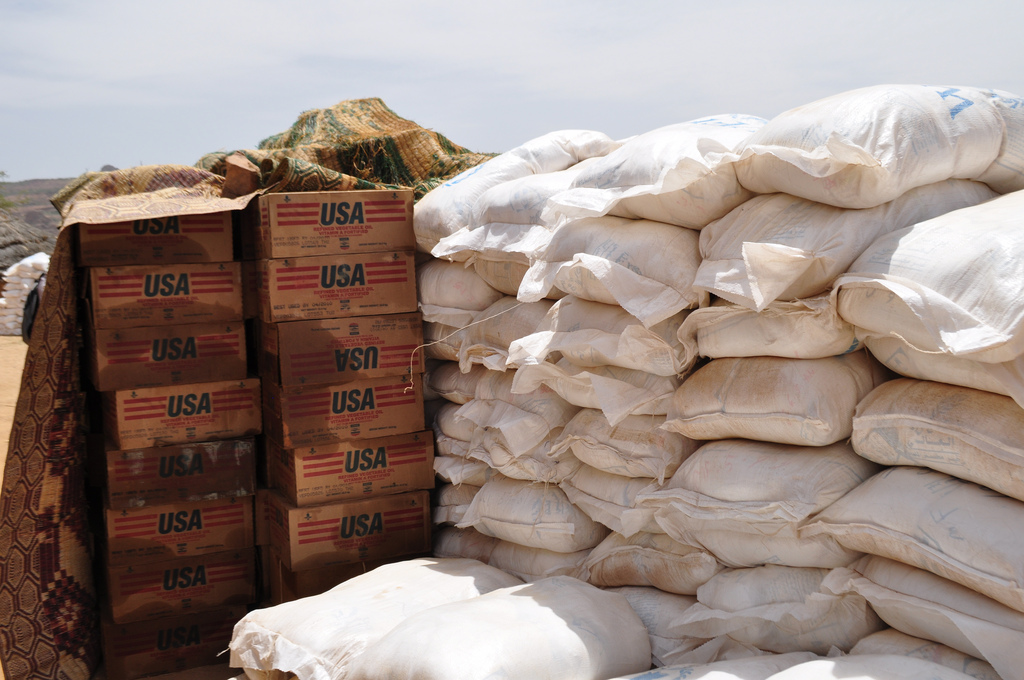
Arita proposes diversifying commercial markets, already under way through 18 reciprocal trade agreements and promotion programmes, while keeping food security and development aid that builds future demand. In 2024, nine of the ten largest US farm export destinations had received Food for Peace assistance earlier in their development.
That aid is shrinking. Food for Peace funding fell from nearly $5.5 billion in fiscal 2024 to an initial $452 million for fiscal 2025 before rising to $1.2 billion in fiscal 2026; US contributions to the World Food Programme fell from about $4.45 billion in 2024 to $2.07 billion in 2025, and 15 of 16 Feed the Future Innovation Labs were cut in 2025. Arita warned that deep cuts could risk long-term market development. The report was written by Jake Zajkowski.
Photo: Sudan Envoy / Wikimedia Commons (CC BY 2.0)
Source: DTN / Progressive Farmer

Comments
(0)