
The ruling royal family of the United Arab Emirates is benefiting from tens of millions of euros in European Union (EU) farm subsidies, and much of the produce grown in Europe is later exported to the Gulf region.
An investigation by DeSmog, later published jointly with the British newspaper The Guardian, found that affiliates controlled by the Al Nahyan family received more than €71 million in subsidies over the past six years for farmland in Romania, Italy and Spain.
The Al Nahyan family is considered the world's second-richest royal family, with total wealth estimated at more than $320 billion, much of it from the UAE's vast oil resources.
Subsidies under the EU's Common Agricultural Policy (CAP) make up about a third of the entire EU budget. Through the programme, about €54 billion a year is spent on farmers and rural development.
But an unknown share of this money is also going to foreign investors, including companies controlled by authoritarian states.
Europe's largest single farm
A joint investigation by DeSmog, Spain's El Diario and Romania's G4Media reviewed data on thousands of CAP beneficiaries between 2019 and 2024. It found at least 110 subsidy payments made to companies and affiliates controlled by the UAE's Al Nahyan family and the country's sovereign wealth fund ADQ.
The largest share went to the Romanian farming company Agricost, which owns the largest single farm in the EU. It covers 57,000 hectares, or about 141,000 acres, almost five times the size of Paris.
It had already emerged that EU farm subsidies favour large landowners. A Guardian investigation in 2024 found that just 17 billionaires received more than €3 billion in subsidies between 2018 and 2021.
In 2024 alone, Agricost received €10.5 million in direct subsidies, about 1,600 times more than an average EU farm.
Human rights campaigners described this as worrying, as the UAE has long faced accusations of human rights abuses. The country is criticised for jailing human rights activists, criminalising homosexuality and torture, although the UAE has always denied these allegations.
The Al Nahyan family and the companies named in the report did not respond to requests for comment. ADQ declined to comment.
Calls to cap payments
The findings come as European policymakers debate the future of the farm subsidy system. In July 2025 the European Commission published new CAP subsidy proposals for 2028 to 2034, including a cap of €100,000 a year on subsidies for any one farmer.
A European Commission spokesperson said CAP income support should be more targeted and that subsidies for large farms should be reduced or capped. The spokesperson also called on the European Parliament and the Council to back the new proposals.
Faustine Bas-Defossez, director for nature, health and environment at the European Environmental Bureau, said the CAP is not helping European farmers but making the richest landowners richer, and, worse still, it is now strengthening authoritarian governments.
A global farming power
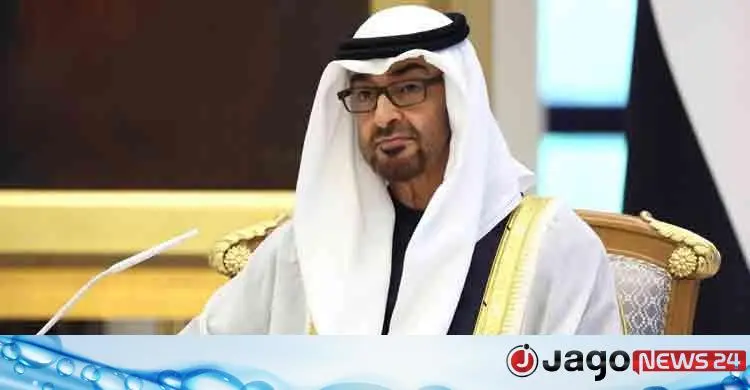
The Al Nahyan family is the most powerful royal family in the UAE. Each of the country's seven self-governing emirates has its own royal family, but central leadership rests with the ruler of Abu Dhabi and UAE President Sheikh Mohamed bin Zayed Al Nahyan.
In little more than 15 years, the Emirati dynasty has become a major force in global agriculture, buying huge areas of farmland and agricultural companies across Africa, South America and Europe. The UAE now controls about 960,000 hectares of farmland around the world.
Analysts say this is mainly part of the UAE's food security strategy, as extreme heat, water scarcity and sandy soils make farming difficult in the country. The UAE currently imports about 90 per cent of its food.
The investigation found that the expansion in Europe was carried out mainly through three large companies in Spain, Italy and Romania.
In 2018 the UAE-based agricultural company Al Dahra bought the giant Romanian farming business Agricost for about €230 million. Al Dahra was founded by the president's brother, Sheikh Hamdan bin Zayed Al Nahyan. In 2020 the Abu Dhabi sovereign fund ADQ bought a 50 per cent stake in the company.
Little is publicly known about Al Dahra's current ownership structure, but DeSmog found that members of its board still have close ties to the Al Nahyan family. Its chairman is Sheikh Hamdan bin Zayed, and his son Sheikh Zayed bin Hamdan Al Nahyan is married to the UAE president's daughter.
Since 2012, Al Dahra has also acquired several farming companies in Spain that control more than 8,000 hectares of land. According to DeSmog, these companies received more than €5 million in CAP subsidies between 2015 and 2024.
The UAE's farms in Spain and Romania mainly grow alfalfa and other crops for animal feed, most of which is exported to the Gulf. Al Dahra also has a long-term feed supply contract with the UAE government, used in the country's fast-growing dairy industry.
In 2022 ADQ bought the fruit producer Unifrutti for about $830 million. DeSmog's analysis found that Unifrutti's Italian farms received at least €186,000 in subsidies in the three years after the sale.
A flaw in how subsidies are paid
Experts say that such large sums reaching the UAE show a fundamental problem in how CAP subsidies are calculated, because they are based mainly on the amount of land.
Although the European Commission's new proposal sets a cap on direct payments, it would affect only the top 0.5 per cent of Europe's landowners, a group that currently receives 16 per cent of the entire CAP budget.
Thomas Waitz, an MEP for Austria's Green Party and its agriculture coordinator, said the UAE receiving these subsidies is a scandal hiding in plain sight.
He said 99 per cent of Europe's genuine farmers receive less than €100,000 in subsidies. The money was meant to support real European farmers, not dynasties built on fossil fuels.
The subsidised farms are only part of Al Dahra's and ADQ's farming expansion in Europe. They also have grain mills in Greece and Bulgaria and a huge dairy farm in Serbia.
Experts say that although ADQ is state-owned on paper, in practice it is run under the close control of the UAE's royal family.
Marc Valeri, associate professor of the political economy of the Middle East at the University of Exeter, said there is no clear line between the state treasury and the royal family's private wealth. It is a highly authoritarian and repressive system of government in which state money and family money have become almost one and the same.
As of 2025, the UAE's seven sovereign wealth funds held total assets of about $2.5 trillion.
Much of this wealth is controlled by the president's close relatives. From 2023 to January 2026, ADQ's chairman was Sheikh Tahnoun bin Zayed Al Nahyan, the president's brother and national security adviser.
Since January this year, ADQ has been part of Abu Dhabi's new sovereign fund L'imad Holding. Its chairman is Sheikh Khaled bin Mohamed bin Zayed Al Nahyan, the president's eldest son and likely successor.
The full picture may be larger
DeSmog says the subsidies uncovered in its investigation may be only part of the full picture, because official data are incomplete and the ownership structures of Emirati companies are not transparent enough.
All EU member states must publish data on the farms and owners that receive CAP subsidies. But the lists include only the entities that receive subsidies directly, so identifying the real owners, or who ultimately benefits from the money, is often difficult or impossible.
Unifrutti is given as an example. The company has farms in Sicily and in the Almería region of Spain, but no information was found on how much in subsidies these farms received.
The report draws on The Guardian.
Source: Jagonews24. First published in Bengali on The Agro News.
Comments
(0)