
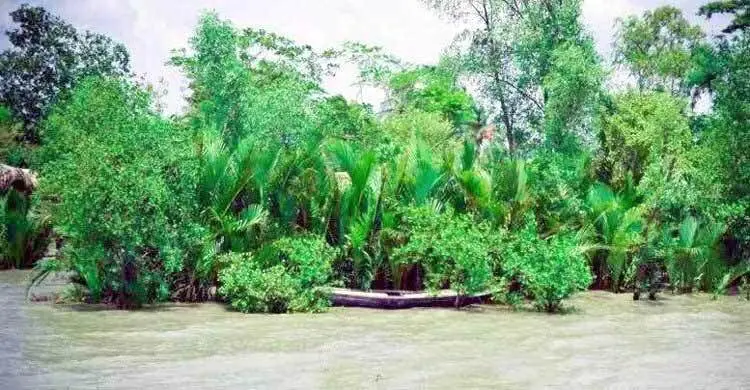
The area of the Sundarbans, South Asia's largest mangrove wetland, has grown from 4.8 per cent to 7.6 per cent, the study reports, a change that raises environmental concerns such as habitat fragmentation and biodiversity loss. Savanna forest, meanwhile, fell slightly from 1.0 per cent to 0.9 per cent, pointing to reduced forest resilience and possible degradation caused by human migration or natural forest dynamics.
The findings come from Change Initiative's 2024 study 'Rising Tides, Roaring Futures: The Sundarbans Quest for Survival'.
The study found that despite the growth in wetland area, the region's 210 species of fish, shrimp, crab, molluscs and oysters are being harmed by widespread use of toxic substances.
Dense forest shrinking
It found that climate change is reducing forest density in the Sundarbans and raising toxin levels in water sources, fragmenting habitats and reducing biodiversity. Bangladesh must act immediately, through national and international efforts, to conserve the ecosystem, including joint management of protected areas and action against those responsible for its degradation.
According to the study, 94.2 per cent of the Sundarbans was covered by dense forest in 1973, falling to 91.5 per cent in 2024: about 3 per cent of forest lost in 51 years. Land cover changed between 1973 and 2024, with dense forest declining and wetland growing, a sign of habitat loss and fragmentation. Ecologically vital areas that provide services from carbon sequestration to coastal protection and biodiversity have shrunk significantly.
The researchers estimate the Sundarbans biosphere reserve has suffered losses of US$3.3 billion over the past 30 years, more than 80 per cent of it due to mangrove degradation.
The study also says the threats facing the Sundarbans must be considered urgently, including the decline in tigers, the disappearance of sundari trees, geographical indication (GI) recognition for Sundarbans honey, and the coal-fired power plant and risky infrastructure at Rampal.
Differing views on the causes
M Zakir Hossain Khan, chief executive of Change Initiative and an international climate and environmental policy expert, said saving the Sundarbans is urgent and needs action on many fronts. It is a cross-border problem, so it should be included under the loss and damage fund. To tackle pollution locally, businesses and institutions harming the local ecosystem must be given alternative sources of income, and punitive measures, including cancelling government benefits, taken against polluters in the area.
Mihir Kumar Dey, conservator of forests for the Forest Department's Khulna region, told Jagonews that the Sundarbans' condition is mainly due to natural causes or climate change. "We think it is a natural process. It is not possible for people to cause any damage inside the Sundarbans. But there is a tendency to erosion in some places; we do not deny that," he said.
He added that some Indian cargo ships run through and alongside the Sundarbans, which has some impact, but the effect of climate change is greater.
Change Initiative stressed the need for multi-level co-ordination across the Bangladesh and Indian Sundarbans. Its proposed solutions include joint management of protected areas, integrated conservation and joint research; digital monitoring, including drones, to track illegal activity and wildlife movement; sensor-based technology to monitor salinity; and measures against illegal fishing.
Expanding protected areas and wildlife sanctuaries is also vital, it said, along with reviving historical administrative models and rapidly renewing regional and international agreements to protect 30 per cent of land and sea by 2030.
Source: Jagonews24. First published in Bengali on The Agro News.
Comments
(0)