
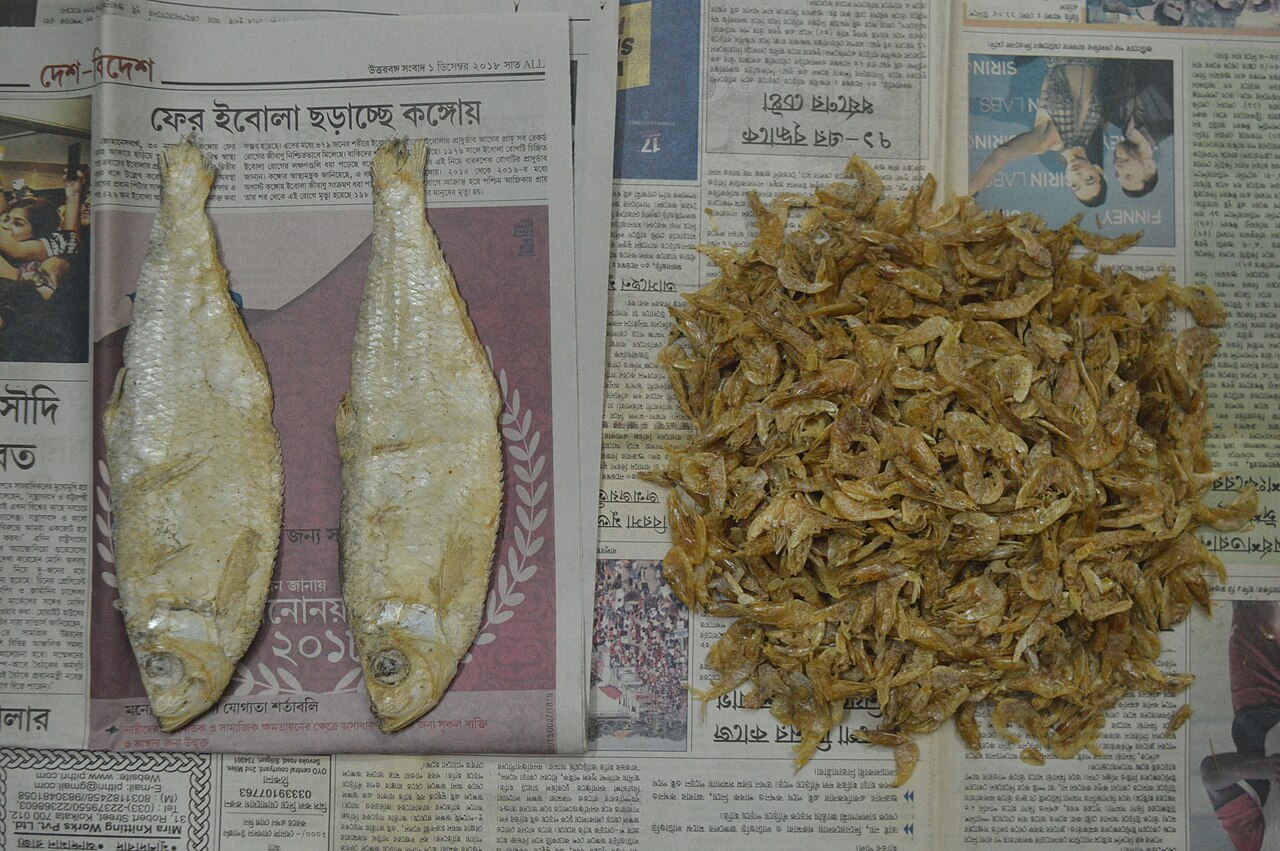
At this time of year Chalan Beel should be yielding plenty of native fish, but this year it is not. Most of the space in the more than 200 dried-fish (shutki) yards set up beside the wetland in Ullapara, Salanga and Tarash in Sirajganj lies empty, and workers sit idle.
Traders from the area and elsewhere in the country set up the yards each year. Native fish such as snakehead, boal catfish, taki, shing, magur, climbing perch, pabda, tengra, goby, shrimp, puti, mola, chanda, kachki, eel, batashi, foli and aair are cleaned, salted and dried on bamboo racks, and the dried fish goes to districts across the country and abroad. For several years now, though, the yards have not produced what traders hoped.
Traders say that from the start of the rains to the end, China duari and other nets take fish of every size from the wetland, which is wiping out native stocks. Trader Anis said he now buys a little fish at a high price, not enough to produce as before. Half of Amjad Hossain's yard in Pangashi, Ullapara, is empty.
Yard workers Khadija and Sobahan said that they used to cut, wash and dry fish from morning to evening, and those earnings kept their households and paid for their children's schooling. Now there is less than half the work, and they spend most of the time idle.
Tarash upazila fisheries officer Md Nasir Uddin said the Department of Fisheries runs several programmes to protect native fish and raise output, and that legal action and drives continue against illegal nets, to protect fry and to conserve natural breeding grounds. The report is by Krishi Shomoy's Sirajganj correspondent.
Photo: Souradeep Roy 1998 / Wikimedia Commons (CC BY-SA 4.0)
Source: Krishi Shomoy

Comments
(0)