

For a long time the Garo hills of Sherpur were a focus of concern over conflict between people and wild elephants. Wildlife researchers feared the Asian elephant might gradually disappear from the area. Amid those fears has come a ray of hope: about 20 elephant calves have been born in the area in the past year. The forest department and activists say breeding has increased as more food has become available in the forest.
Conflict with settlers
According to those concerned, the Garo hills have long been home to wild elephants, but forest grabbers have disturbed that habitat. Over 30 years they have moved into the hills and built settlements, and the deep forest of the Garo hills has steadily shrunk. As a result, herds often come out of the deep forest in search of food, and conflict begins with the people living on forest land.
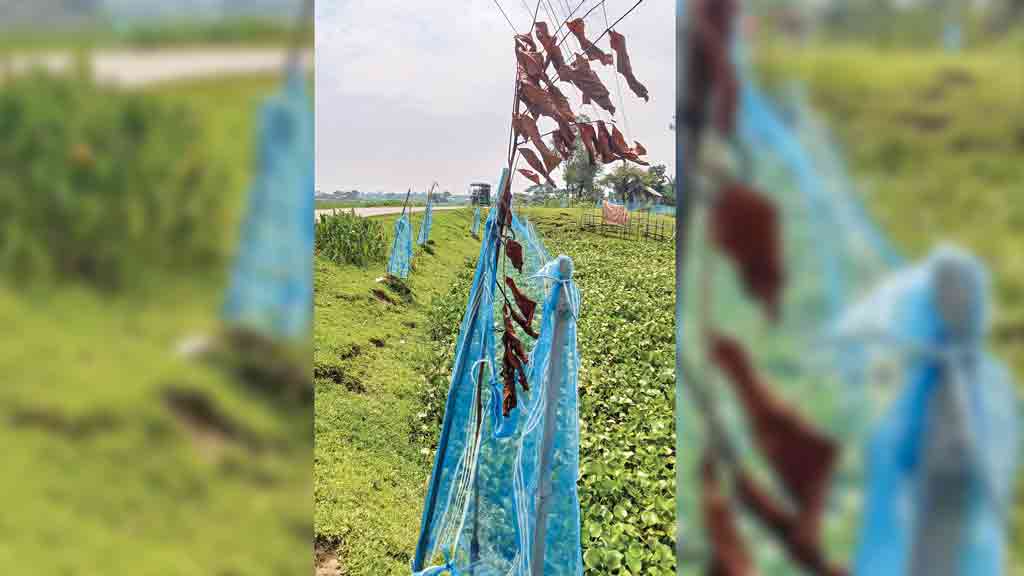
Local farmers put electric wires around their fields to keep elephants from damaging crops, and wild elephants die of electrocution. At times people trying to drive elephants away have also been trampled to death.
According to the Bangladesh Animal Welfare Association, two cases were filed under the Wildlife (Conservation and Security) Act over the killing of elephants: one in Sreebardi upazila on 12 November 2021, and one in Nalitabari upazila on 1 November of "this year", as the report puts it. The accused served time in jail. Even so, questions were raised over several more elephant deaths, and fears grew in recent years that the number of wild elephants in the region was falling. Now that a number of calves have been seen in the herds, hope has replaced that fear.
What locals have seen
Local resident Abdul Khaleque said: "When we go into the forest we often see elephant calves. Altogether we have seen more than about 15 calves."
Rangli Rani said the same: "When we go into the jungle to gather firewood we see calves in the herds. There are about 15 to 20 calves. We have never seen so many calves together before."
Habitat under pressure
Asifuzzaman Prithil, president of Research and Conservation of Elephant Bangladesh, told Jagonews that the Garo hills along the border once covered a vast area but are now shrinking. Hundreds of acres of forest department land are in the hands of encroachers. Many animals that once lived in the hills have vanished as the forest was occupied; only the elephants remain. More attention is needed so that their movement continues undisturbed and nothing blocks their routes, he said.
Jihadul Islam, joint convener of Save the Wildlife and Nature (SWAN) in Sherpur, said: "That the number of elephants in Sherpur is rising is without doubt correct. Elephants give birth once every four years. We have seen calves moving with several herds here. But with human settlements growing in the hills, the elephants face a severe shortage of food and space to move, and so they are becoming agitated. With no alternative place to go, they are making the Garo hills their permanent home and multiplying by breeding."
He added: "We cannot understand how illegal settlements on forest land get electricity connections. Our demand to the forest department and the power department is that they do not give electricity connections in the deep forest of the Garo hills."
Forest department's measures
Suman Mia, range officer of the forest department's Balijuri range in Sherpur, told Jagonews: "About 15 elephant calves have been born in our range in the past year. The calves are healthy, and the forest department is keeping them under regular watch."
He said the forest department had planted gardens as food for the elephants, with trees including chapalish, tropical almond, cashew, jackfruit, karamcha, guava, amla, kadam, neem, sonalu, arjun, palash, kanchan, shilkoroi, dhanchhara, kanaidinga, tamarind, chikrashi, olive, garjan, gamar, mahua, bahera, haritaki, jagdumur, deua, sheora, chalta, bel, achargola, mohumadal, dudhkhori, custard apple, mohimmuri, bamboo, dhakijam, putijam, wild hog plum, rain tree, ranjana, mahunda, kumbhi, banyan, jujube, nageshwar, mango, bajna, hocha, chhatian, latkan, carambola, jarul, shimul and krishnachura.
Suman Mia said the forest department had run regular awareness campaigns so that locals do not disturb elephants and other wildlife. The government has also taken up a larger plan that includes cash assistance for people harmed by elephant attacks. As part of it, Tk 3 lakh is being paid to the family of anyone killed by a wild elephant, Tk 1 lakh to anyone injured, and Tk 50,000 to anyone whose house or crops are damaged.
Source: Jagonews24. First published in Bengali on The Agro News.

Comments
(0)