
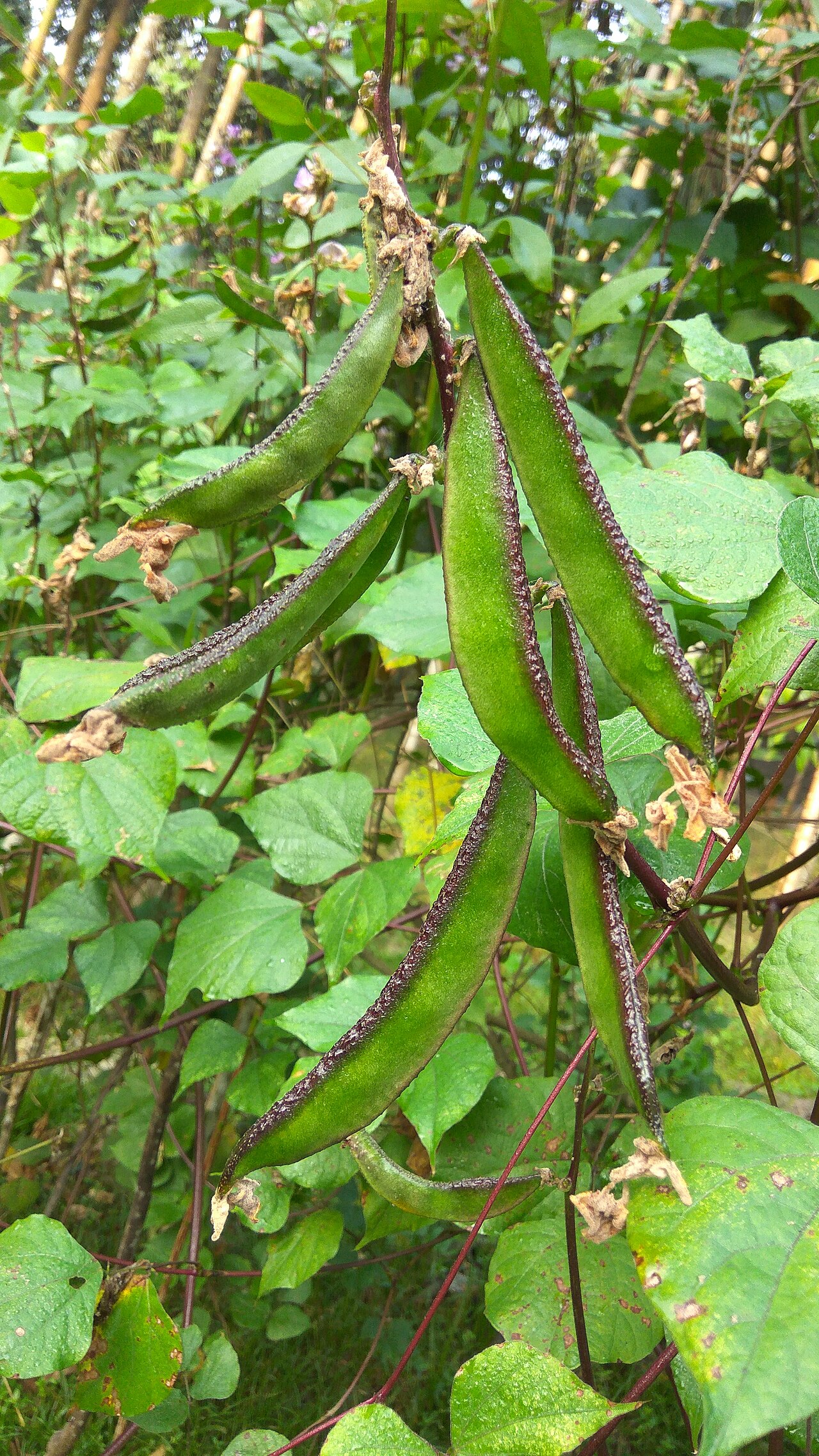
In Gomra, a village on the border in Jhenaigati upazila of Sherpur, not a patch of land is left idle: hill slopes, both sides of the road, homestead yards and courtyards are all planted with early vegetables, and the next crop is prepared before the last one is picked. Once dependent on rice, all of the village's more than 300 families now grow vegetables, with men and women working together.
Farmer Abul Kashem, 55, planted early hyacinth beans on 30 decimals of hill slope in mid-August. A trellis of bamboo and string netting, fertiliser and pesticide cost him about Tk 20,000. The plants began bearing 45 to 50 days after planting, and he now picks seven to eight maunds of beans every five days. He sold at Tk 200 a kilo at first; the price is now Tk 50 to 52. He has sold Tk 60,000 to 70,000 worth so far and expects about Tk 1 lakh profit after costs.
When the beans finish he will plant teasel gourd, bitter gourd, snake gourd, sponge gourd, yardlong beans and brinjal on the same land, using the same trellis and saving the cost of a new one. Farmer Rabeya Begum said new vegetables fetch higher prices when they reach the market early, so villagers almost compete to grow them first.
Md Lal Mia, 50, spent about Tk 30,000 on beans on 40 decimals; he sold at first for Tk 180 a kilo and has so far sold Tk 70,000 to 80,000 worth. Md Rubel Mia, 35, left a private-sector job three years ago and came home to grow vegetables. Early vegetables are in demand and easy to sell, he said.
Beyond beans, gourds and brinjal, the village grows ginger, pumpkin, ash gourd, bananas, okra, cauliflower, pointed gourd, cabbage, tomatoes, carrots and coriander. A vegetable market sits on the border road at nearby Sandhyakura and Haldigram from 6am to 8am, and early in the season wholesalers buy from farmers' homes and truck the produce to Karwan Bazar in Dhaka and other markets.
Upazila agriculture officer Mohammad Farhad Hossain told Prothom Alo that early vegetables are more profitable than other crops.
Photo: কামরুল ইসলাম শাহীন / Wikimedia Commons (CC BY-SA 4.0)
Source: Prothom Alo

Comments
(0)