
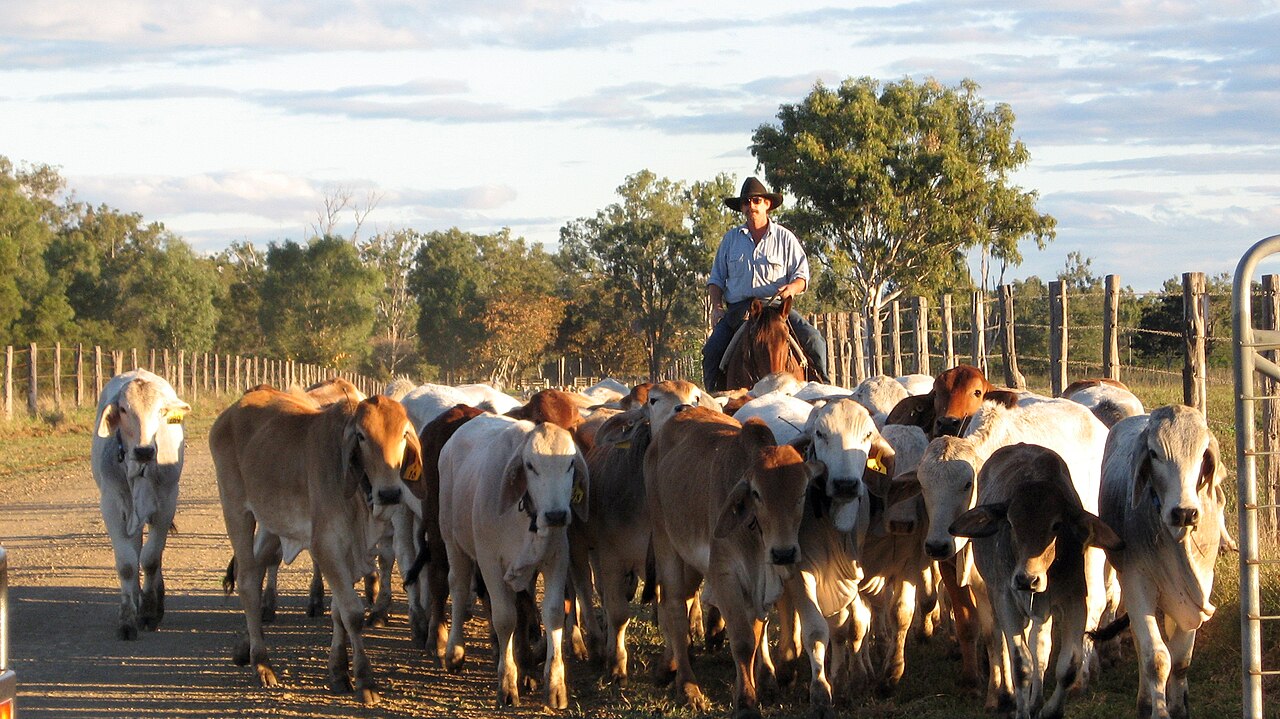
Australian agriculture should not assume China will solve its future demand problems, for beef or other commodities, economist Saul Eslake told the grainfed beef industry's biennial BeefEx conference on the Gold Coast on 23 September, Beef Central reports.
"China's population is going to shrink by more than 500 million over the next 60 to 80 years, and that decline has already begun, having peaked about 2015," Eslake said. After three decades of growth of about 10% a year, the Chinese economy has grown by less than 5% in the last couple of years and is likely to slow to 3% or less.
He said Chinese consumers have been in a "funk" since the pandemic and the peak of the property bubble in 2018-19, retail sales have almost stalled and households are saving more as the population ages, while large budget deficits leave the authorities unable to launch big stimulus packages. "So China isn't going to be the growth market for beef - or anything else - that Australians have become accustomed to assuming," he said.
Eslake offered illustrations of what diversification might mean over five to ten years. If Australia sold as much beef per head to Indonesia, Vietnam, the Philippines and Malaysia as it does to Thailand, it could export an extra 120,000 tonnes a year; matching its per-head sales to Taiwan in the Middle East would add almost 200,000 tonnes; half its per-head US and Canadian level in Mexico would add almost 300,000 tonnes; and a quarter of its Pacific Islands level in Africa would add 180,000 tonnes.
He stressed there are many obstacles and nothing would happen overnight, but said the alternatives matter if China's economy stagnates or governments keep turning protectionist, citing China's latest 55% tariffs. His focus on Southeast Asia matched JBS's recent sale of a 25% stake in its Australian business to an Indonesian sovereign fund to expand in the region.
Photo: CSIRO / Wikimedia Commons (CC BY 3.0)
Source: Beef Central
Comments
(0)