
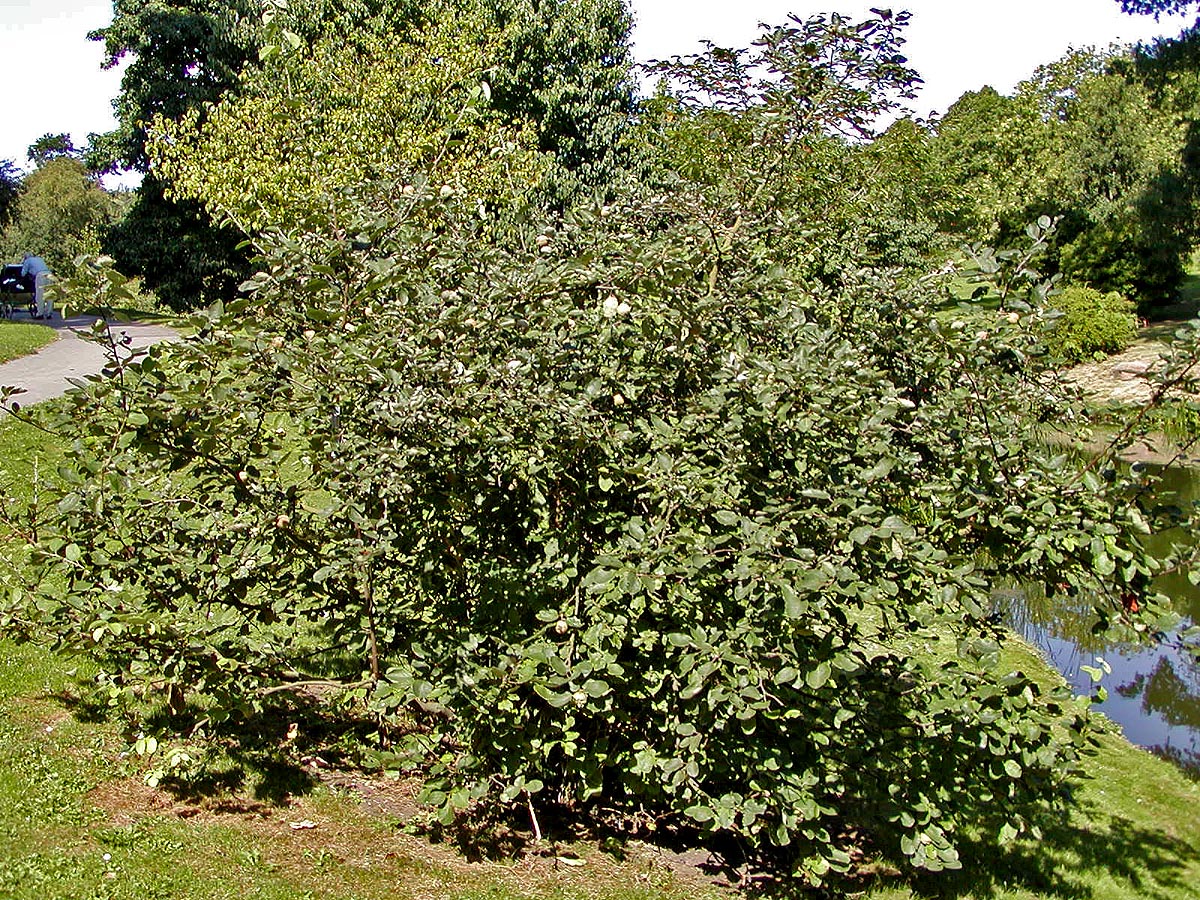
Quince, a tart, hard relative of the apple and pear, is grown commercially on only about 300 acres in the United States, mostly in California, yet a small band of Pacific Northwest growers, cider makers and researchers sees room for the fruit to grow, Capital Press reported on 5 October ahead of the third Quince Fest in Portland on 18 October.
Rob and Paula Siegel started a one-acre organic quince orchard at Philomath, Oregon, in 2013 and now have 47 trees of seven varieties, selling fruit and a quince spread at the Corvallis Farmers Market from mid-September to Thanksgiving. Their biggest customers are immigrants from Eastern Europe, Asia, Russia and South America, and they see more interest from younger buyers. Rob Siegel said the fruit is mostly free of the diseases that affect sweeter fruits so they do not spray, but needs 9 to 12 hours of direct sun a day to ripen, and advised newcomers to start with a few trees because the market is small.
The USDA's National Clonal Germplasm Repository in Corvallis, the main US quince collection, keeps about 200 quince trees representing 115 accessions. Technician Ryan King said quince was first studied as a dwarfing rootstock for pears, that a larger commercial crop would take about 10 years to establish, and that the trees are productive with little input. Retired curator Joseph Postman said nearly 100 varieties are now being evaluated, and that cold-hardy types from Russia or Ukraine may suit the region better than Californian ones.
Kim Hamblin of the Art+Science cider company in Sheridan, Oregon, keeps 25 quince trees among about 700 and makes a 100% quince cider, but hand-cuts the fruit because it once snapped a commercial mill blade. She warned that hype about quince as the next big thing could lead to a bust.
Turkey is the largest producer, with about 25% of the world crop, and with China produced 43% in 2021. US imports of quince and quince products reached 1,906 tons, worth $1.78 million, in 2022, a seven-fold rise in a decade.
Photo: Stan Shebs / Wikimedia Commons (CC BY-SA 3.0)
Source: Capital Press

Comments
(0)