
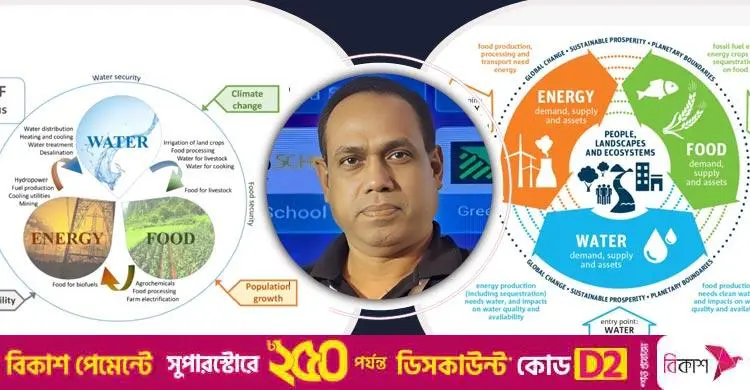
The foundations of survival are food, water, air and nature; life is unimaginable without them. Today these basic elements face disaster because of the advance of modern civilisation, excessive industrialisation, population pressure, urbanisation and environmental pollution. Ensuring the protection of food, water, air and nature is now the biggest challenge for a sustainable future.
Food
Food is a basic human right, yet for lack of safe and nutritious food, hundreds of millions of people worldwide suffer malnutrition and disease. Excessive use of pesticides and chemical fertilisers in farming is building up toxic elements in food, raising health risks. Climate change also threatens food production: in Bangladesh and many other countries, drought, floods, salinity and erratic rainfall are disrupting farm output. Food protection requires expanding organic farming, safe food storage, fair prices for farmers and an end to food waste. Adulteration and chemical use in food must also be strictly controlled.
Water
Clean, safe water is essential to a healthy life. But over-extraction of groundwater, industrial waste, pesticides and plastic pollution are rapidly degrading water quality. In Bangladesh, arsenic contamination has already created a serious health risk for millions. At the same time, climate change is increasing water scarcity and salinity. Protecting water requires rainwater harvesting, restoring rivers and canals, enforcing laws against water pollution and ensuring water is used sparingly. Effective effluent treatment plants must be made mandatory for industries.
Air
Air pollution is now one of the biggest global health risks. Black smoke from vehicles, factory emissions, construction and the burning of fossil fuels are poisoning the air. In Dhaka and other big cities around the world, air quality has reached dangerous levels, causing breathing problems, asthma, lung cancer and other diseases. Protecting the air requires clean energy, tree planting, better public transport, quality fuel for vehicles and control of industrial waste, along with greater awareness and encouragement of eco-friendly technology.
Nature
Nature is the main support of our lives. Forests, rivers, hills, wildlife and biodiversity sustain our existence. But deforestation, hill cutting, river encroachment, plastic pollution and habitat destruction are upsetting the balance of nature, increasing climate change, natural disasters and biodiversity loss. Protecting nature requires forest conservation and tree planting, protection of rivers and water bodies, enforcement of wildlife protection laws and sustainable development planning. People's consumerist mindset must also change to ensure coexistence with nature.
Food, water, air and nature are all closely bound up with human life and the sustainable existence of the planet. Without protecting them, neither health, the economy nor development is possible. So the government, civil society, industry and every individual must work together to implement eco-friendly policies and programmes. If we become aware now and take the right steps, a liveable world can be secured for future generations.
Implementation, not policy, is what matters
What environmental protection needs now is effective implementation, not policy. Bangladesh and every other country have drawn up policies, laws and strategic plans to protect the environment. On paper they are undoubtedly praiseworthy, but in reality their impact is very limited. Deforestation, air and water pollution, shrinking farmland, the spread of plastic waste, and the encroachment and filling of rivers all stem mainly from a lack of effective implementation. Policy alone cannot protect the environment; it needs strong administrative action combined with public awareness. Although policy frameworks give priority to environmental protection, in practice industrial waste is dumped into rivers untreated, high-rise buildings go up in cities in breach of the rules, and forests are steadily destroyed.
Despite laws in these areas, the lack of effective oversight and strict penalties has deepened the problems. What is most needed now is regular monitoring, accountability and the enforcement of penalties. Sustainable environmental protection is also impossible without active public participation, and awareness must be raised through education, the media and technology. At the same time, an eco-friendly development framework must be built through renewable energy, recycling and green industry. So what the times demand is not new policies but strict and effective enforcement of existing laws and policies. If effective steps are taken, our environment, our health and future generations will all be safe.
Sustainable development needs a change in lifestyle
Sustainable development requires a change in how we live. The world is moving rapidly along the path of development, but in many cases this progress is harming the environment and natural resources. Crises such as climate change, biodiversity loss, water shortages, food insecurity and pollution are calling our development path into question. In this situation sustainable development is no longer merely an option but a condition for survival, and it requires a change in lifestyle at both the individual and social level.
- First, we must move away from a consumerist mindset. Instead of consuming more than we need, we must practise "smart consumption". Preventing waste of food, water and energy is everyone's responsibility: making proper use of leftover food, using water-saving technology and stopping the waste of electricity and fuel should become daily habits.
- Second, we must adopt eco-friendly lifestyles. Using reusable goods instead of single-use plastic, taking public transport or cycling, planting trees and cutting carbon emissions can play an effective role.
- Third, education is vital to building a sustainable culture in society. Environmental awareness and responsibility must be fostered in everyone from children to adults, and the message of sustainable development spread through education and the media.
Finally, sustainable development is not only the work of policymakers but the result of every citizen's awareness. If eco-friendly lifestyles can take hold at every level, from personal life to society, the economy and the state, our future generations will inherit a safe and beautiful world.
Source: Jagonews24. First published in Bengali on The Agro News.


Comments
(0)