
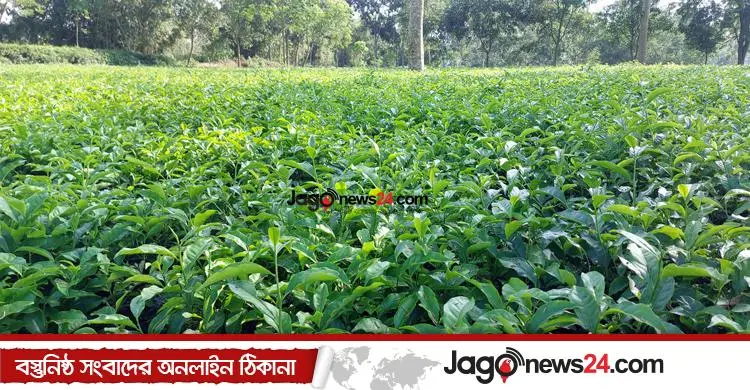
Strict monitoring and policy decisions by the district administration and the local tea board, together with the combined efforts of factory owners and growers, have brought good days back to tea farming on the flatlands of Panchagarh. Better quality tea is fetching good prices at auction, so factory owners are buying green tea leaf at fair prices. Factory owners are pleased that they can make good tea from better leaf, and after losses over several seasons the growers are happy with the prices this season.
For several years, growers in Panchagarh, known as the country's third tea region, had been losing money continuously. They sold green leaf for only Tk 12 a kg, and even after deductions of 40-50 percent of the value, small growers had to chase their payments for days on end. Faced with losses, many stopped irrigating and tending their gardens, and some uprooted the gardens they had planted with such enthusiasm. Now factory owners are buying good quality green leaf at Tk 32-35 a kg, and flatland tea growers have begun to dream again.
How flatland tea began
According to the regional tea board and local sources, in 1996 the then deputy commissioner, Rabiul Islam, recognised the potential for tea on the flatlands of Tetulia upazila and planted a few tea saplings in pots. In 1999 an expert team from the Bangladesh Tea Board examined the feasibility of tea on the flat land there. In 2000, Tetulia Cha Kazi & Kazi began the first commercial tea cultivation. Investors from the area and other parts of the country then took abandoned land in various parts of Tetulia upazila for tea, and local small farmers gradually became interested too. In time this remote northern area was filled with the green of tea.
Tea cultivation in the district now covers 9,729.730 acres. Last season the northern flatlands produced 1.92 crore kg of tea. So far this season, 30 factories have produced 1.38 crore kg, and the tea board expects production to reach 1.52 crore kg by the end of the season in the next month to month and a half.
Growers return to their gardens
Aminur Rahman, a small tea grower from Moulvipara in the upazila headquarters, said: "For several years in a row growers did not get a fair price for green leaf and lost interest in tea. Small growers were not even looking after their gardens, and through neglect many gardens were going to ruin. Some were cutting down and uprooting their gardens. At that time we had to sell green leaf at Tk 12 a kg, and then 30-40 percent of the weight was deducted. We had to plead with factory owners for our money and went months without being paid. But now, if we supply good quality leaf, factory owners are paying Tk 32-35 a kg. If prices stay like this, tea cultivation will expand further in the area."
Arman Ali, a small tea grower from Bhajanpur in Tetulia upazila, said: "I grow tea on four acres. At first the price was good, but for the past few years I was losing money. Selling leaf at Tk 12 a kg did not even cover the cost of looking after the garden, so I stopped irrigating, spraying pesticides and tending it. This year growers here are selling leaf at Tk 32 a kg, and I have started looking after my garden again."
Masud Khan, manager of North Bengal Central Tea Industries, said: "We took coordinated steps to control tea quality in Panchagarh and to get good leaf supplied. We put up a banner outside the factory saying we would buy quality leaf at Tk 35 a kg, and now we are getting a good supply of good leaf. We are paying Tk 32-35 a kg, and the growers are very happy with the fair price. We are encouraging those who still do not supply good quality leaf to improve."
Md Asaduzzaman, director of Sajeda-Rafiq tea factory, said: "There have been some changes in government policy. At the auction market the rate for tea from here has been set at Tk 170, and for tea from Sylhet and Chattogram at Tk 245. Because of the price difference, buyers are leaning more towards northern tea. Mainly because we are getting good prices at auction, we can pay growers a proper price for green leaf."
Officials credit tight monitoring
Md Arif Khan, development officer at the Bangladesh Tea Board's Panchagarh regional office, said: "There are reasons behind growers now selling at Tk 32-35 a kg. The deputy commissioner had started working on tea before I joined last year, and when I came I took charge of many of the technical aspects of his work. Close monitoring of factory owners, the auction market and growers' tea production, along with strict supervision by the administration, has greatly improved the quality of tea here. Factory owners are happy with the good prices at auction, and growers are happy with the fair prices they get from factory owners."
Deputy Commissioner Md Sabet Ali said: "On the very day I joined in Panchagarh last year, I saw small growers' anger over tea prices. They had to sell at Tk 12-14 a kg, and then up to 30-40 percent of the weight was deducted on various pretexts. There was great anger among growers. From then on we worked together on tea here and held more than 30 meetings with the tea board and others involved in tea. Finally, a 14-point policy was given to factory owners and growers to control quality and produce better tea. Strict monitoring alongside this improved the quality of both green leaf and made tea, and with good prices at auction, fair prices for the small growers here have also been ensured."
Source: Jagonews24. First published in Bengali on The Agro News.
Comments
(0)