
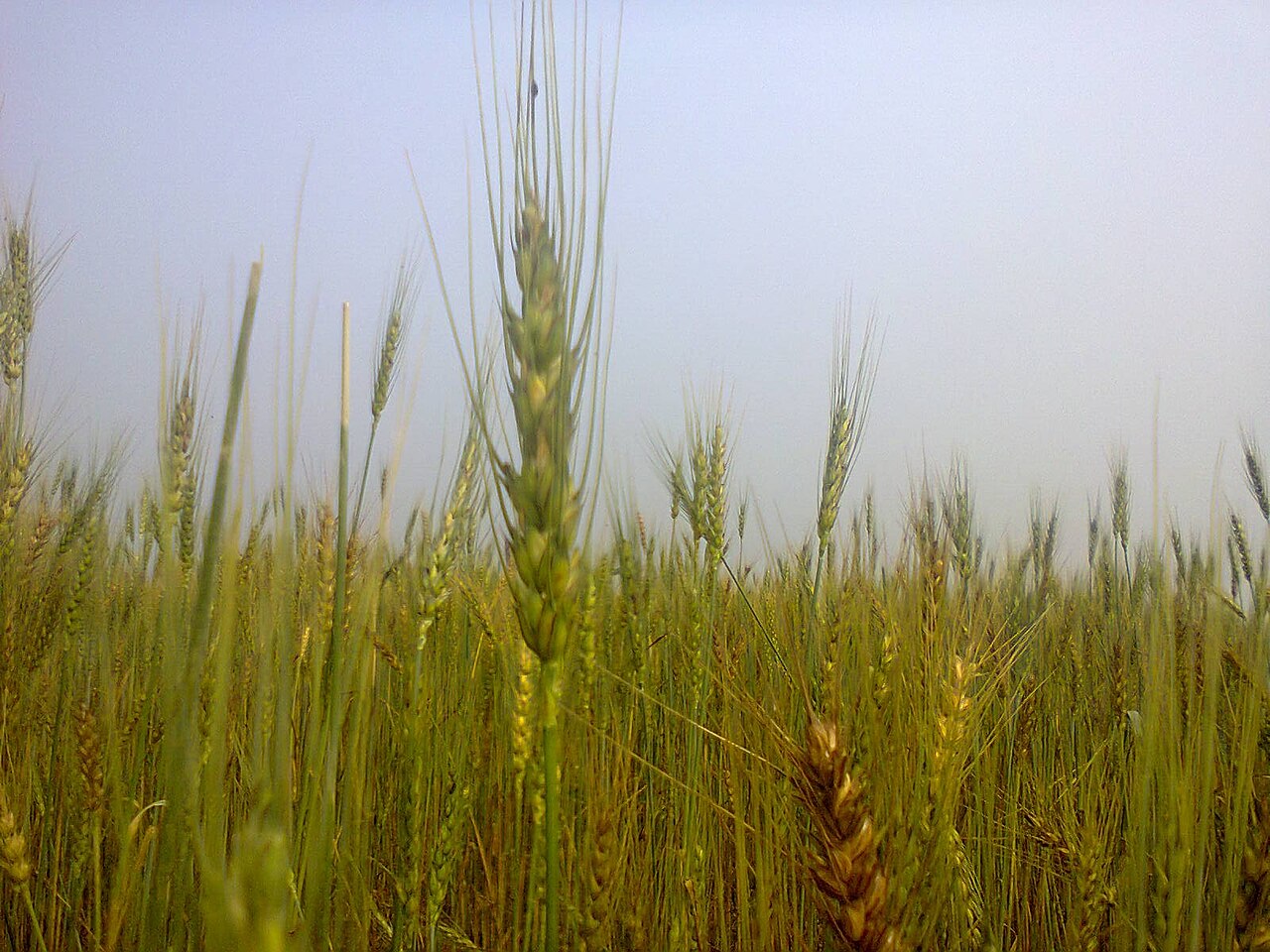
The Bangladesh Wheat and Maize Research Institute (BWMRI), Rajshahi, gave a day of training to 50 farmers and 10 sub-assistant agriculture officers in Pabna on demonstration plots of new wheat varieties, and handed the farmers free seed and fertiliser afterwards. The session was held at 10am on Thursday, 26 November, in the training hall of the Department of Agricultural Extension (DAE) deputy director's office at the Pabna Khamarbari.
Each farmer received 12 kg of seed of one variety, chosen from BARI Gom 30 and 33 and BWMRI Gom 1, 2, 3, 4 and 5, together with 21 kg of urea, 12 kg of DAP, 13 kg of MOP, 10 kg of gypsum and 600 grams of boron.
Md Jahangir Alam Pramanik, deputy director of the DAE in Pabna, was the main speaker. District Training Officer Md Saiful Islam, Additional Deputy Director (Crops) Md Lutfar Rahman and Scientific Officer Mosa Suhana Khatun led sessions on high-yielding, short-duration varieties, production methods, disease and pest control, and seed collection and storage.
The speakers said the institute's new varieties are high-yielding and short-duration, tolerant of blast, leaf rust and other diseases, and able to withstand adverse conditions. They urged wider spread of these varieties to meet the challenges of climate change, rising production costs and making the best use of farmland.
Wheat needs relatively little irrigation and suffers less from disease and insect attack, they said, so its costs can be kept down. A good yield depends on quality seed of improved varieties, sowing on time, balanced fertiliser based on soil tests and timely disease control, and they also called for more use of organic fertiliser to protect soil health.
The speakers asked the participants to use what they had learned on their own land and pass the methods on to other farmers. They described wheat, the raw material of bread, biscuits and noodles, as an important cereal for the country's food and nutrition security.
Photo: মিলন / Wikimedia Commons (CC BY-SA 4.0)
Source: AgriNewsBD

Comments
(0)