
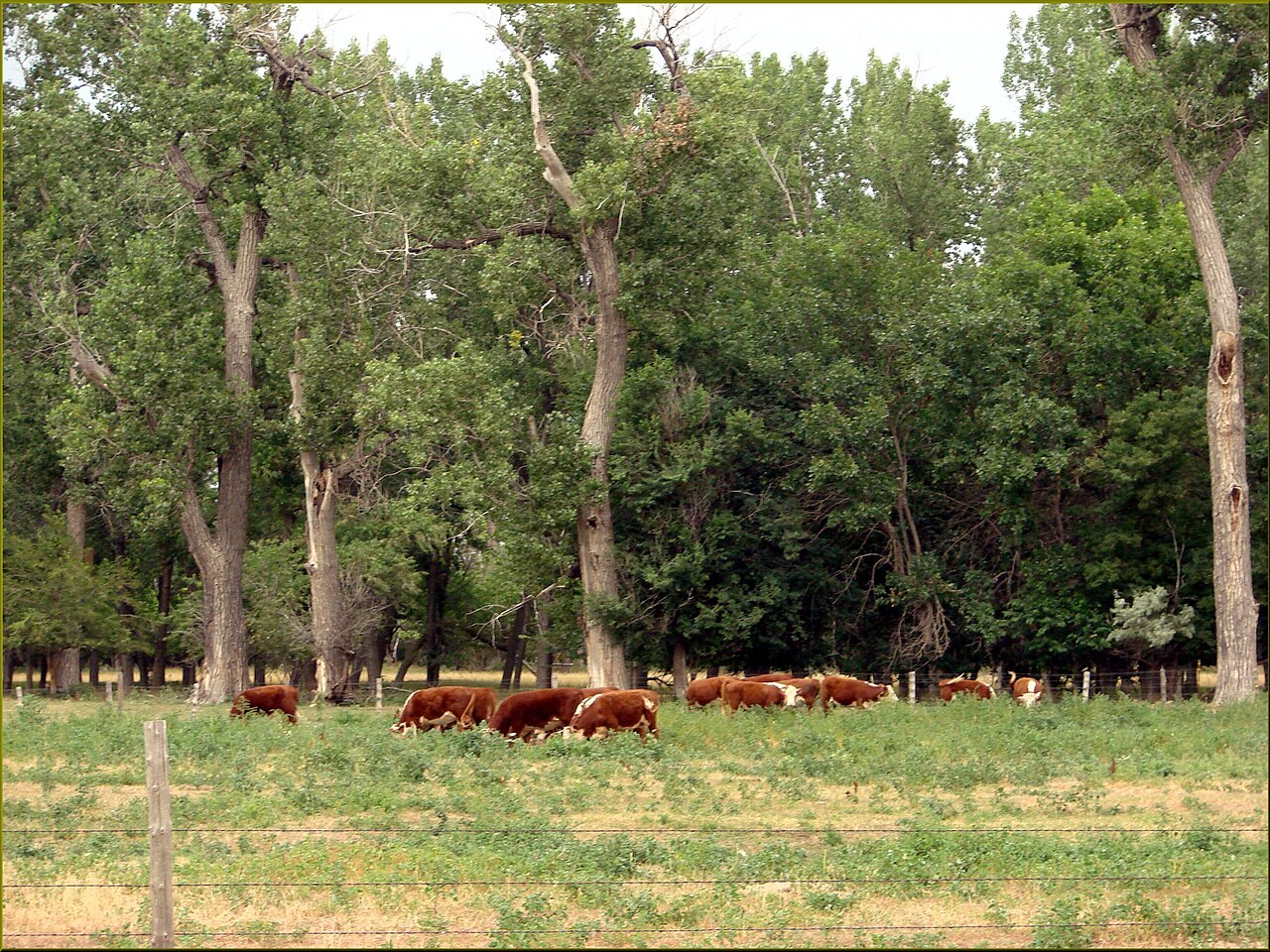
Grazing a pasture to the last bite looks like free feed, but it costs money for years, according to Shannon Sand, an agricultural economist with Nebraska Extension. Overgrazing means fewer grazing days, earlier hay purchases, lower stocking rates in later seasons, more weeds, pests and erosion, and a recovery that can take three to five years to restore the original carrying capacity.
Sand's worked example starts with a 100-acre pasture producing 2 tons, or 4,000 pounds, of forage an acre. Assuming 25 per cent grazing efficiency, since some grass is trampled or otherwise lost, and 780 pounds of forage per animal-unit month (AUM), the pasture supplies 128.2 AUM: 100 acres times 4,000 pounds times 0.25, divided by 780.
If overgrazing cuts forage production by 20 per cent, the equivalent of 40 tons on that pasture, the current supply falls to 102.56 AUM. The difference, 25.641 AUM for the season, is what Sand calls the grazing balance, and replacing it with purchased hay "can quickly add thousands of dollars in feed costs".
The cost does not stop at one season. Reduced carrying capacity lowers the stocking rate a rancher can run in following years, and the bare ground that overgrazing leaves invites weeds and erosion that add their own management bills.
Sand's prevention list is short: move livestock before plants are grazed too short, monitor forage availability through the season, adjust stocking rates as conditions change, leave adequate residual forage after grazing, and treat the pasture as an investment that needs annual maintenance rather than a resource to be drawn down.
"The cheapest forage you'll feed is the grass already growing in your pasture," she writes; protecting it improves profit now and keeps the land productive for years. Shannon Sand is a Nebraska Extension agricultural economist; the piece was published by Farm Progress.
Photo: inkknife_2000 / Wikimedia Commons (CC BY-SA 2.0)
Source: Farm Progress

Comments
(0)