
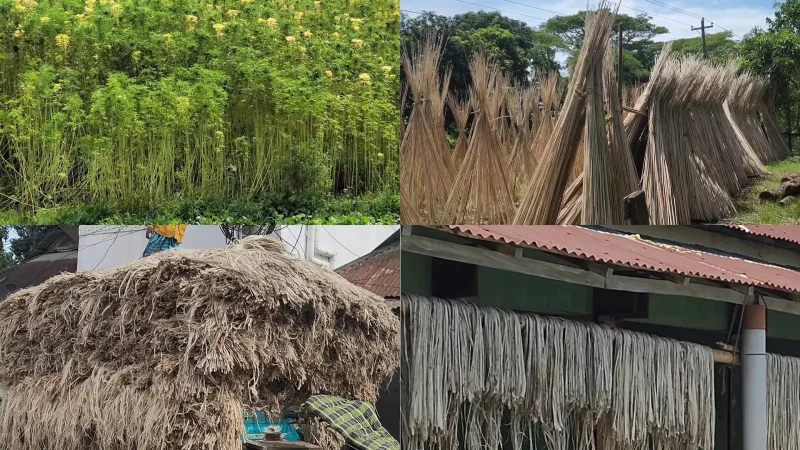
Netrokona's fields were once green with jute every monsoon, and boatloads of fibre went to the country's big markets; the district's Pateshwari river still carries the memory of that trade. Now, with rising costs, too little water for retting and no fair price, jute growing in the district has become a token affair.
Agriculture department figures show a target of 4,510 hectares this season but only 2,840 hectares sown, 1,670 short. Last year, against the same target, 4,410 hectares were grown. In a single year the area has fallen by 1,570 hectares, about 36 percent.
Local farmers say jute needs labour at every step from preparing the land to stripping the fibre, and wages have risen sharply. Rivers, canals and ponds no longer hold enough water for retting, so bundles must be carried far away. After all that expense the market price does not cover costs, so many are growing vegetables and mustard, which pay better for less work, on the same land.
Incentives are not stopping the slide. This year 800 farmers received 1 kilogram of jute seed and 5 kilograms each of DAP and MOP fertiliser free; the year before, 4,000 farmers got incentives. Without an assured market price and profit, seed and fertiliser alone cannot keep farmers in jute.
Md Amirul Islam, deputy director of the Department of Agricultural Extension in Netrokona, said farmers are now growing quicker, more profitable crops such as vegetables and mustard on the same land, and this change of crop choice is the main reason jute land is shrinking. District environmental activist Ohidur Rahman believes that making jute bags and sacks mandatory and easy to get as an alternative to plastic would bring farmers back to jute.
People involved say a fair price, modern retting facilities, better seed and a bigger home market for jute goods are needed to revive the crop.
The report is by Ekattor TV's Netrokona correspondent.
Photo: Ekattor TV
Source: Ekattor TV
Comments
(0)