
Sanjana Rahman Juthi
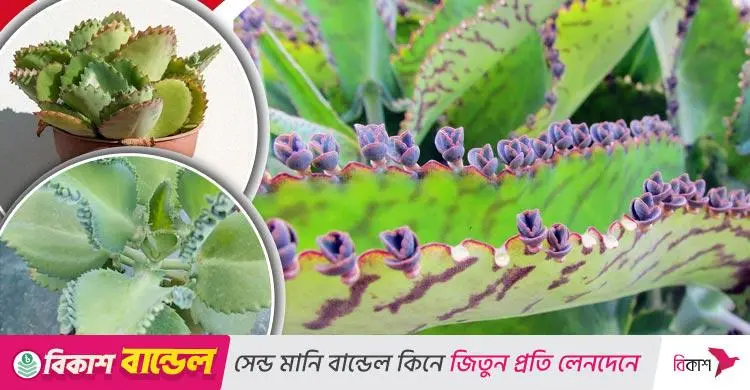
The mother of thousands plant, which in Bengali might be called "hajar charar janani", is not just a unique addition to your indoor plant collection but an amazing succulent that survives in harsh conditions and grows with little care.
The plant goes by several names, such as devil's backbone, Mexican hat plant or alligator plant. Its scientific name is Kalanchoe laetivirens.
Kalanchoe laetivirens is native to Madagascar, from where it spread to other tropical and subtropical regions. Today it is popular around the world, especially in hobby gardens and as a houseplant. Because it reproduces so easily, it has spread like a weed in some places.
Babies on every leaf
The plant's most remarkable feature is the countless tiny plantlets along the edges of its leaves. They look just like little baby plants standing in a row along the leaf margin, each one a living newborn.
Surprisingly, these small plants can grow their own roots, separate from the parent and become self-sufficient plants. In favourable conditions the plant can grow to about 3 feet (about 1 metre) tall.
It is like a mother plant, each of whose leaves gives birth to countless new lives from its own body; hence the name "mother of a thousand children". Just as a mother shelters her children with all her love, this plant protects the small plantlets born on its leaves.
Easy care, but keep away from pets
As lovely as the plant looks, it is just as easy to care for. It likes to be in the sun and needs little water. If you want to add a touch of green to a corner of your home, it could be an excellent choice, and Kalanchoe laetivirens is very popular for decorating homes.
The plant is toxic to cats, dogs and other pets. Eating it can cause poisoning because of chemical compounds called bufadienolides, so it is advisable to keep it away from pets.
Reference: Planet Desert.
Source: Jagonews24. First published in Bengali on The Agro News.


Comments
(0)