
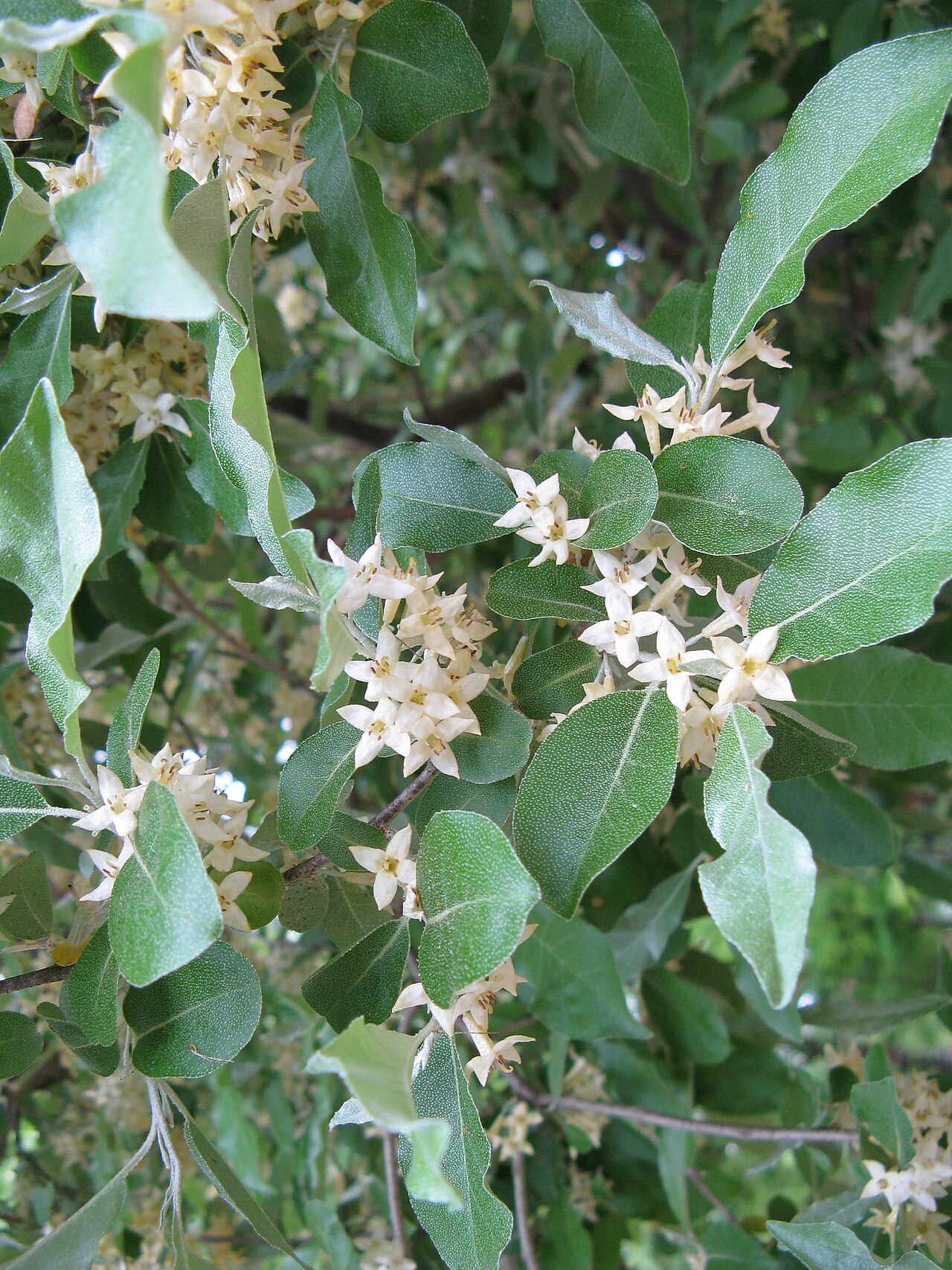
Autumn olive (Elaeagnus umbellata), a large, fast-growing deciduous shrub, is Minnesota's Weed of the Month for October, American Ag Network reports. Introduced to the United States in the 1800s as an ornamental, it was later planted for windbreaks, erosion control, wildlife habitat and forest restoration because it grows quickly on poor soils. It is no longer recommended for any of those uses, because it spreads easily into fields, forest edges, roadsides and other disturbed ground.
Its leaves are 2 to 4 inches long, greyish green on top with distinctive silvery scales underneath. Cream to pale-yellow bell-shaped flowers bloom in clusters from April to June, followed in autumn by red, silver-speckled berries, each with a single seed.
A mature plant can produce around 60,000 fruits a year, weighing as much as 80 pounds. Birds and other wildlife eat them and spread the seed. Once established, the shrub shades out native plants and raises nitrogen levels in the soil, which harms plants adapted to low-nutrient conditions, including prairie species.
Autumn olive is a Restricted Noxious Weed in Minnesota: its sale is banned and its transport allowed only in line with state law. Landowners are not legally required to control it but are strongly encouraged to. Small plants can be dug or hand-pulled; cut stumps resprout unless treated with herbicide, and the University of Minnesota Extension can advise on products.
Photo: KENPEI / Wikimedia Commons (CC BY-SA 3.0)
Source: American Ag Network

Comments
(0)