
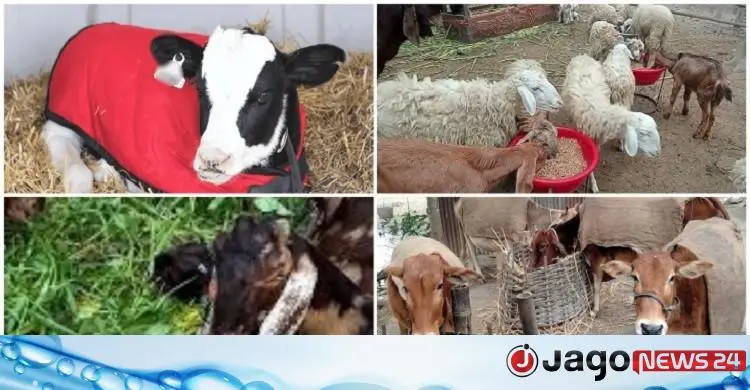
In Bangladesh, December and January are usually the coldest months. Livestock cannot express the severity of the cold as people can, but their bodies show it. We wear heavy clothes and jackets in winter and use blankets at night, and caring for these voiceless animals is also our moral duty and responsibility.
Cold winds blow more in winter, and animals' body temperature can drop sharply, a condition known as hypothermia. In winter, cattle and calves suffer more from pneumonia and breathing difficulties, and various allergic infections are seen. Animals also suffer from bacterial and viral diseases such as haemorrhagic septicaemia (golafola), anthrax, lumpy skin disease and foot-and-mouth disease.
Keep the shed warm and clean
The cowshed must always be protected from outside wind. To stop bacterial and viral diseases spreading on the farm, cleaning with antiseptic must be kept up at all times. Arrangements must be made to keep the inside warm. Where needed, jute sacks, blankets and modern jackets for livestock are available and should be used. Dry straw can be used as bedding.
The farm should be covered on all sides with polythene so that fog and wind cannot easily get in. Foot rot and liver fluke are seen more at this time, so regular deworming and vaccination are needed. It is also essential to take the advice of a registered veterinarian.
Feed, water and supplements
In winter, animals drink less water and their immunity falls. Drinking water should be lukewarm. Energy levels in livestock drop at this time, so they should be fed oil cake, bran, wheat and molasses. Vitamin, zinc and calcium supplements should also be given. To keep production from falling, vitamins E, A, D and B complex should be provided, and vitamin C can be given to boost immunity.
Pregnant animals
Pregnant animals need constant attention. In the last two to three months of pregnancy, calcium, zinc and magnesium supplements should be given on a veterinarian's advice. Otherwise the unborn calf will be deprived of necessary nutrition and will be born weak. Watch also for signs of mastitis.
Otherwise, treatment costs will rise and milk production will fall. Pregnant cows should be given enough fresh grass. Grass grown with excessive urea should be avoided, as it causes diarrhoea and weakness. They should also be given plenty of water.
Finally, winter care alone can keep livestock healthy and normal, so owners need to be aware and caring. Only then will these harmless animals be spared the harshness of the cold.
The writer, Md Ansaruzzaman Siam, is a fourth-year student in the Faculty of Veterinary and Animal Sciences, Gono University, Savar.
Source: Jagonews24. First published in Bengali on The Agro News.
Comments
(0)