
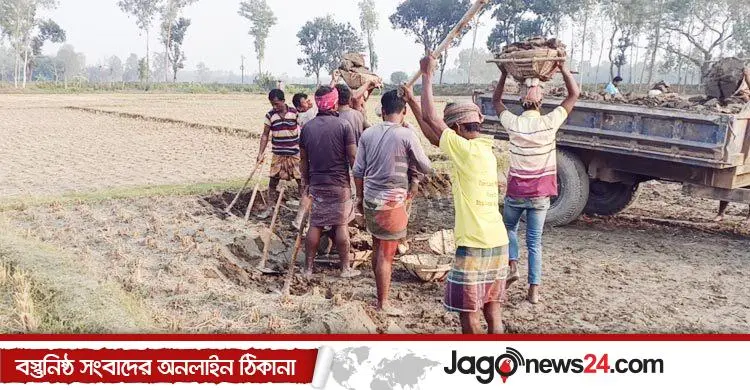
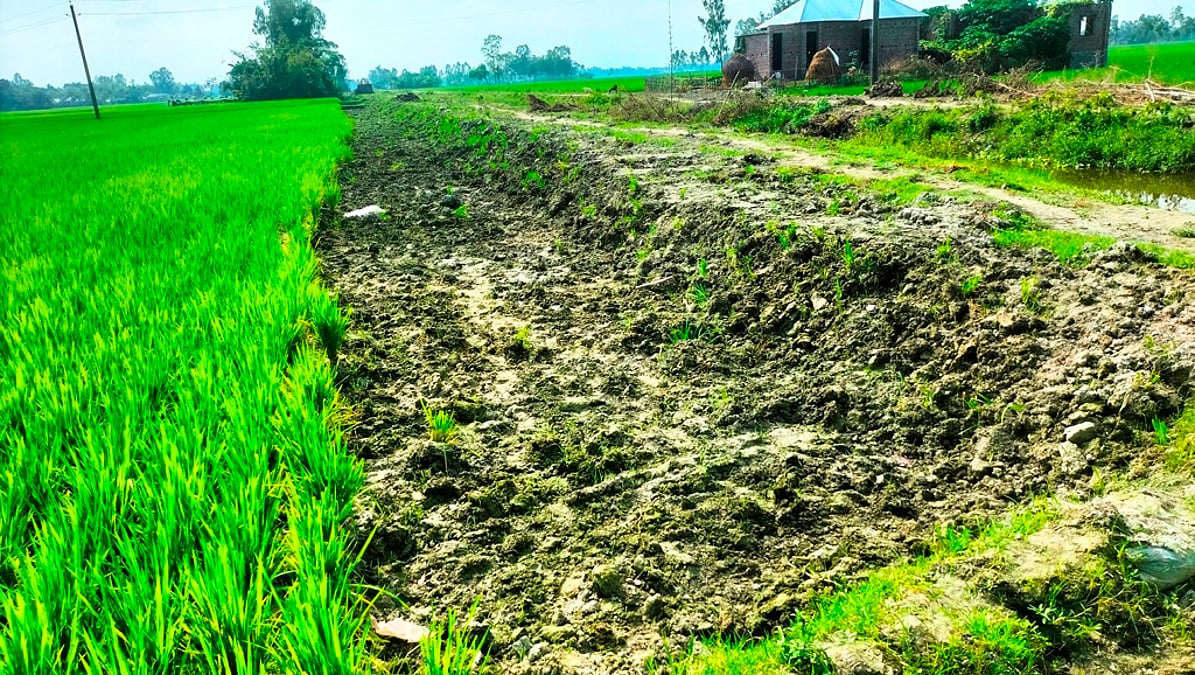
A frenzy of cutting topsoil, known as the life of cropland, is under way in Lalmonirhat. The soil looting began right after the aman harvest. Earth is being cut freely from fertile farmland in various unions and taken to local brick kilns. Cultivable land is shrinking at an alarming rate and soil fertility is being destroyed. The administration occasionally raids and fines, but the "soil-eater" syndicate carries on.
According to the 2024 government list, Lalmonirhat has just over 20 registered brick kilns, yet at least 34 operate illegally. Kilns are sometimes shut or fined in raids, but they restart after a while on various pretexts.
It is alleged that soil from cropland is cut and trucked to kilns in full view of the local administration, while the authorities pretend not to see.
Brick kiln owners declined to comment despite repeated attempts to contact them. Concerned local citizens say protecting cropland needs not just awareness but tough and lasting action from the administration.
Farmers forced to sell
Mahafuz Rahman, a farmer in the Banbasa More area, said: "Because a kiln was built next to our farmland and neighbouring owners sold their soil, we are in trouble. The neighbouring land has sunk, so mine is left high and irrigation water from the pump won't reach it. So I have to sell soil to the kiln even though I know it will cause harm."
Nayan Islam, a farmer in Saptibari union, faces the same situation. "I haven't even harvested my crop yet, but the soil of the neighbouring land has been sold. If I don't sell my soil, my land will stay high and nothing will grow there. But if the soil is cut, it will be very hard to grow crops there again. We want the brick kilns to stop buying soil from farmland," he said.
Fertility lost for years
According to experts, the top 8-10 inches of soil hold the most organic matter and nutrients needed by crops. The agriculture department says removing this layer severely reduces fertility, which takes a long time to return. Once the topsoil is gone, a hard, stony layer is exposed that holds almost no water, and the land risks gradually becoming barren, like a desert. In this farming district, shrinking cropland raises fears of future food shortages.
Agriculturist Md Motiur Rahman, additional deputy director of the Department of Agricultural Extension (DAE) in Lalmonirhat, said agriculture is the main source of income in this border district, but brick kilns are reducing cultivable land. "We are urging farmers not to sell their topsoil. The fertile layer built up by chemical and organic fertilisers is hard to restore once it is destroyed," he said.
He added that environmentally friendly "eco bricks" or block bricks are now being made from sand and cement, and people should take an interest in them. If demand for clay bricks falls, the topsoil of cropland will be saved.
Source: Jagonews24. First published in Bengali on The Agro News.

Comments
(0)