
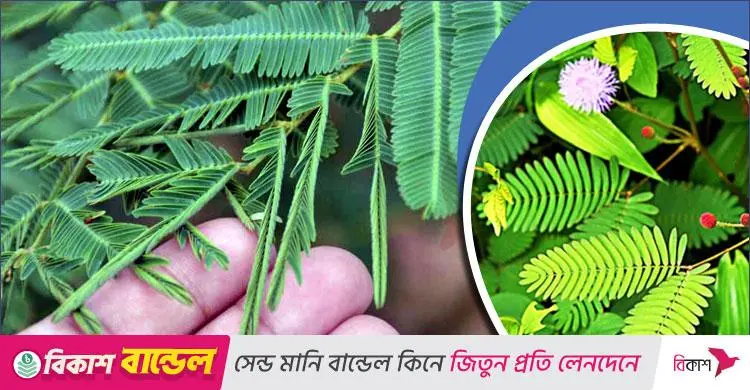
The lajjaboti plant is unlike many others, writes Khandaker Badiuzzaman Bulbul, a student at Ananda Mohan College, Mymensingh. At the touch of a hand it shrinks, as if hiding itself in shyness, like a bashful new bride. The plant is usually found beside village ponds, along dirt paths or in a corner of a wide field.
Known in botany as Mimosa pudica, lajjaboti is a small thorny shrub. There are more than 400 species of it, and plants of this kind are found not only in Bangladesh but in every corner of the world.
Features of the plant
Lajjaboti usually grows 0.5 to 1.5 metres (1.5 to 5 feet) tall. The leaves are feathery and finely divided. Because of a substance called turgor, the leaves fold quickly when touched and open flat again after a few minutes. The flowers are small and attractive, pink or white; male plants have pinkish-purple flowers and female plants white flowers. The seeds are small, hard and black. Male plants do not produce seeds.
Why it folds
The way lajjaboti leaves shrink or fold when touched is fascinating, and a remarkable scientific process lies behind it. The cells of the leaves contain a fluid called turgor. When we touch a leaf, the electrical flow in the cells changes. The turgor quickly moves out and the pressure inside the cells drops. The leaf's "muscles" relax and collapse. It is a defensive strategy that helps protect the plant from predators.
Medicinal properties
The leaves, roots, shoots, flowers and seeds of lajjaboti are said to be useful in treating various illnesses. A paste of the leaves helps remove acne and dark spots on the face. The plant is effective in relieving joint and nerve pain. An extract of the leaves or roots is used for arthritis. For headaches, a leaf paste can be bandaged on the forehead. An extract of the leaves or seeds helps control blood sugar, and an extract of the leaves or flowers is useful against cough and nausea. A root extract is effective in reducing inflammation and healing wounds.
However, a doctor's advice or prescription must be obtained before using lajjaboti medicinally. It may react with some medicines and may not be suitable for pregnant or breastfeeding women.
Source: Jagonews24. First published in Bengali on The Agro News.


Comments
(0)