
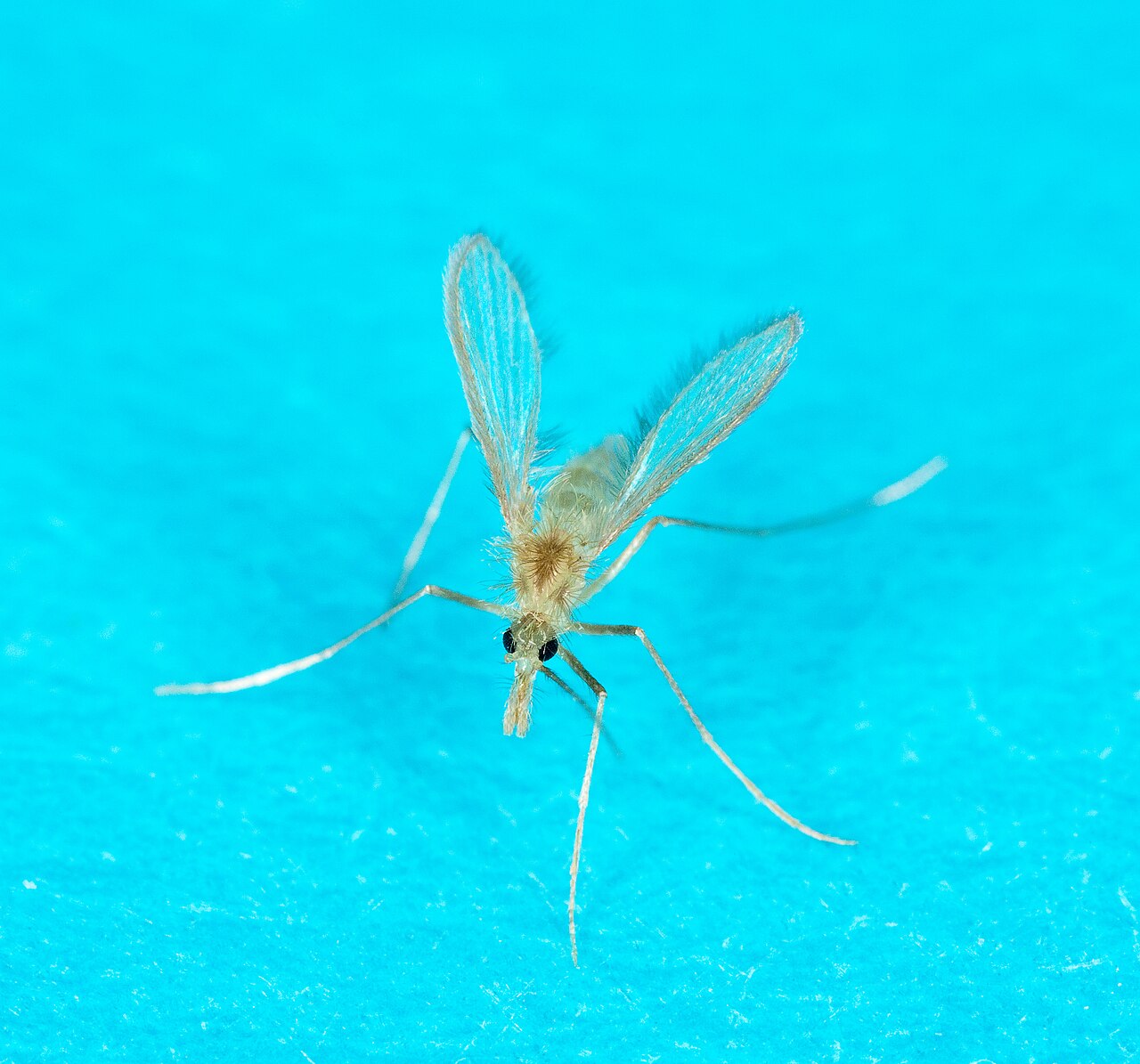
Kala-azar, the sandfly-borne disease India has nearly eliminated in its traditional strongholds, is turning up in the hills of Uttarakhand, a state long assumed to be too cold and dry for it, and many of the cases never reach the state's records. Reporters Aatreyee Dhar and Swati Thapa set out the evidence in an investigation for Mongabay India.
Records obtained through a Right to Information request show that the All India Institute of Medical Sciences (AIIMS) in Delhi received kala-azar patients from Uttarakhand every year from 2016 to 2025, 33 cases in all. Uttarakhand's National Health Mission, asked the same way, reported two cases in 2017 and none from 2018 to 2025. Patients treated in Delhi or Chandigarh appear in those hospitals' registers but not in the state's, and the review found no dedicated kala-azar elimination programme in Uttarakhand.
Kala-azar, or visceral leishmaniasis, is caused by the parasite Leishmania donovani and spread by the female sandfly Phlebotomus argentipes. It brings months of fever, enlarged spleen and liver, anaemia and weight loss, and the reported mortality is 75% if it goes untreated. It is endemic to Bihar, Jharkhand, West Bengal and Uttar Pradesh, where a study puts 165.4 million people at risk across 54 districts. In July 2025 the health ministry said the elimination target of fewer than one case per 10,000 people had been met in 633 blocks across 54 districts of the endemic states.
The hill cases are different. Doctors at AIIMS Rishikesh documented seven cases between 2017 and 2019 among residents of high-altitude areas who had never travelled to an endemic region, and a 2014 study reported cases in children raised in Garhwal. A five-year-old girl from a village above 1,700 metres in Pithoragarh district died of the disease in 2020. Families have spent lakhs of rupees moving patients between hospitals about 100 kilometres from home before a diagnosis.
Researchers suggest two environmental drivers: rising temperatures that let sandflies survive higher up, and roads, dam reservoirs and other construction that create new habitat. "The weather has changed," said Dr. Prabhat Pant of Sushila Tiwari Hospital in Haldwani. In Nepal, Phlebotomus argentipes has been found at up to 1,764 metres, far above the 600 metres once taken as its limit.
Livestock come into it too. A study by Dr. Shyam Sundar's team with the US Centers for Disease Control and Prevention found the sandfly strongly attracted to cattle, with more insects in cowsheds than in homes in parts of Bihar, and 30% of dogs tested carried antibodies to Leishmania, though their role in human infection is not established. Spraying only inside homes may push sandflies outdoors and towards untreated cattle sheds, entomologist Rahul Choubey of the Kala-azar Medical Research Centre in Muzaffarpur warned.
The disease has a long history in the region: one of the earliest recorded outbreaks, in 1824-1825 in Jessore, now in Bangladesh, reportedly killed 750,000 people over three years. Dr. Sanjay Sarin of the Drugs for Neglected Diseases initiative said India's progress is a major achievement but "not the finish line", and that sustaining it needs surveillance, timely diagnosis and new approaches to vector control.
Photo: USDA Agricultural Research Service / Wikimedia Commons (Public domain)
Source: Mongabay India

Comments
(0)