
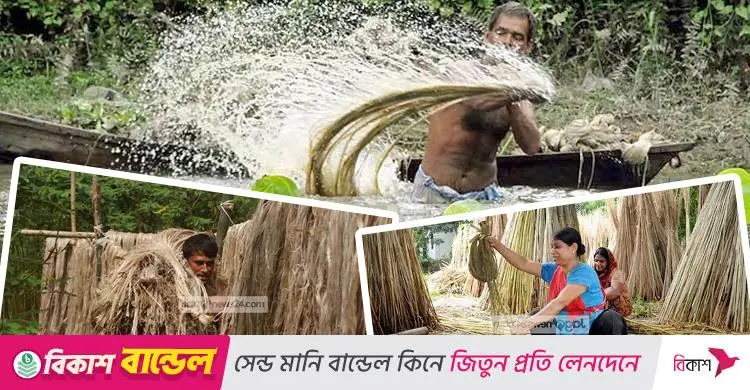
Half of the month of Shraban is over, and now (July-August) is the right time to cut jute. At this time jute plants are cut, tied in bundles and steeped (retted) in water, from which the fibre is extracted. Here are some important steps for harvesting and processing jute in Shraban.
Cutting
Cut the jute when more than half of the plants have flowered. Cut close to the base with a sharp da or sickle. The plants can also be pulled up, but only if the soil is soft. Otherwise, rather than cutting plants one by one, it is easier to bundle several together and cut them.
Bundling
Tie the cut plants in small bundles, using leftover parts of the jute plant or another soft material. Tie them so they can be moved easily while retting, and make sure they do not come undone.
Retting
Submerge the bundles in a nearby ditch, canal, beel or a specially built hydrolysis tank. The water must be deep enough to keep the plants fully under water, and the current should not be strong. Weigh the bundles down with heavy objects such as logs, banana plants, earth or stones.
Duration
Retting time depends on water temperature, water quality and the jute variety, and usually takes 7-20 days. To judge when to lift the bundles, take out a few from time to time and strip the fibre to check. When the fibre comes away easily, retting is complete.
Stripping
When retting is done, lift the bundles out of the water and strip the jute slowly, taking care not to tear the fibres. Wash the stripped jute well in clean water.
Drying
Spread the washed jute in a clean place and dry it well. Sun drying is best, but a shelter can be arranged to protect it from rain. Jute should not be dried in strong wind, as the fibre may be damaged. Once it is well dried, tie it in bundles and store it.
Precautions
There is a lot of rain in Shraban, so take care when cutting jute in the rain. Make sure retting does not inconvenience people nearby, and that the rotten water after retting does not pollute anything. In this way jute can be harvested and processed properly in Shraban.
Source: Jagonews24. First published in Bengali on The Agro News.
Comments
(0)