
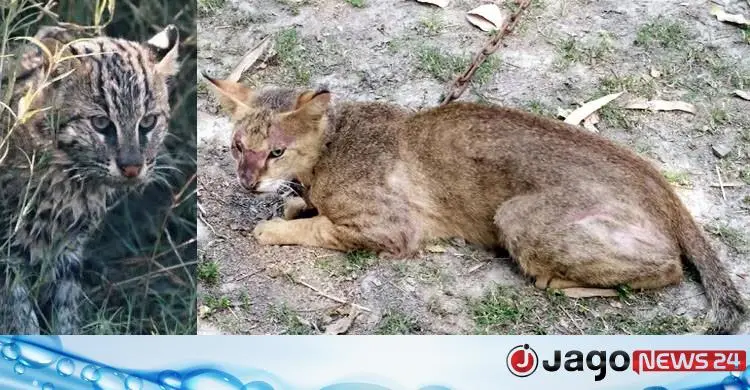
In the secluded wetlands, dense thickets and abandoned old buildings of Bengal lives a clever hunter: the jungle cat, better known to us as bon biral, jongli biral or khagra biral. Although it stays out of human sight, the animal plays a very important role in keeping nature in balance.
The jungle cat is remarkably adaptable. It is skilled at climbing trees, swimming and running fast. Being nocturnal, it is rarely seen in daylight. Its search for food begins at nightfall, and covering 3 to 6 kilometres in a single night is normal for it. In Bangladesh it is found mostly in haors and baors, riverside areas and thickets beside paddy fields. It blends into its surroundings so well that people often do not notice it even when it is close by.
A natural pest controller
The jungle cat's diet includes birds, rabbits, lizards, fish, frogs and even snakes. Most importantly, it eats large numbers of rats and harmful insects. Rats are a major enemy of paddy and other crops, so the jungle cat protects crops without farmers knowing it. In a sense, the animal works naturally as an alternative to chemical pesticides. It sometimes raids poultry pens in villages when food is short, but that loss is very small compared with its overall benefit.
The relationship between people and the jungle cat is not always positive. People often kill it, thinking it harmful. In rural areas there are also misconceptions that it is a "tiger cub" or a "dangerous animal". Because of this misunderstanding, many jungle cats are losing their lives for no reason, although in reality they are no threat to people.
The biggest crisis facing the jungle cat today is loss of habitat. Filling of wetlands, deforestation and changes in farmland are rapidly shrinking the places where it can live. The International Union for Conservation of Nature lists the jungle cat as "Least Concern" globally, but locally its numbers are falling in many places, which is worrying.
Protected by law
Under Bangladesh's Wildlife (Conservation and Security) Act, the jungle cat is a protected animal, and killing, hunting or harming it is a punishable offence. But a law alone is not enough; it needs enforcement and public awareness. Every animal has a particular role in nature. The jungle cat is an important part of the food chain: by keeping rat numbers in check it protects crops while maintaining the balance of the environment. If its numbers fall, rat numbers could rise and cause major damage to farm production, which would directly affect people's lives.
According to nature experts, the most urgent need for protecting the jungle cat is to raise awareness. That requires campaigns in rural areas, conservation of forests and wetlands, dispelling misconceptions about wildlife and strengthening environmental education in schools and colleges. With such steps, the jungle cat and other wildlife can survive safely.
The jungle cat does its work silently and out of sight. It helps people but receives neglect, and sometimes cruelty, in return. Protecting this unknown ally of nature means not just saving one animal but safeguarding our own environment, agriculture and future. To preserve the delicate balance between nature and life, let the jungle cat survive; let that be our shared commitment.
Source: Jagonews24. First published in Bengali on The Agro News.


Comments
(0)