
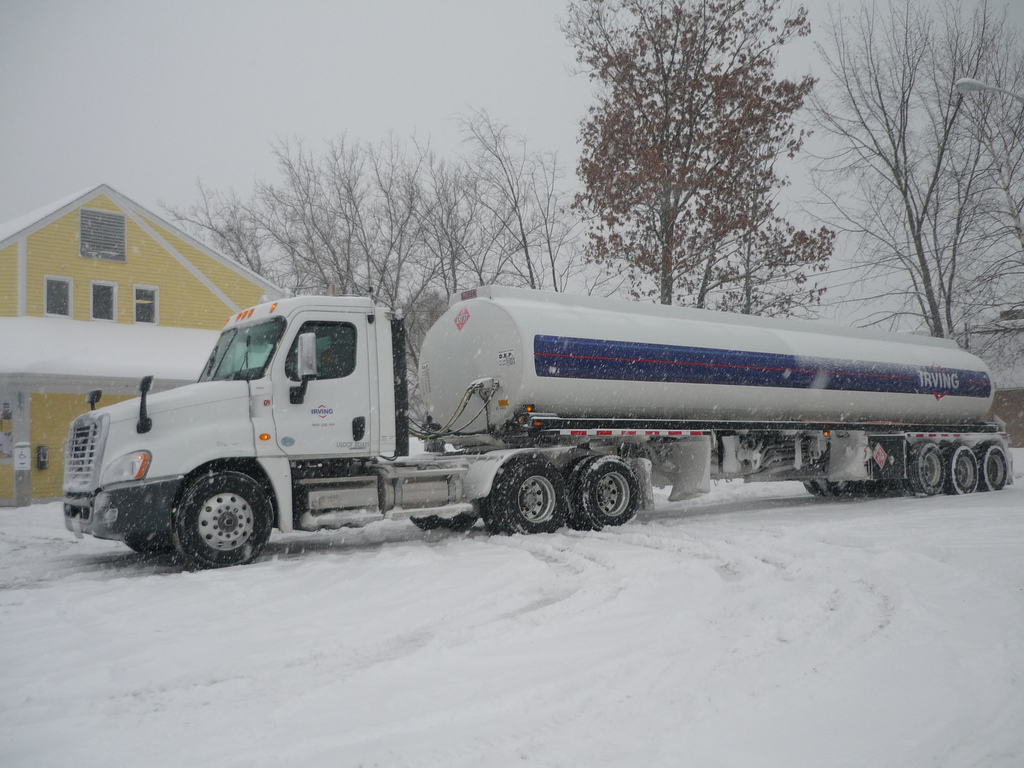
John Deere has begun a six-month pilot in which five of its freight trucks run on 100% biodiesel made from soybean oil and corn oil, part of a wider push by the farm equipment maker to build demand for fuels grown on farms.
The five 2027 Freightliner Cascadia trucks carry Optimus Technologies' patented Vector System and will haul parts from Deere's facility in Milan, Illinois, to its warehouses and dealerships on set routes. The system has two fuel tanks, one for biodiesel and one for ordinary diesel, with software and controllers that monitor the biodiesel.
Optimus chief executive Colin Huwyler explained how it works. At start-up, ordinary diesel runs the engine and warms the biodiesel tank; once the biodiesel reaches its operating condition, the truck switches to B100. Warming solves biodiesel's tendency to gel in cold weather, and before shutdown the engine is flushed with ordinary diesel so no biodiesel stays in the injectors. The system never stops the engine from running on ordinary diesel, he said.
Deere expects the five trucks to cover more than 700,000 miles a year, using about 85,000 gallons of B100 from Chevron's plant in Seneca, Illinois. Nate Green, Deere's director of biofuels, said the company wants to keep the upgraded trucks in service for their full three-to-five-year life and, if all goes well, to extend the project to other places with defined routes and suitable fuel supply.
The trucks are one part of a renewable fuel initiative Green leads. Deere is running four prototype ethanol tractors in the US, tested a tractor on B30 this summer and is testing biofuel equipment in Brazil. It also lobbies for biofuel policy; the US Renewable Fuel Standard mandates 8.86 billion gallons of biomass-based diesel for 2026.
Farmers gain twice, the article notes: biofuels give row crops such as soybeans a steady domestic market, and they offer relief from diesel prices that peaked at $6.529 a gallon on 21 September and were around $6.127 on 9 November. The US soybean crush grew roughly 25% between 2020 and 2025.
"It has all turned to fuel costs," said Kevin Johnson of the Illinois Soybean Association, which backs the pilot. Illinois exempts B20 blends from its 6.25% sales tax, saving buyers about $0.40 a gallon, until December 2030.
Reporting by Ryan Daily for AgNavigator.
Photo: Jason Lawrence / Wikimedia Commons (CC BY 2.0)
Source: AgNavigator




Comments
(0)