
Soybean, the crop long known as ‘yellow gold’, was losing favour with farmers in India in October 2025, Jagonews24 reported on 25 October, drawing on a report in The Hindu published the same day under the headline ‘Trouble in “soy State”’. In Indore in Madhya Pradesh, the state that grows more than 40 per cent of India’s soybean, growers, a grain trader, a farmers’ representative and an executive of an industry body described lower yields, market prices well below the government’s support price of Rs 5,328 a quintal, doubts about a state payment scheme, and fear of imports from the United States.
The government’s own sowing figures pointed the same way. By the Ministry of Agriculture and Farmers’ Welfare’s count as on 3 October 2025, the area under kharif oilseeds was 10.62 lakh hectares below the previous year’s, and soybean alone accounted for 9.10 lakh hectares of that fall. Kharif is India’s monsoon-sown crop season, and soybean is its largest oilseed by area.
What growers in Indore said
The central voice in the report is Arvind Singh Rathore, a young farmer from Muradpura village in Indore. His family has grown soybean for three generations, but he said there was no longer any profit in it and that he wanted to leave farming for another occupation. He said his yield had dropped to two to two and a half quintals an acre, where it was once more than four quintals, and that prices were lower than they had been 15 years earlier, by Rs 1,000. Changing crop was no easy answer, he said: maize is an alternative, but nilgai damage it too.
Costs were the other half of his complaint. Inputs alone came to Rs 8,000 to Rs 10,000 an acre, he said, and running machines cost up to another Rs 3,000 on top of that.
Another farmer, Dilip Singh, recalled that his ancestors had grown millet and pulses and that the government had encouraged farmers to take up soybean. Now, he said, millet prices had risen while soybean prices had fallen. By his account, soybean fetched Rs 4,200 a quintal in 2014, against Rs 3,300 to Rs 3,500 at the time of the report.
The trade felt it as well. Kailash Parthani, a trader at the Chhawani grain market in Indore, said up to 6,000 tonnes of soybean used to be sold there in a month and that this had fallen to 2,000 tonnes.
The complaints were not new that season. On 18 September 2025 the Free Press Journal reported from Indore’s Lakshmibai Mandi that yields were averaging two to three quintals per bigha, a local land measure, and that farmers carrying loans and instalments were being forced to sell at very low prices. In March 2025 The Mooknayak reported from Bhopal that seed, fertiliser and labour costs had risen sharply for soybean growers in the state while crop prices had stagnated for more than a decade.
The support price and the market price
The minimum support price, or MSP, is the rate the Indian government announces for a crop as a floor for farmers. On 28 May 2025 the Press Information Bureau published the Cabinet’s decision on the 14 kharif crops for marketing season 2025-26. Yellow soybean was set at Rs 5,328 a quintal, Rs 436 more than the Rs 4,892 of 2024-25. In 2013-14 the rate had been Rs 2,560. The same release put the cost of production at Rs 3,552 a quintal, a figure that takes in paid-out costs such as hired labour, machines, seed, fertiliser and irrigation as well as the imputed value of family labour, and it gave the margin over that cost as 50 per cent. The government said the rise was in line with the 2018-19 budget’s announcement that MSP would be at least one and a half times the all-India weighted average cost of production.
The report said that at the Chhawani market in Indore, growers were being forced to sell for as little as Rs 3,000 a quintal. Arvind said that the government speaks of giving the MSP while farmers do not receive it.
Other reports of the weeks before show how far prices varied with quality. At Lakshmibai Mandi in September 2025, the Free Press Journal gave Rs 3,500 to Rs 3,800 a quintal for good soybean, under Rs 3,000 for inferior or moist produce and Rs 3,800 to Rs 4,000 for dried stock. Farmer leaders there said soybean had earlier sold above Rs 6,000 and demanded that the government buy at once at the MSP. On 14 October 2025 Rural Voice put sales at Rs 3,500 to Rs 4,000 and reported farmer groups protesting in several districts for procurement at the MSP. It also said that experts blamed cheap imported edible oil for the pressure on prices.
The slide had begun before this season. In August 2024 Rural Voice reported that mandi rates in Madhya Pradesh had fallen to Rs 3,500 to Rs 4,000, levels last seen about a decade earlier. It cited data from the Soybean Processors Association of India (SOPA) showing an average price of Rs 3,823 in 2013-14, and a cost of production of Rs 3,261 from the Commission for Agricultural Costs and Prices. Farmers who spoke to The Mooknayak in March 2025 listed an MSP of at least Rs 8,000 a quintal among their demands.
The Bhavantar payment scheme and its critics
The Madhya Pradesh government’s answer to the price gap that season was the Bhavantar Bhugtan Yojana, a price-difference payment. As Outlook Business and the Free Press Journal described it in October 2025, if a farmer sells in a mandi below the MSP, the state pays the difference. The main rules were these:
- Registration ran online on the e-Uparjan portal up to 17 October 2025, with Aadhaar number, bank account, mobile number and area under cultivation required.
- Sales under the scheme were set for 24 October 2025 to 15 January 2026, at the farmer’s nearest mandi or sub-mandi.
- Farmers had to bring their registration number, receipt and Aadhaar card.
- The stated target was to deposit the difference in farmers’ bank accounts within 15 days of the sale.
In Indore division, the Free Press Journal reported on 24 October, 145,188 farmers had registered at 432 centres across eight districts, 46,061 of them in Indore district. It said CCTV cameras had been installed at gates and courtyards, staff trained and help desks set up.
Farmers in the report were not persuaded. Arvind called the scheme a fraud; in his words, the government states one price and in reality pays another. That is his opinion; Jagonews24’s account carries no reply from the state. Rural Voice had recorded similar objections on 14 October: farmer organisations said the scheme did not cover their losses, and one farmer leader argued that paying only the gap between a model market price and the MSP gave no real relief.
The scheme had a history in the state. Scroll.in reported in November 2018 that it was first announced in 2017, and that under it the state paid the difference when the day’s average mandi rate fell below the MSP. It gave the example of soybean selling at Pipliya mandi on 27 October 2018 for Rs 2,900 a quintal against an MSP of Rs 3,399. Citing The Indian Express, Scroll said that only about 18.5 per cent of soybean output had benefited even though the average sale price was about 12 per cent under the MSP. Farmers told Scroll that the payments came later, not at the time of sale, leaving them short of cash at sowing time.
What the sowing figures show
The ministry’s weekly area table as on 3 October 2025, carried by the trade site Global Agriculture on 7 October, gives the season’s picture in lakh hectares:
- All kharif crops: 1,121.46, against 1,114.95 a year earlier.
- All oilseeds: 190.13, against 200.75, down 10.62 or 5.29 per cent.
- Soybean: 120.45, against 129.55, down 9.10 or 7.03 per cent.
- Groundnut: 48.36, against 49.96.
- Sesamum: 10.51, against 11.07.
- Castor: 8.98, against 8.39, one of the few oilseeds to gain.
SOPA, the industry body, keeps its own count, and its numbers are lower. At the International Soy Conclave in Indore in early October 2025 it estimated the kharif soybean area at 114.56 lakh hectares, against 118.32 lakh hectares in 2024. It put output at 105.36 lakh tonnes, against 125.82 lakh tonnes, a fall of about 20.5 lakh tonnes, and average productivity at 920 kg a hectare, against 1,063 kg. Kedar Sirohi of the Samyukt Kisan Morcha (SKM), a farmers’ platform, gave a close figure in the report: by his estimate, output could be 20 lakh tonnes below the previous year’s.
Madhya Pradesh is at the centre of these numbers. SOPA’s estimate for the 2024 season, reported by PTI on 15 October 2024, gave the state about 52 lakh hectares and 55.40 lakh tonnes, ahead of Maharashtra at 45 lakh hectares and 50.17 lakh tonnes and Rajasthan at 11.13 lakh hectares and 10.53 lakh tonnes.
Rain, yellow mosaic and seed
Kedar Sirohi said Madhya Pradesh’s economy depends on soybean, and that poor-quality seed and falling market prices were cutting production sharply. The industry body’s explanation added weather and disease. SOPA’s chairman told PTI in October 2025 that heavy monsoon rain, especially in Rajasthan, had badly hurt the crop, and Outlook Business reported that heavy rain had destroyed soybean in several districts of Madhya Pradesh. D.N. Pathak, SOPA’s executive director, said an outbreak of yellow mosaic virus had also damaged the crop in many places.
Yellow mosaic disease turns patches of the leaf yellow and is, in Central India, caused by Mungbean yellow mosaic India virus, which the whitefly Bemisia tabaci carries from plant to plant. A paper in the Indian Journal of Agricultural Research, first published online in August 2024, reports yield reductions of up to 85.7 per cent in soybean and says the disease first appeared on India’s northern plains in the early 1970s before spreading to Central India. Local damage in 2025 could be severe: on 5 September 2025 the Free Press Journal reported that in Petlawad tehsil of Madhya Pradesh nearly 1,000 of 32,000 hectares of soybean were affected, with damage of up to 80 per cent. A deputy director of the agriculture department said scientists would inspect the fields and advised farmers to drain standing water.
The seed complaint also had a longer record. Scientists at the Indian Institute of Soybean Research, writing in the ICAR journal Indian Farming in July 2018, said that India’s yield had almost stagnated at around 10 to 11 quintals a hectare over the previous decade, while the rainfed potential was 20 to 25 quintals. They added that about half of the soybean area in Madhya Pradesh was then yielding under 1,250 kg a hectare. Sirohi told the Free Press Journal in June 2024 that the best soybean yields 25 to 30 quintals a hectare, but that farmers hardly got 10, and he blamed substandard seed.
Nilgai and the move to maize
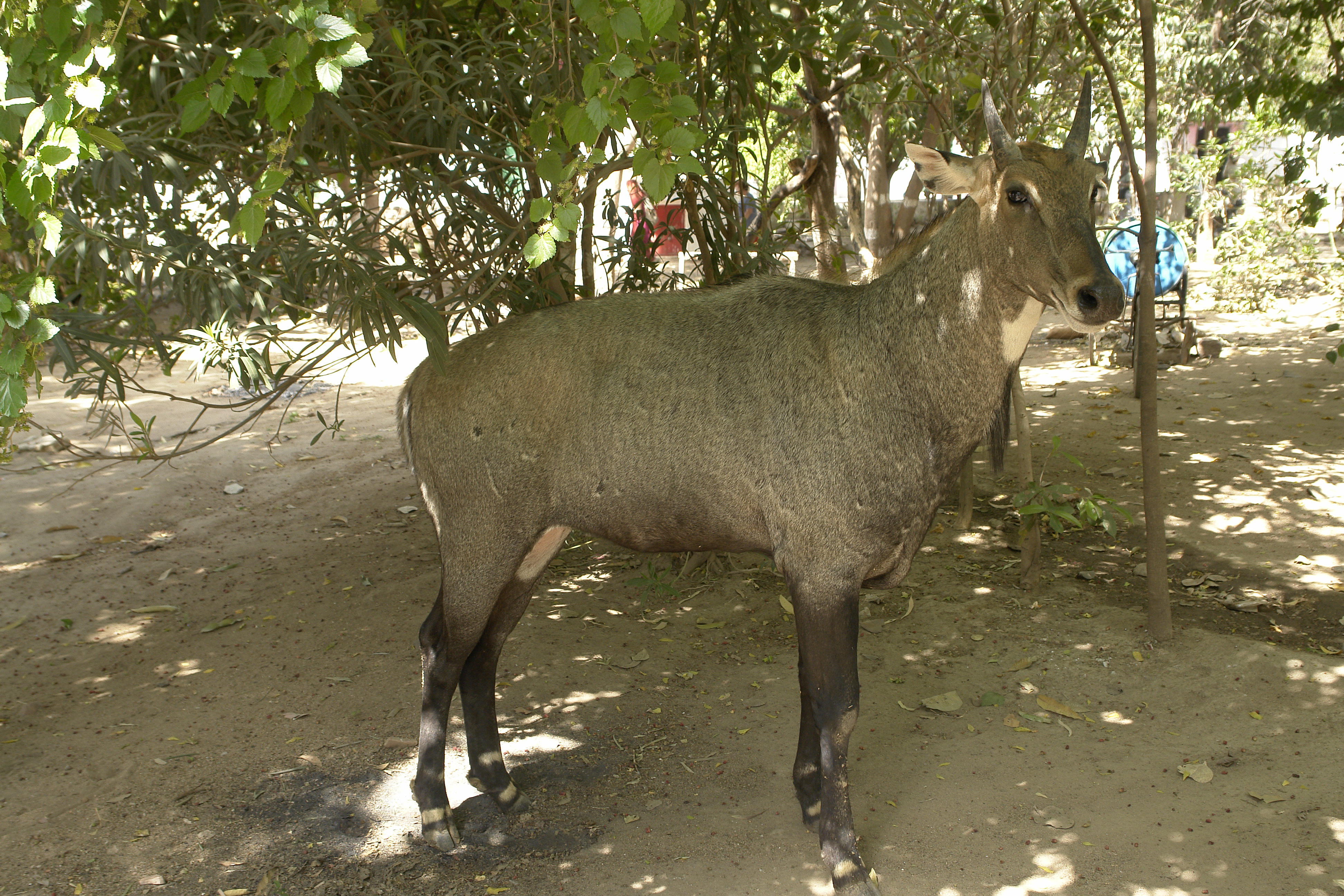
Arvind’s remark about maize points to two other pressures on the crop. The nilgai is the largest antelope in Asia, and its herds raid and trample fields.
Even so, the shift towards maize was visible in the ministry’s table: maize stood at 94.95 lakh hectares on 3 October 2025, against 84.30 lakh hectares a year earlier, a rise of 12.63 per cent. Rural Voice linked this to poor soybean returns the year before. ChiniMandi reported on 6 August 2025, citing a SOPA survey, that farmers in Ashok Nagar, Guna, Shivpuri, Betul, Harda, Khandwa and Khargone districts of Madhya Pradesh were moving from soybean to maize, which they found more profitable, and that the state’s soybean area stood at 51.9 lakh hectares on 31 July, against 52 lakh hectares a year earlier. The Free Press Journal had reported the same movement towards paddy, maize and other kharif crops in June 2024, with a former state agriculture director naming high input costs and low returns as the main reasons.
Worries over imports from the United States
All those quoted in the report returned to the same fear. Arvind said that if the government imports soybean from the United States, domestic farmers will be completely ruined. D.N. Pathak of SOPA warned that if such imports begin, the industry would be destroyed and farmers would not survive either. He said India produces soybean at $620 a tonne while the US price is $380, and that domestic produce would not sell if imports started. Kailash Parthani said that traders and farmers alike would suffer.
SOPA had put the same case in writing earlier in the year. The Free Press Journal reported on 12 March 2025 that the association had written to the Union commerce minister, in connection with the India-US trade negotiations, asking that existing import duties on soybean, soybean oil and soybean meal be kept. It warned that lower duties could bring in low-cost imports and endanger the livelihoods of 10 million soybean farmers.
How soybean became India’s ‘yellow gold’
Soybean, a legume with over 40 per cent protein and about 20 per cent oil, originated in China and probably reached India centuries ago over the Himalayas, according to a history in the journal Asian Agri-History. It was long a small local crop; the paper says one old variety, Kalitur, is still grown in Madhya Pradesh. Trials began at Pusa in Bihar in the early 1900s, and lines were tested at Jabalpur and Indore among other places, but the crop failed to spread because of limited knowledge, poor varieties and the lack of a market. Indian households tried to cook it as dal and found that it took too long and did not break down like other pulses.
The change came from the mid-1960s. Trials at Pantnagar and Jabalpur in 1965-66 with varieties from the southern United States yielded 3 to 4 tonnes a hectare, and the Indian Council of Agricultural Research (ICAR) began a coordinated all-India project on 1 April 1967. The variety Bragg was released in 1968, and farmers grew the first commercial crop in 1970. Yellow mosaic and rust struck almost at once, and growers could not find buyers. The answer on the market side was industry: more than 85 solvent-extraction plants were then running well under capacity, and once one mill in Aligarh showed that soybean could be crushed profitably, others followed, including plants in Madhya Pradesh.
Area and output then climbed. The same journal gives about 11,000 hectares until 1961 and more than 6 million hectares in 2003. Indian Farming records 30,000 hectares in 1970-71, producing about 10,000 tonnes, and an average of 10.183 million hectares and about 13.205 million tonnes in the three years ending 2012-13, when undivided Madhya Pradesh had 57.5 per cent of the area and about 53 per cent of the output. Soybean by then supplied about 28 per cent of India’s vegetable oils and two-thirds of its oil meals. The Mooknayak says that the crop helped the state through economic hardship in the 1980s, that by the 1990s Madhya Pradesh was India’s largest producer with more than half of national output, and that the bean earned the name ‘yellow gold’ and the state the name ‘Soya State of India’.
Indore became the crop’s research home as well. The National Research Centre for Soybean was set up there in 1987 under ICAR, and it has since grown into the Indian Institute of Soybean Research, which works on breeding, pathology and value addition and coordinates the all-India research project.
The edible oil gap behind the debate
The soybean dispute sits inside a larger shortage. SOPA says India imports more than 60 per cent of its edible oil needs, at a cost of about Rs 1.7 lakh crore in foreign exchange a year. To narrow that, the Union government approved the National Mission on Edible Oils-Oilseeds in October 2024, with Rs 10,103 crore over the seven years from 2024-25 to 2030-31. As Rural Voice reported on 4 October 2024, the mission’s main points were:
- Raising primary oilseed output from 39 million tonnes in 2022-23 to 69.7 million tonnes by 2030-31, with soybean among the crops covered alongside rapeseed-mustard, groundnut, sunflower and sesamum.
- Setting up 65 new public-sector seed hubs and 50 seed storage units.
- Creating more than 600 value-chain clusters in 347 districts.
- Bringing an additional 40 lakh hectares under oilseeds, using rice and potato fallow land and intercropping.
Together with the separate oil palm mission, the target is 25.45 million tonnes of domestic edible oil by 2030-31, about 72 per cent of projected demand. SOPA said at its October 2025 conclave that raising soybean production with improved seed was needed to reach self-sufficiency in edible oil.
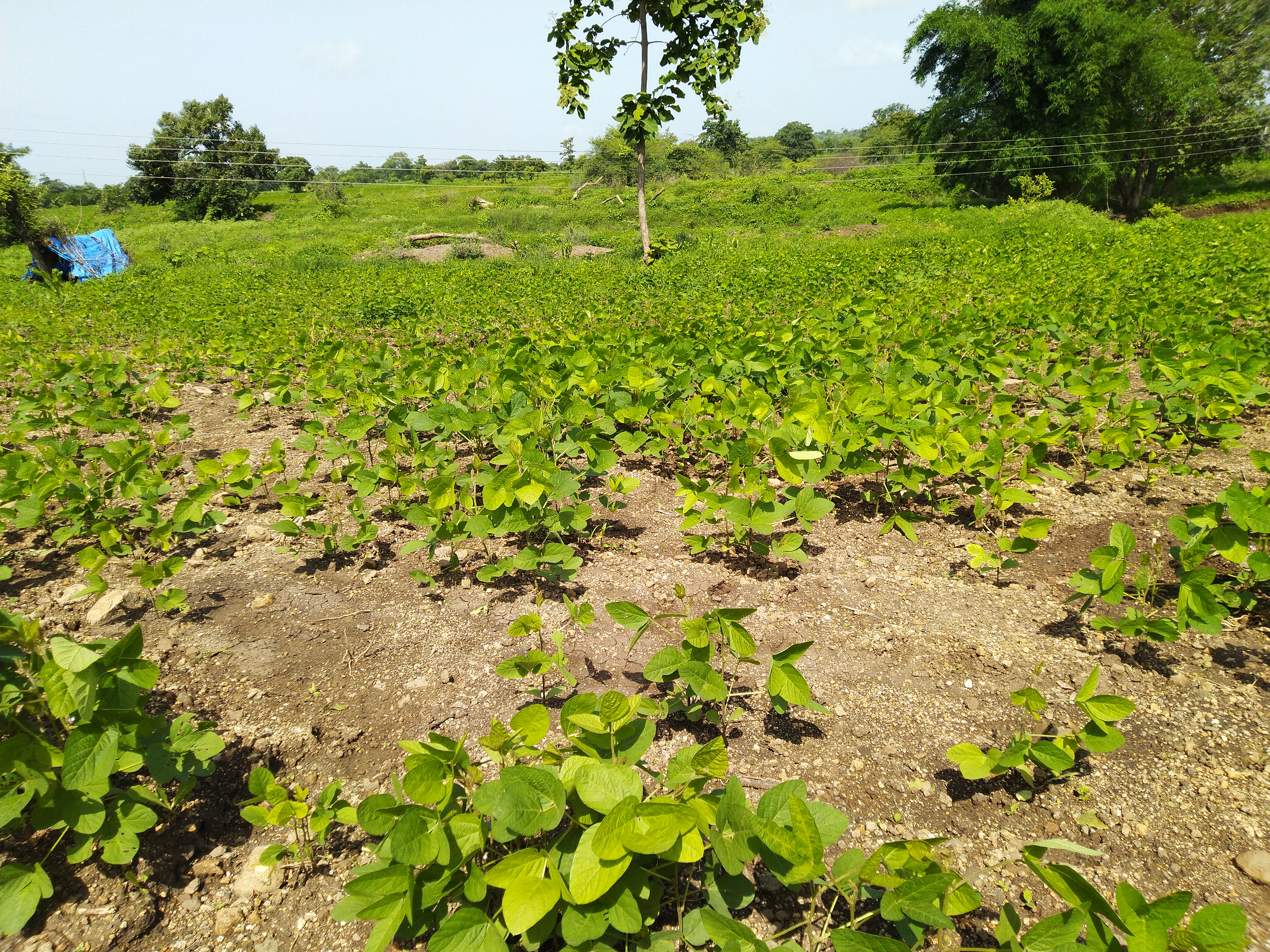
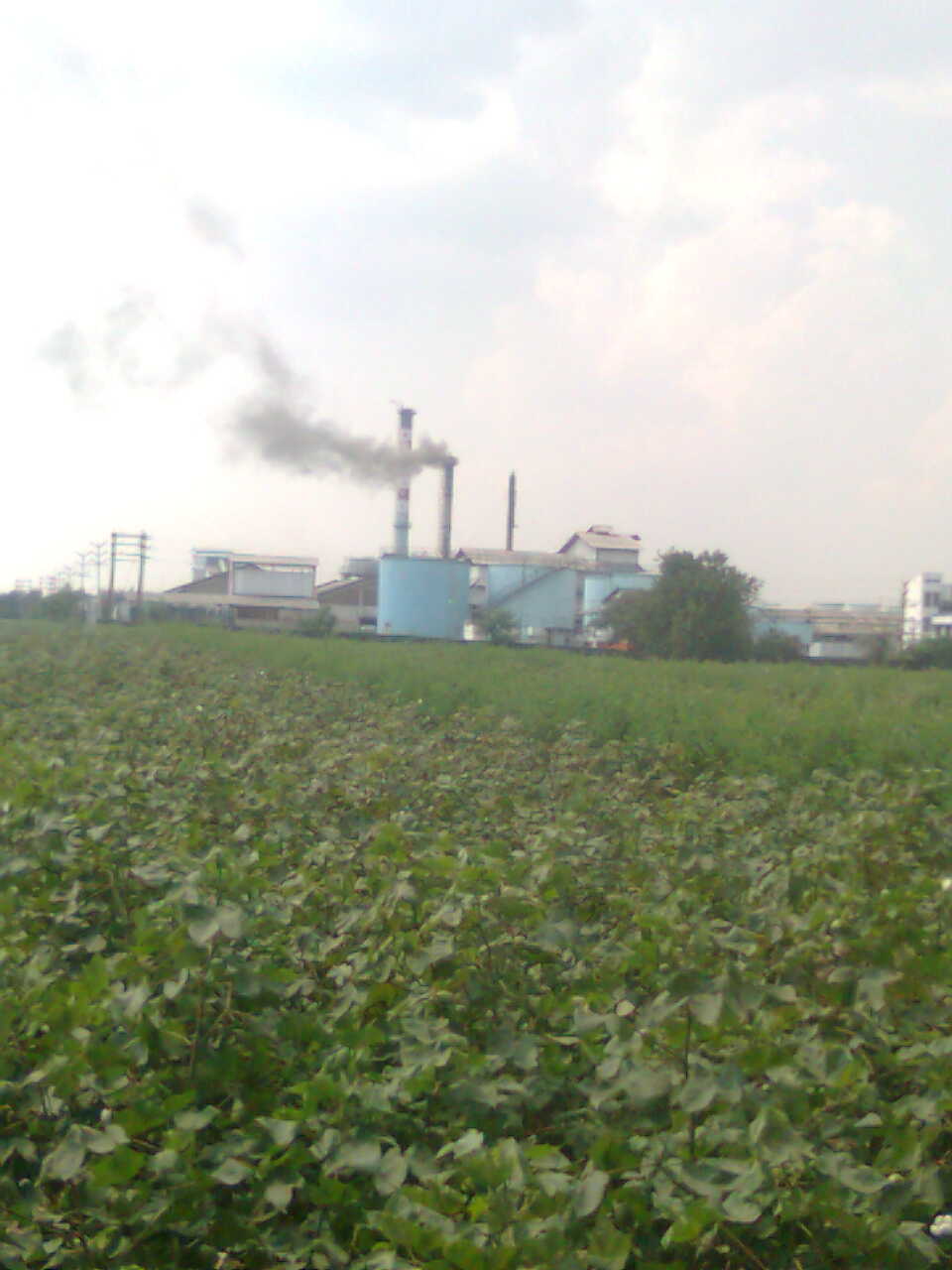
Photo: Albert Deccan / Wikimedia Commons (CC BY-SA 3.0). The top picture shows a soybean field at Jamthi Kh. village in Hingoli district, Maharashtra, India, as background.
Sources: Jagonews24, The Hindu, Press Information Bureau (Ministry of Agriculture and Farmers’ Welfare), Global Agriculture, Outlook Business, PTI, Rural Voice, Free Press Journal, ChiniMandi, The Mooknayak, Scroll.in, Indian Journal of Agricultural Research, Indian Farming, Asian Agri-History, Wikipedia
Comments
(0)