
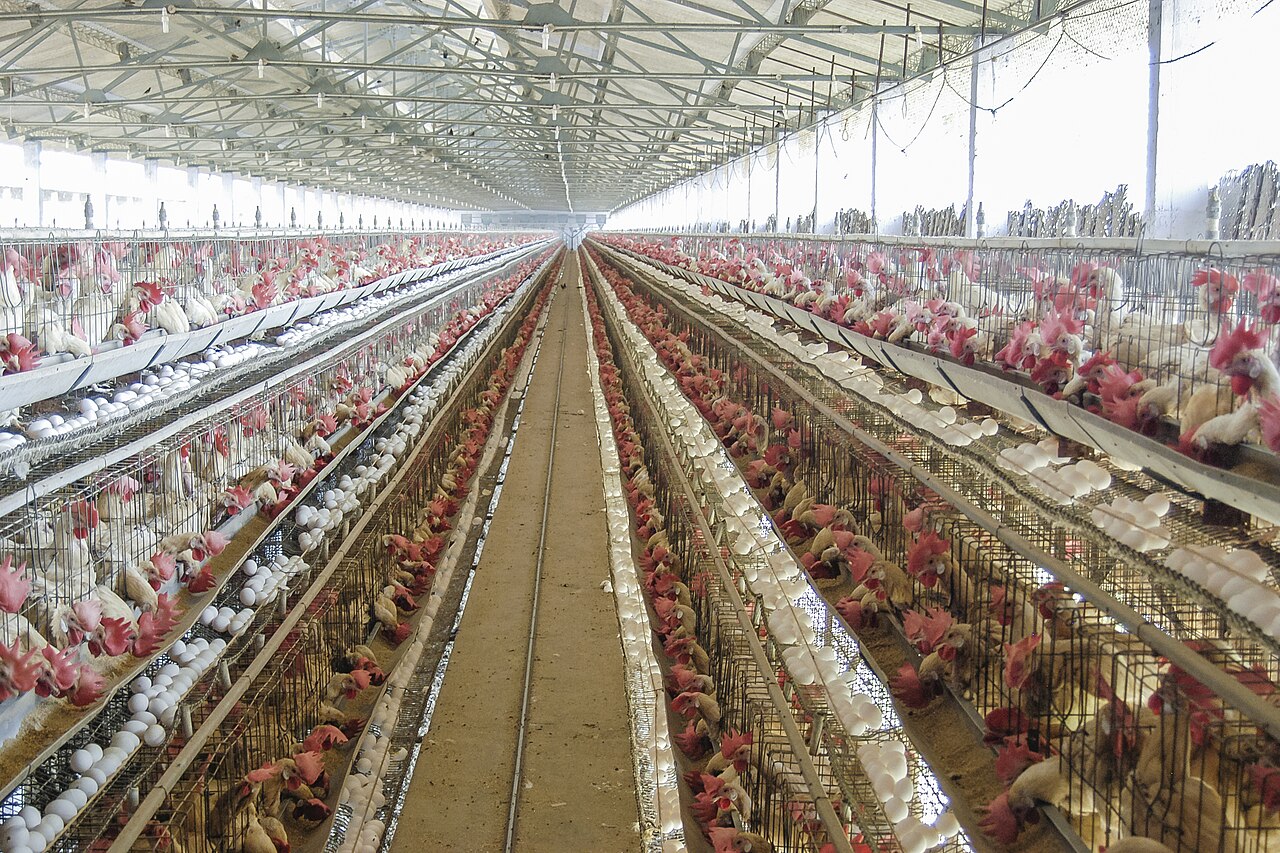
India will get its first indigenous vaccine against the H5N1 strain of highly pathogenic avian influenza in chickens on 20 November 2026. Union Agriculture and Farmers Welfare Minister Shivraj Singh Chouhan will dedicate it to the nation at the ICAR-National Institute of High Security Animal Diseases (ICAR-NIHSAD) in Bhopal.
The inactivated vaccine was developed by ICAR-NIHSAD and targets H5N1 clade 2.3.2.1a. Studies have identified that clade as the strain behind most bird flu outbreaks in chickens, and until now no commercial vaccine has been available against it. It is the first vaccine made in India specifically against this clade for chickens.
Highly pathogenic avian influenza can kill nearly 100 per cent of infected birds. Outbreaks bring mass culling and trade restrictions, and heavy losses for farmers and the poultry industry. Since bird flu was first detected in India in 2006, the country has reported more than 500 outbreaks of the H5N1 and H5N8 subtypes.
According to the press release, a major outbreak could cut India's GDP growth by up to 1.5 per cent, and more than 20 per cent of the country's poultry could be at risk if the disease spread unchecked. The 2006 outbreak caused estimated direct and indirect losses of Rs 2,200-3,000 crore; one outbreak in Manipur cost the equivalent of 0.5 per cent of the state's GDP.
The clade has also been found in other animals, including mammals, and in three human cases, which makes controlling it in poultry more important. The World Health Organization has recorded 1,003 human cases of H5N1, with 479 deaths, in 25 countries including India since 2003.
The release presents the vaccine as a step towards stronger domestic capacity in animal disease prevention and less reliance on vaccines developed abroad for emerging animal health threats.
Photo: Matthew T Rader / Wikimedia Commons (CC BY-SA 4.0)
Source: Rural Voice


Comments
(0)