
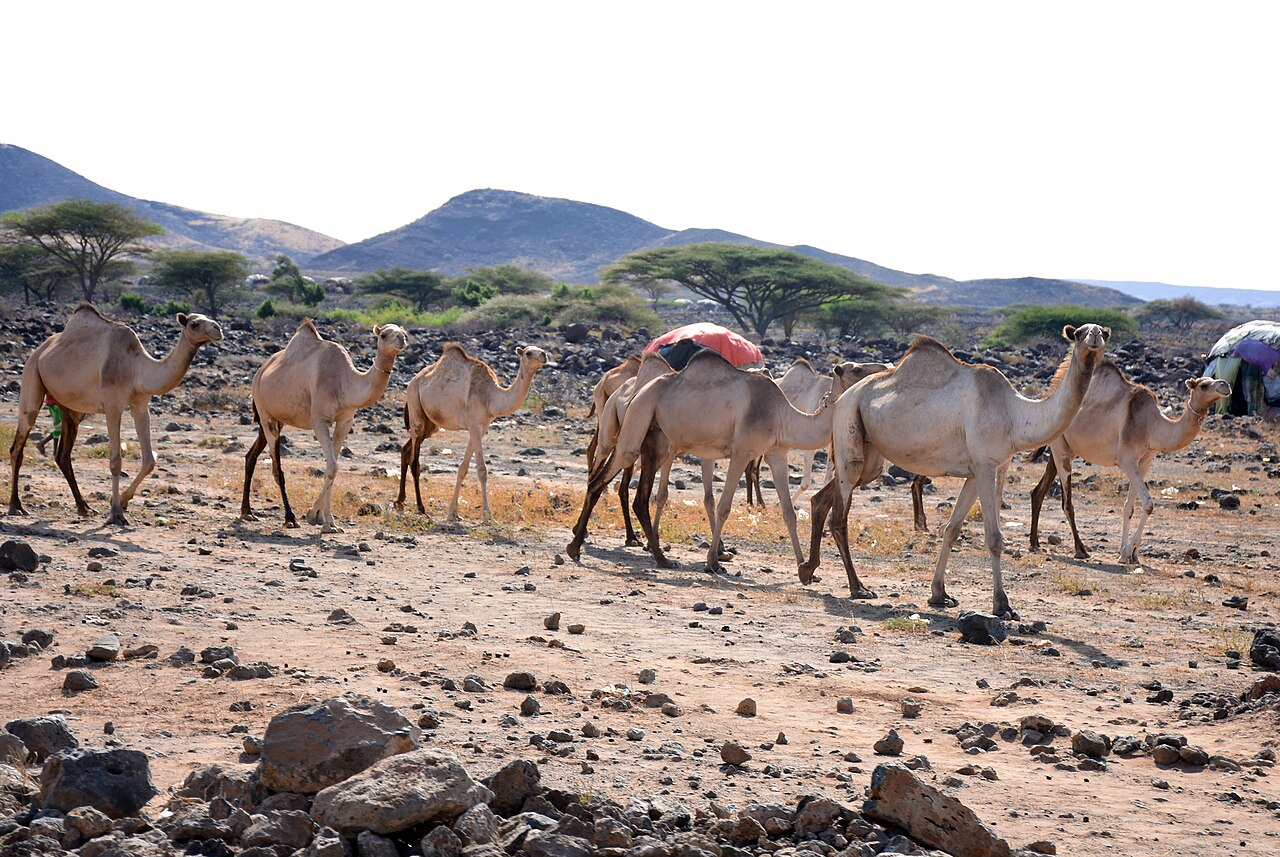
Livestock should be named as a climate solution at COP31 in Antalya, beginning with camels, argues Tahira Mohamed of the International Livestock Research Institute (ILRI) in a piece published by CGIAR. At COP30 last year livestock did not feature strongly in the negotiations, and the main political conclusion document mentioned neither livestock nor food systems.
Africa's drylands cover 60 per cent of the continent and are home to about 525 million people; pastoralism supports an estimated 268 million in 36 countries, and livestock makes up around 40 per cent of agricultural GDP on average. The sector's emissions count too: Africa produces about 10 per cent of the world's enteric methane from dairy cattle but only 3.9 per cent of its milk, largely because of poor feed, breeding and animal health. Better feed, healthier animals and breeding could cut emissions per litre while raising incomes.
Camels show what resilience looks like. In the 2020-2023 drought, Shindia, a camel owner from Marsabit County in northern Kenya, walked 108 camels about 480 kilometres to market with her colleagues; 40 arrived alive. Millions of cattle, goats and sheep died across the region in the same drought, and camels, with longer lactations and better drought survival, were often what kept households going. Africa has an estimated 34 million camels, yet research on their health, vaccines and disease control remains minimal.
Women run much of camel milk marketing in northern Kenya and Somalia, and young people work in transport, aggregation, trade and digital services, but they often lack finance, skills and market access, and producers can lose up to half their milk to poor hygiene, storage and transport.
With support from the CGIAR Science Program on Food Frontiers and Security, ILRI is studying how women and young people take part in and benefit from camel value chains in Ethiopia, Kenya and Somalia through CAMEL-CARE (Camel-Based Adaptation, Mobility, Environmental Cooperation and Resilience). The project works on negotiated access to grazing, water and markets through a cross-border camel caravan, and examines in Somalia how informal credit, mobile money and customary obligations shape trade.
Photo: Tish Madesh / Wikimedia Commons (CC0)
Source: CGIAR
Comments
(0)