
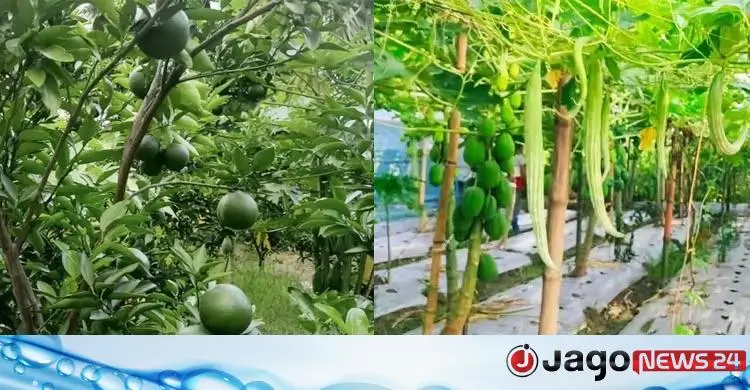
Agriculture is the scientific method or practice of producing crops, livestock, fish, fruit and forest resources using suitable soil, writes Tanushree Gain Priyanka. Farming gives fresh food and keeps the mind healthy, so its role in personal life is immense. Spending idle time on farm work lifts the mood and can also bring the family extra income.
That is why it is important to learn a few key things before starting.
Making compost from kitchen waste
First, collect a closed container such as a bucket or drum with a lid, or a sack. Put leftover vegetable peelings from the kitchen into it and spread some soil over them. Then, in turn, spread cut leaves and creepers or chopped banana plant over the soil. Building up layers in this way with crushed eggshell, soil, dried cow dung and some ash or sawdust, close the sack or cover the bucket or drum for a month.
After a month everything will have rotted into organic fertiliser. Dry it well in the sun and sieve it to get pure compost. Mixing this home-made compost with some soil before planting gives a better yield. Crops such as aubergine, pumpkin, bottle gourd, cucumber, sponge gourd and red amaranth grown this way meet the family's needs and help earn money.
Soil for indoor plants
By indoor plants we mean money plant, lucky bamboo or snake plant. But an indoor plant cannot simply be put into soil; care is needed in preparing it, so that the plant grows over time and becomes a useful companion.
To prepare the soil, mix suitable amounts of soil, sand, ash, cocopeat or sawdust and crushed eggshell thoroughly. The ingredients must be dry and crumbly. Planting indoor plants in soil prepared this way saves time on care and lets the plant get the nutrients it needs.
Livestock, fish and trees
Rearing livestock meets family needs on one hand and provides money on the other. Cow's milk, for example, mainly contains vitamin A, vitamin D and vitamin B12, so people should be encouraged to keep livestock.
Fish play a very important role in daily life, nutrition and the balance of the environment, so people need to come forward to farm fish.
Fruit and forest resources play a direct role in farming by protecting soil, regulating the climate and giving farmers extra income:
- Tree roots hold the soil firmly, so fertile topsoil is not washed or blown away by heavy rain or wind.
- Forests help bring regular rainfall, which is vital for irrigating and growing crops.
- Trees reduce the force of storms, cyclones and harsh sun, protecting crops and farmland.
- Wood is needed to make farm tools such as ploughs, harrows and bullock carts, and forests also meet the demand for cooking fuel.
- Farmers can earn extra income by selling fruit, honey and timber, bringing them financial security.
Farming, then, is a friend in everyday life, and people of every class should be encouraged to take it up.
The writer is a master's student in management at Government Brajamohan College, Barishal.
Source: Jagonews24. First published in Bengali on The Agro News.

Comments
(0)