
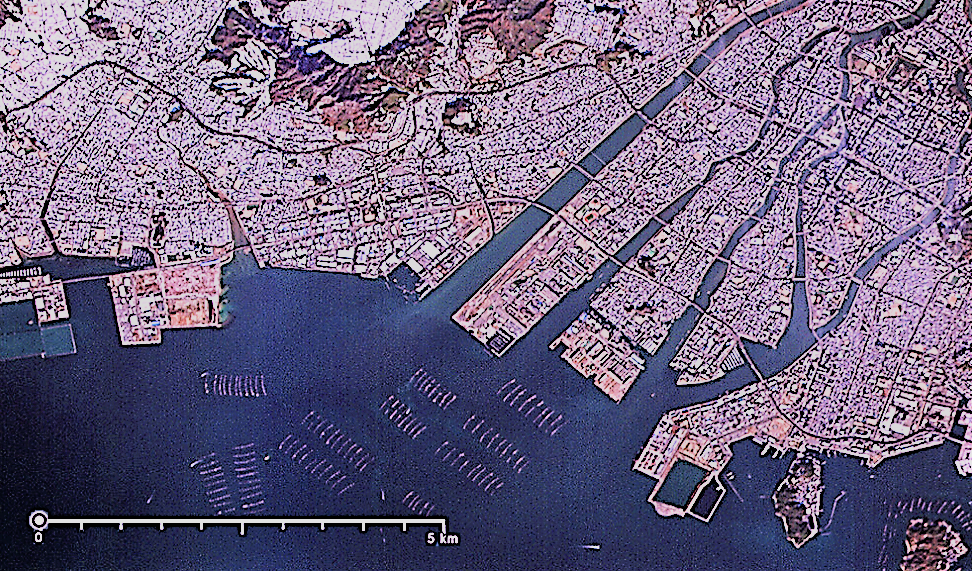
Deaths among farmed oysters in Hiroshima Prefecture have reached as high as 90% in places and are now spreading to parts of Hiroshima Bay that had been growing well, Japan's Minister of Agriculture, Forestry and Fisheries, Arata Takebe, told reporters on November 20, AgNavigator reports.
Mortality among three-year-old oysters ranges from 50% to 90% across the prefecture, and among two-year-old oysters from 10% to 90% depending on the area. Takebe said districts in the western and north-central parts of the bay, "where oyster growth had previously been progressing favourably, are now beginning to record high mortality rates."
Hiroshima produces more than half of Japan's oysters. Widespread deaths were already reported last year across the Seto Inland Sea, in Okayama, Hyogo and Osaka as well as Hiroshima, and a white paper by SeatecHIROSHIMA put Hiroshima's oyster production in the 2025 fiscal year at 57% of normal. The paper estimated that around 60% to 70% of oysters died in the western and central parts of Hiroshima in 2026.
The cause is still unknown. The ministry and the Hiroshima government believe high seawater temperature is the main factor, with high salinity and low oxygen also possible; disease is considered unlikely.
Under a policy package introduced last year, the government will keep supporting oyster farmers with financing and business continuity measures, help with joint purchases of equipment for alternative cultivation methods, and work with the Japan Fisheries Research and Education Agency and local governments to investigate the deaths. It will also support oyster seed better suited to changing conditions and trials of new farming methods. Takebe said officials may be sent to the affected areas depending on how the situation develops.
Photo: Toshiki Tanaka / Wikimedia Commons (CC BY-SA 4.0)
Source: AgNavigator

Comments
(0)